Lufthansa A380 Returns to Denver With 47% Fewer Flights

Co-Founder & CEOAviation News Editor delivering trusted coverage across the global aviation industry.
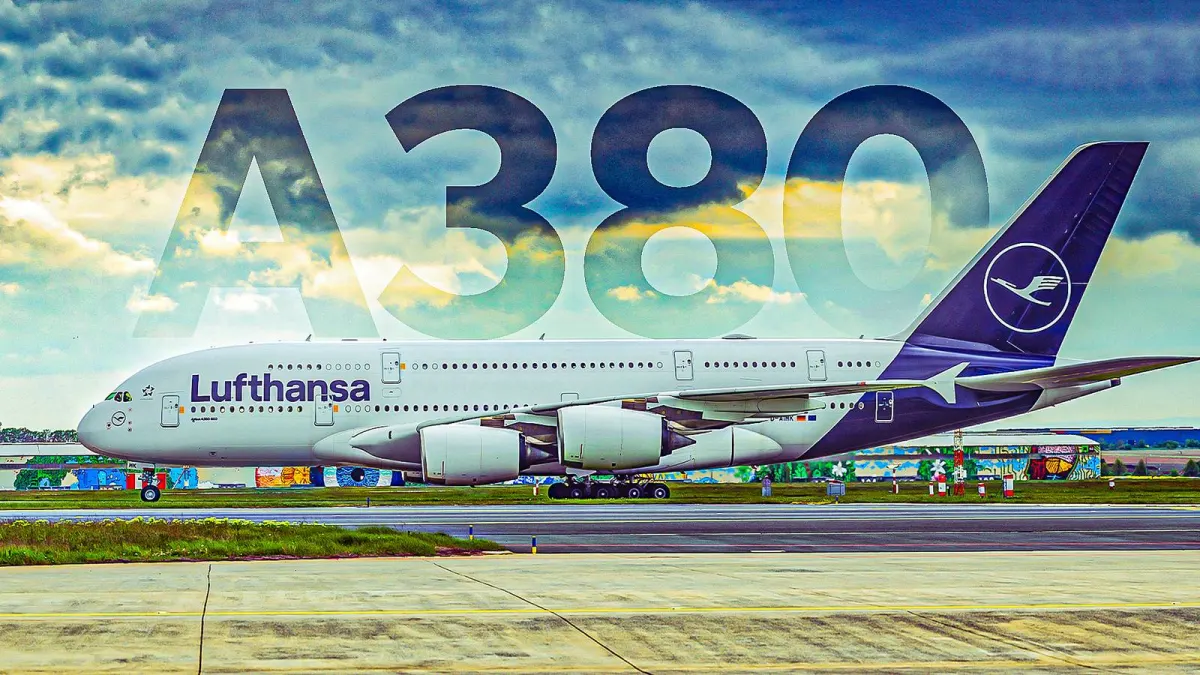
Lufthansa has resumed Airbus A380 service to Denver International Airport, cutting total flight volume by 47% to optimize seat load factors.
Key Takeaways
- •Lufthansa cut 2026 A380 flights to Denver by 47% to 89 departures.
- •The 2025 seat load factor on the Munich-Denver route was 77.6%.
- •A380 service in 2026 is limited to July 1 through September 27.
- •The A380 configuration provides 509 seats per flight.
Lufthansa A380 Service Resumes at DEN
Lufthansa has commenced its summer Airbus A380 service to Denver International Airport (DEN), marking the return of the double-decker aircraft to the Colorado hub. While the return of the flagship aircraft signals continued commitment to the market, the carrier has significantly reduced its Lufthansa flight volume for the 2026 season. According to data from Cirium Diio, the airline has scheduled 89 departures for the current summer season, a sharp decline from the 167 flights operated in 2025.
This 47% reduction in Lufthansa A380 Denver flight volume reflects a broader industry trend of aggressive capacity management. By shortening the seasonal deployment window to run exclusively from July 1 through September 27, 2026, the airline aims to align capacity more closely with peak demand periods. The move follows a 2025 performance period where the US Department of Transportation recorded a seat load factor of 77.6% on the route between Munich International Airport (MUC) and Denver.
Yield Management and Capacity Strategy
The decision to scale back frequency is designed to improve route profitability and yield. The Airbus A380 offers 509 seats per flight in Lufthansa Group's current configuration, representing a significant jump in capacity compared to smaller widebody aircraft. For Denver International Airport (DEN), the reduction in flight volume impacts terminal throughput and landing fee revenues, though it reflects a strategic pivot by the airline to avoid the operational inefficiencies of flying high-capacity aircraft during shoulder seasons.
"Bringing a larger aircraft with greater capacity to this market, which has exponentially increased in popularity over the years, just made sense for the summer season," said Dirk Janzen, Vice President Passenger Airlines Sales, The Americas, Lufthansa Group. "We remain committed to Denver and are excited that Lufthansa's A380 will once again fly to the Mile High City in 2026."
A380 vs. A350-900: Key Specifications
| Metric | Lufthansa A380 | Airbus A350-900 |
|---|---|---|
| Seating Capacity | 509 seats | 293-318 seats |
| Engines | 4 | 2 |
Managing the Ultra-Large Fleet
This adjustment follows a period of significant fleet volatility for the German flag carrier. During the 2020–2023 pandemic years, Lufthansa grounded its entire A380 fleet before opting to reactivate a portion of the aircraft to meet surging post-pandemic demand. The current approach to the Munich to Denver route mirrors this flexible deployment strategy, where the aircraft is utilized as a tactical tool to maximize revenue during the most profitable windows of the year. While the capacity cut improves the airline's bottom line, it also results in a lower availability of A380 First Class and premium seating options for transatlantic passengers during the early and late summer months.
What Comes Next for the 2026 Season
Lufthansa’s current deployment schedule for the Airbus A380 at Denver International Airport (DEN) is confirmed to run through September 27, 2026. Following this date, the airline is expected to transition the route to smaller aircraft types to maintain service continuity through the winter season. The efficiency of this shortened window will likely serve as a benchmark for future transatlantic airline capacity planning across the carrier’s North American network.
Why This Matters for Transatlantic Yields
For the airline industry, this development highlights the difficulty of matching 500-seat aircraft to secondary hub demand. By prioritizing load factor optimization over sheer volume, Lufthansa is demonstrating a disciplined approach to airline yield management. For passengers, the shift means fewer opportunities to fly the flagship aircraft, but it ensures that the route remains financially sustainable for the carrier in a competitive transatlantic market.
Frequently Asked Questions
- Why did Lufthansa reduce its A380 flight volume to Denver?
- Lufthansa reduced its flight volume by 47% to optimize seat load factors and improve route profitability, following a 77.6% load factor recorded in 2025.
- What is the seasonal window for Lufthansa's A380 service to Denver in 2026?
- The 2026 summer season for the A380 service at Denver International Airport runs from July 1 through September 27, 2026.
Get breaking commercial aviation news and expert airline analysis at omniflights.com. For reporting on UAP sightings, investigations, and aviation-related encounters, see the UAPs section at omniflights.com/uaps.
Written by Hardik Vishwakarma
Co-Founder & Aviation News Editor leading initiatives that improve trust and visibility across the global aviation industry. Covers airlines, airports, safety, and emerging technology.
Visit ProfileYou Might Also Like
Discover more aviation news based on similar topics
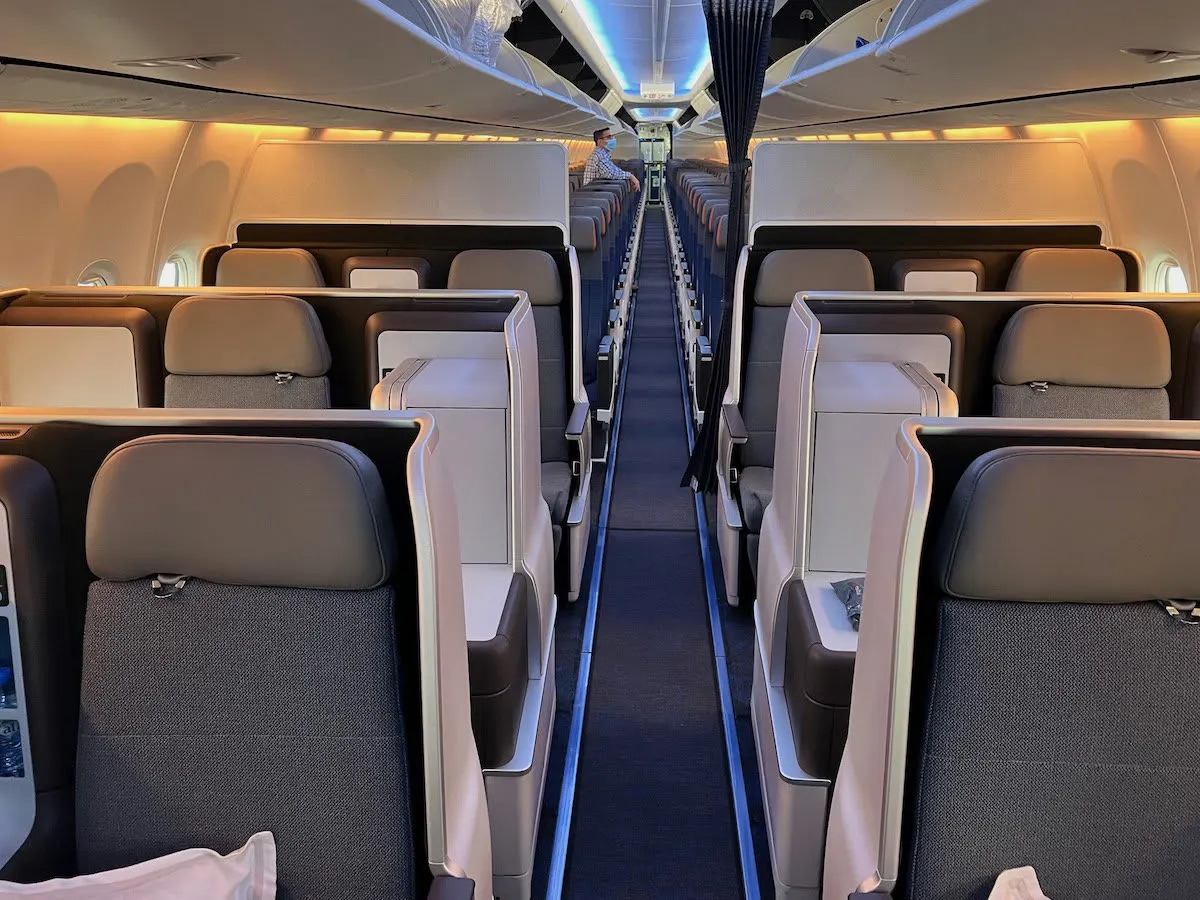
Flydubai Upgrading 21 Boeing 737 MAX 8s to Flat Bed Seats
Flydubai is retrofitting 21 Boeing 737 MAX 8 aircraft with lie-flat business class seats to standardize its premium product by late 2027.
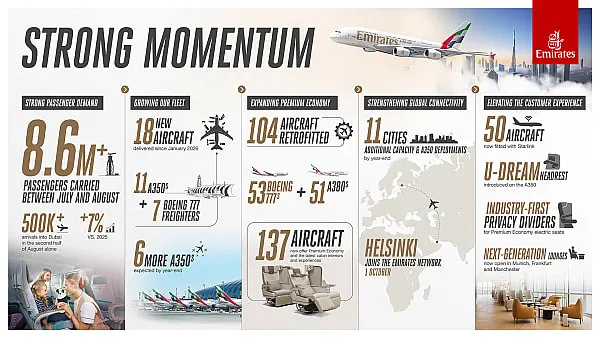
Emirates Winter Booking Momentum Grows Amid Fleet Expansion
Emirates carried 8.6 million passengers this summer and enters winter with strong demand as it accelerates fleet retrofits and network growth.
Air Arabia Consortium Gains AOC for New Dammam Budget Airline
A Saudi GACA-led consortium including Air Arabia has secured an AOC to launch a new budget airline based at Dammam's King Fahd International Airport.

Turkish Airlines Exits Luanda as Angola Hub Struggles
Turkish Airlines dropped its Luanda route as Angola's new airport struggles to attract traffic, handling only 756,028 passengers in 2025.

Red Sea Airlines Leases Two 737 MAX 8s for 2027 Expansion
Red Sea Airlines signed a lease for two Boeing 737 MAX 8 aircraft from SMBC Aviation Capital, arriving in 2027 to support its 14-aircraft fleet goal.
Avelo CEO Warns Airfares May Rise on Jet Fuel Price Spikes
Avelo Airlines CEO Andrew Levy warns that rising fuel costs may force fare increases as global jet fuel prices reach $171.01 per barrel.