JetBlue A220-300 Debuts 'Blueprint II' Special Livery

Co-Founder & CEOAviation News Editor delivering trusted coverage across the global aviation industry.
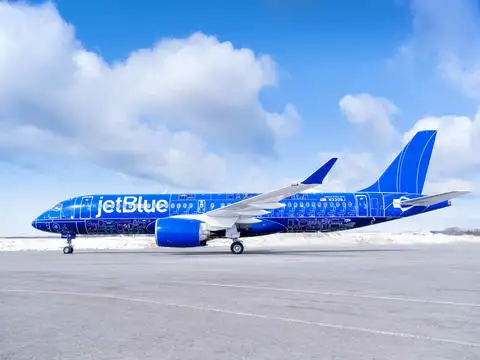
JetBlue debuted its 'Blueprint II' special livery on an Airbus A220-300, reimagining a fan-favorite design for its modern, all-Airbus fleet.
Key Takeaways
- •JetBlue debuts 'Blueprint II' livery on a new Airbus A220-300 (N3308J).
- •The design succeeds the original on the now-retired Embraer E190 fleet.
- •A220s offer 40 more seats and 1,000 nm more range than the E190s.
- •The livery marks JetBlue's full transition to an all-Airbus fleet in 2025.
JetBlue has introduced its JetBlue Blueprint II livery, a reimagined version of a fan-favorite special paint scheme, on a new Airbus A220-300. The aircraft, registered as N3308J, officially began scheduled service on May 15, 2026. This launch represents a significant branding milestone, connecting a celebrated design from the airline's past with its modernized, all-Airbus fleet.
The new livery is more than a cosmetic update; it symbolizes JetBlue's strategic fleet transition. The original 'Blueprint' design was featured on an Embraer 190 (E190), a type that JetBlue completely phased out in September 2025. By transferring the popular 'x-ray' concept to the A220-300, the airline bridges its history with its future operational strategy, which is centered on the efficiency and range of Airbus aircraft.
According to Marty St. George, President of JetBlue, the airline's special liveries are a vital expression of its brand identity. He emphasized that 'Blueprint II' honors a beloved design while celebrating the personal journeys of its passengers. The intricate design features a cutaway view of the aircraft's interior, filled with technical details and whimsical 'easter eggs' intended to engage passengers and aviation enthusiasts.
Fleet Modernization and Efficiency
The debut of 'Blueprint II' on an A220 highlights a core element of JetBlue's recent strategy: fleet up-gauging. The airline completed its transition to an all-Airbus fleet on September 9, 2025, replacing its older 100-seat Embraer E190s with larger, more efficient 140-seat A220-300s. This move aligns with a broader industry trend where carriers are replacing smaller regional jets with larger narrowbodies to reduce per-seat operating costs and enhance network flexibility. The new aircraft, bearing Manufacturer Serial Number (MSN) 55446, required formal registration with the Federal Aviation Administration (FAA) before it could commence commercial flights.
Airbus A220-300 vs Embraer E190: Key Specifications
The operational advantages of the A220-300 over the E190 are substantial, enabling JetBlue to optimize its route network.
| Metric | Airbus A220-300 | Embraer E190 |
|---|---|---|
| Range | 3,400 nm | 2,400 nm |
| Passenger Capacity | 140 seats | 100 seats |
| Engines | Pratt & Whitney PW1500G | GE CF34-10E |
The A220's nearly 42% increase in range and 40% increase in capacity allow JetBlue to serve longer routes more profitably. The aircraft's technical specifications can be viewed on the official Airbus A220-300 page.
A Legacy Reimagined
The original 'Blueprint' livery was introduced in February 2017 on an Embraer E190 and quickly became one of the airline's most recognizable paint schemes. It operated until 2024 when the specific aircraft was retired ahead of the full fleet transition. The decision to resurrect the design for the A220 reflects its popularity and aligns with an industry trend of using complex, detailed liveries for experiential brand marketing. These unique designs often generate significant organic social media engagement, acting as mobile billboards for the airline's brand. For more details on the carrier's fleet, JetBlue maintains an official fleet information page.
Technical Analysis
The introduction of the 'Blueprint II' livery is a calculated move that serves both marketing and strategic objectives. It visually punctuates JetBlue's successful transition away from the E190, a cornerstone of its original fleet, to the more economically advantageous A220 platform. This fleet modernization is critical for competing in the U.S. domestic market, where per-seat costs are a key determinant of profitability. The A220's superior range and capacity unlock new, longer-haul markets that were previously unviable with the E190, while the special livery ensures the new aircraft receives maximum public attention.
While the livery is a public relations success, some financial analysts have noted that such custom projects incur additional expense. Given JetBlue's significant debt load, which stands at approximately $9.3 billion, the cost-benefit of non-essential branding exercises remains a point of scrutiny. However, the airline clearly views these liveries as a worthwhile investment in customer loyalty and brand differentiation.
What Comes Next
With the A220 fleet now well-established, JetBlue is expected to continue enhancing its onboard product. The airline is scheduled to begin installing a domestic first-class prototype on one of its A220 aircraft in June 2026. This move signals an ongoing effort to capture more premium-fare passengers and further differentiate its service offering.
Why This Matters
For the industry, JetBlue's 'Blueprint II' is a prime example of how airlines can leverage brand heritage to celebrate major operational milestones. The livery is not just a paint scheme but a symbol of the airline's evolution towards a more efficient and capable fleet. It demonstrates a commitment to a unique brand identity while executing a fundamental shift in its long-term network and cost strategy.
Frequently Asked Questions
- What is the JetBlue Blueprint II livery?
- The JetBlue Blueprint II is a special 'x-ray' style paint scheme on an Airbus A220-300 (N3308J). It reimagines a popular design that was originally featured on one of the airline's now-retired Embraer E190 aircraft.
- Why did JetBlue replace its Embraer E190s with Airbus A220s?
- JetBlue replaced its 100-seat E190s with larger 140-seat A220-300s to increase passenger capacity, extend route range by approximately 1,000 nautical miles, and improve overall fuel efficiency as part of its fleet modernization strategy.
- What are the key differences between the Airbus A220-300 and the Embraer E190?
- The Airbus A220-300 carries 140 passengers up to 3,400 nautical miles. In contrast, the Embraer E190 carried 100 passengers and had a maximum range of 2,400 nautical miles, making the A220 a significantly more capable aircraft for JetBlue's network.
Visit omniflights.com for the latest commercial aviation news and airline industry updates. Discover how innovation is shaping aviation through aircraft systems, avionics, and digital tools at omniflights.com/technology.
Written by Hardik Vishwakarma
Co-Founder & Aviation News Editor leading initiatives that improve trust and visibility across the global aviation industry. Covers airlines, airports, safety, and emerging technology.
Visit ProfileYou Might Also Like
Discover more aviation news based on similar topics
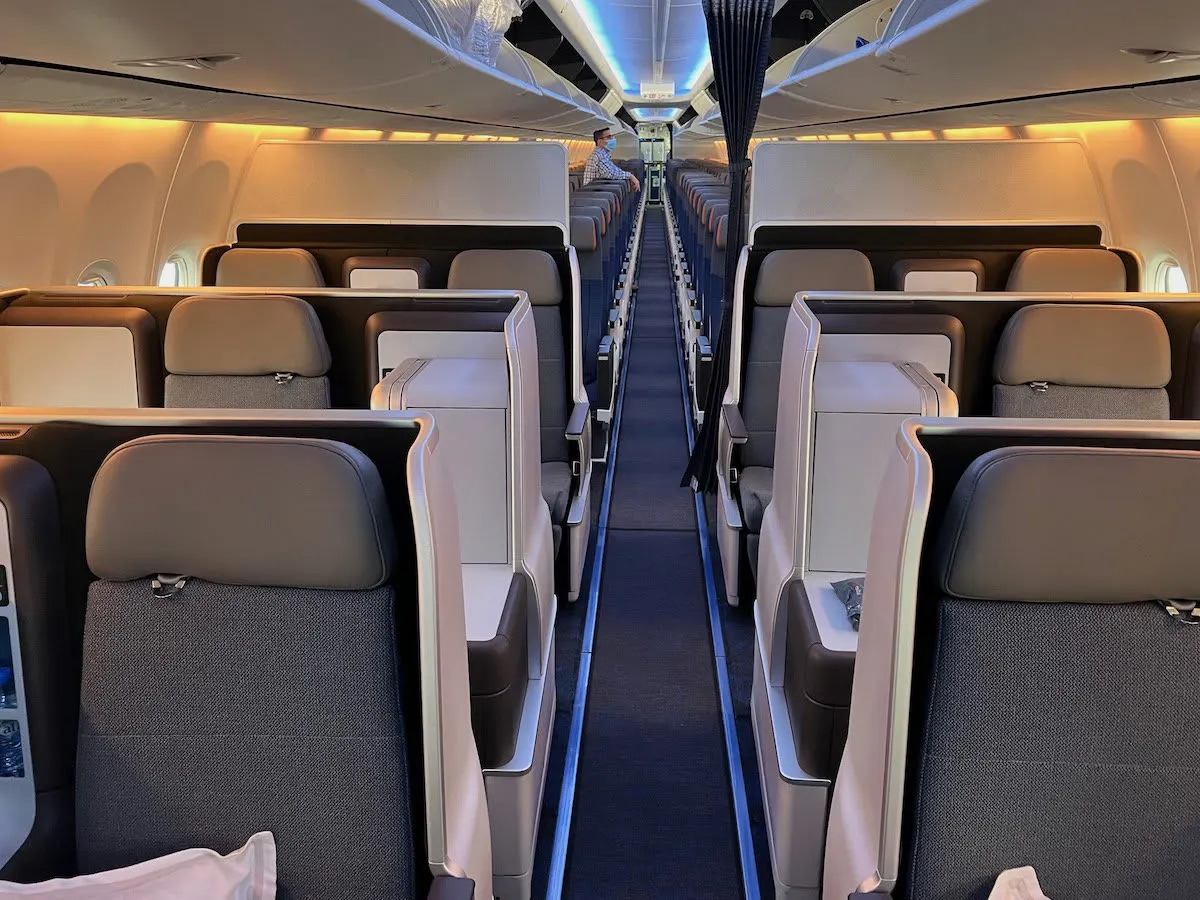
Flydubai Upgrading 21 Boeing 737 MAX 8s to Flat Bed Seats
Flydubai is retrofitting 21 Boeing 737 MAX 8 aircraft with lie-flat business class seats to standardize its premium product by late 2027.
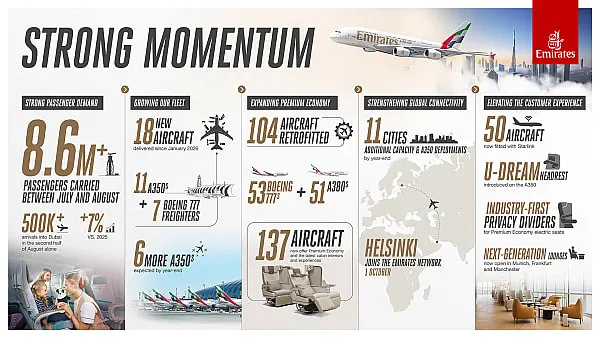
Emirates Winter Booking Momentum Grows Amid Fleet Expansion
Emirates carried 8.6 million passengers this summer and enters winter with strong demand as it accelerates fleet retrofits and network growth.
Air Arabia Consortium Gains AOC for New Dammam Budget Airline
A Saudi GACA-led consortium including Air Arabia has secured an AOC to launch a new budget airline based at Dammam's King Fahd International Airport.

Turkish Airlines Exits Luanda as Angola Hub Struggles
Turkish Airlines dropped its Luanda route as Angola's new airport struggles to attract traffic, handling only 756,028 passengers in 2025.
Red Sea Airlines Leases Two 737 MAX 8s for 2027 Expansion
Red Sea Airlines signed a lease for two Boeing 737 MAX 8 aircraft from SMBC Aviation Capital, arriving in 2027 to support its 14-aircraft fleet goal.
Avelo CEO Warns Airfares May Rise on Jet Fuel Price Spikes
Avelo Airlines CEO Andrew Levy warns that rising fuel costs may force fare increases as global jet fuel prices reach $171.01 per barrel.