Delta Doubles Las Vegas to Austin Flights in Fall 2026

Co-Founder & CEOAviation News Editor delivering trusted coverage across the global aviation industry.
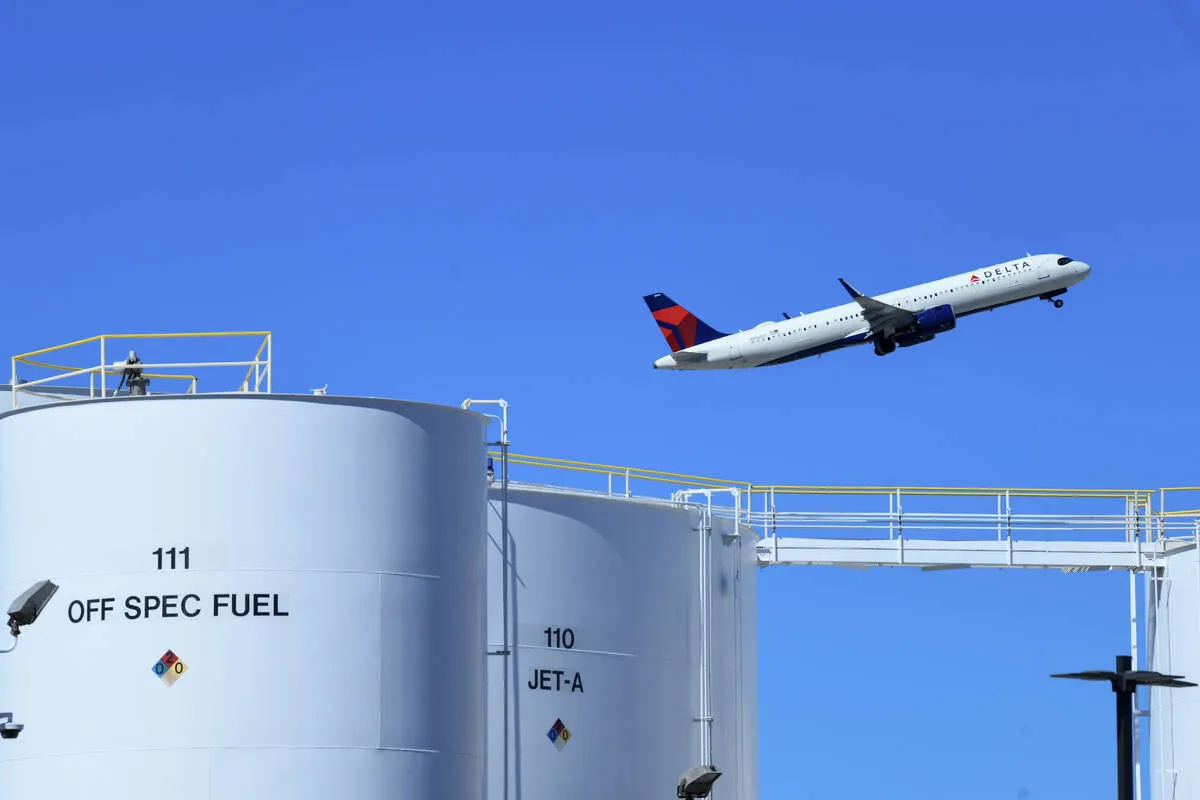
Delta is doubling daily Las Vegas-Austin flights to two starting in fall 2026, growing its market share after Spirit's shutdown.
Key Takeaways
- •Delta doubles Las Vegas-Austin service to two daily flights in Fall 2026.
- •Move solidifies Delta as the #2 carrier at Harry Reid Int'l Airport.
- •Delta's growth follows the May 2026 shutdown of Spirit Airlines.
- •Expansion is part of Delta's methodical Austin focus city strategy.
Delta Air Lines is set to double its flight frequency between Las Vegas and Austin, a move that underscores a strategic expansion in key growth markets. The carrier confirmed it will increase service to two daily nonstop flights starting in the fall of 2026. This enhancement of Delta Austin Las Vegas flights solidifies the airline's new position as the second-largest among Harry Reid International Airport carriers. The expansion is a direct result of market shifts and reflects a broader strategy of Delta focus city expansion.
The decision significantly increases travel options between the major leisure hub of Las Vegas and Austin, Texas, often called the “Live Music Capital of the World.” For Delta, the move is both opportunistic and strategic. The airline ascended to the number two spot at Harry Reid International Airport (LAS) in May 2026, a position vacated following the complete operational shutdown of Spirit Airlines. According to data from the Clark County Department of Aviation (CCDOA), Spirit's exit created a significant market share vacuum, which legacy carriers are now moving to fill.
A Tale of Two Focus Cities
Delta's growth in Austin contrasts sharply with the recent strategy of a key competitor. The expansion is part of a methodical build-up of its focus city at Austin-Bergstrom International Airport (AUS). This approach appears to have learned from the precedent set by American Airlines, which aggressively expanded its Austin presence between 2021 and 2024 before making significant cuts to its route network due to overcapacity and lower-than-expected yields. Delta's more measured frequency increases suggest a focus on sustainable, high-demand routes.
The market dynamics at Las Vegas provide the other half of the context. The collapse of Spirit Airlines in May 2026 immediately reshuffled the competitive landscape. As the former second-busiest airline at LAS, Spirit's absence left thousands of daily seats available. Delta's move to capture a larger share of the Las Vegas market, particularly on a popular route to another growing city, demonstrates its agility in capitalizing on competitor failures. More details on Delta's network strategy can often be found on the official Delta News Hub.
Market Dynamics and Competitive Landscape
The increased frequency on the LAS-AUS route directly challenges Southwest Airlines, which has long been the dominant carrier at Harry Reid International Airport and a major player on routes to and from Austin. The introduction of a second daily flight from a legacy carrier like Delta is expected to increase competition, potentially impacting fares and pressuring Southwest's yields on the route. For Austin-Bergstrom International Airport, the expansion is a welcome development, promising increased landing fee revenue, higher gate utilization, and greater passenger spending in its terminals.
This development is indicative of two broader industry trends. First, it highlights how legacy carriers are leveraging focus cities to execute disciplined point-to-point expansion in high-growth markets outside of their traditional fortress hubs. Second, it shows the immediate and tangible redistribution of market share that occurs at major airports following the failure of an ultra-low-cost carrier (ULCC). The official Harry Reid International Airport website provides ongoing statistics on carrier market share.
Technical Analysis
Delta's decision to double its Las Vegas-Austin service is a calculated maneuver that synthesizes market opportunity with long-term network strategy. The move is not merely about adding a single flight; it represents a strategic capture of valuable market share left vacant by Spirit Airlines while simultaneously reinforcing its growing focus city in Austin. By backfilling capacity on a route connecting two major tech and leisure destinations, Delta is capitalizing on American Airlines' recent strategic pullback from AUS. This positions Delta to attract high-yield business and premium leisure travelers on a route where low-cost carriers have historically competed primarily on price. The expansion signals a broader trend of legacy carriers using competitor disruptions to fortify their own networks with profitable, point-to-point routes that do not rely on hub-and-spoke connections, thereby improving operational efficiency and market responsiveness.
What Comes Next
The new schedule is slated for implementation in the fall of 2026. According to Delta Air Lines, this timeline is confirmed, and the flights will likely be available for booking in the coming months as the carrier finalizes its seasonal schedules. The aviation industry will be watching closely to see how competitors, particularly Southwest Airlines, respond to the increased capacity on this route. Further adjustments to schedules and frequencies by other carriers operating at LAS and AUS are possible as the market adapts to the post-Spirit landscape.
Why This Matters
This route expansion is more than a simple schedule update; it is a clear signal of how legacy airlines are adapting to a volatile market. It demonstrates a strategy of seizing tactical opportunities created by competitor failures to build a more resilient and profitable point-to-point network. For travelers and corporate travel managers, the additional frequency means more choice and competitive pressure on a key business and leisure corridor. For the industry, it's a case study in how the collapse of a major ULCC can accelerate market share consolidation among the remaining legacy carriers.
Frequently Asked Questions
- When will Delta start its second daily flight between Las Vegas and Austin?
- Delta Air Lines has confirmed it will begin its second daily nonstop flight between Las Vegas' Harry Reid International Airport and Austin-Bergstrom International Airport in the fall of 2026.
- Why did Delta become the second-busiest airline in Las Vegas?
- Delta Air Lines became the second-busiest carrier at Harry Reid International Airport in May 2026. This occurred after the previous number two airline, Spirit Airlines, ceased all operations, creating a market share vacuum that Delta and other carriers are now filling.
omniflights.com provides comprehensive commercial aviation news covering airlines, aircraft, and airports. Follow aviation sustainability efforts, emissions research, and green initiatives in the Environmental section at omniflights.com/environmental.
Written by Hardik Vishwakarma
Co-Founder & Aviation News Editor leading initiatives that improve trust and visibility across the global aviation industry. Covers airlines, airports, safety, and emerging technology.
Visit ProfileYou Might Also Like
Discover more aviation news based on similar topics
Flydubai Upgrading 21 Boeing 737 MAX 8s to Flat Bed Seats
Flydubai is retrofitting 21 Boeing 737 MAX 8 aircraft with lie-flat business class seats to standardize its premium product by late 2027.
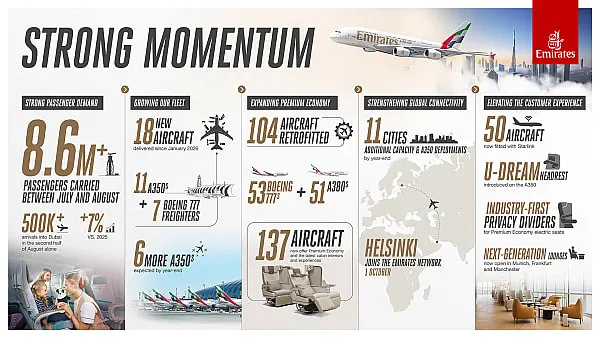
Emirates Winter Booking Momentum Grows Amid Fleet Expansion
Emirates carried 8.6 million passengers this summer and enters winter with strong demand as it accelerates fleet retrofits and network growth.

Air Arabia Consortium Gains AOC for New Dammam Budget Airline
A Saudi GACA-led consortium including Air Arabia has secured an AOC to launch a new budget airline based at Dammam's King Fahd International Airport.
Turkish Airlines Exits Luanda as Angola Hub Struggles
Turkish Airlines dropped its Luanda route as Angola's new airport struggles to attract traffic, handling only 756,028 passengers in 2025.

Red Sea Airlines Leases Two 737 MAX 8s for 2027 Expansion
Red Sea Airlines signed a lease for two Boeing 737 MAX 8 aircraft from SMBC Aviation Capital, arriving in 2027 to support its 14-aircraft fleet goal.
Avelo CEO Warns Airfares May Rise on Jet Fuel Price Spikes
Avelo Airlines CEO Andrew Levy warns that rising fuel costs may force fare increases as global jet fuel prices reach $171.01 per barrel.