Jet Fuel Prices Double; Airlines Face Mideast War Fallout

Aviation News Editor & Industry AnalystAviation News Editor & Industry Analyst delivering clear coverage for a worldwide audience.
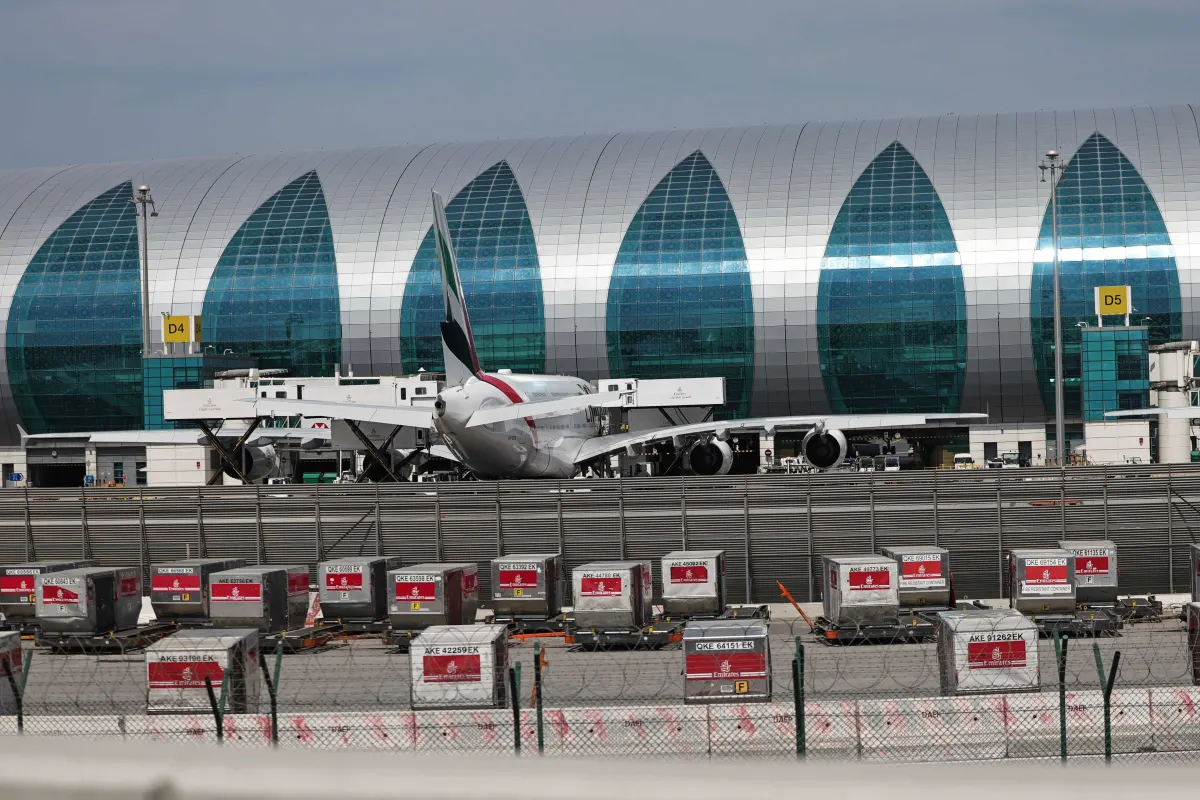
Global airlines face soaring costs as Middle East conflict doubles jet fuel prices, forcing fare hikes and impacting summer travel demand.
Key Takeaways
- •Soared to $173.91 per barrel, doubling since early January, according to the Platts index.
- •Exposes unhedged US carriers while providing a temporary cost advantage to hedged European airlines like Lufthansa.
- •Triggers fare hikes and fuel surcharges across Europe and Asia-Pacific ahead of the peak summer travel season.
- •Prompts travelers to delay bookings, creating demand uncertainty similar to the pandemic era.
Global airlines are confronting significant financial and operational headwinds as a war in the Middle East triggers a sharp spike in jet fuel prices and growing uncertainty among travelers. According to the S&P Global Platts Jet Fuel Price Index, the average global price for jet fuel surged to $173.91 per barrel on March 9, 2026, effectively doubling since the beginning of the year. The price shock threatens airline profitability just as the industry gears up for the critical summer booking season.
The rapid cost escalation is directly linked to geopolitical tensions, including threats to choke off traffic in the Strait of Hormuz, a critical global energy transit route. This has created a stark divide in the industry, exposing the risks of differing fuel procurement strategies. While Middle Eastern carriers like Qatar Airways, Emirates, and Etihad face the most immediate disruption, the impact is rippling across all major international airlines operating flights to or through the Gulf region.
A Tale of Two Strategies: Hedging vs. Exposure
The financial impact of the fuel crisis is not being felt equally across the industry, primarily due to divergent airline fuel hedging strategies. Major European carriers appear well-insulated from the immediate shock. According to its Q4 2025 earnings call, Lufthansa has secured 80% of its annual fuel needs at a fixed price. Similarly, Air France-KLM announced in February it had locked in prices for 70% of its fuel for the first half of 2026 and 60% for the third quarter. Budget carrier Ryanair is also well-protected by a similar strategy.
In contrast, the three largest U.S. carriers—United, Delta, and American—do not hedge their fuel costs, a strategy that leaves them fully exposed to spot price volatility. This exposure could significantly weaken their competitive position on lucrative North Atlantic routes, where they compete directly with their hedged European counterparts.
Despite hedging, some airlines are already passing costs to consumers. SAS (Scandinavian Airlines System) announced a temporary fare increase, while carriers in the Asia-Pacific region, including Qantas, Air India, and Cathay Pacific, have either raised fares or plan to do so shortly to offset the surging costs.
Impact on Summer Travel and Network Adjustments
The timing of the conflict is particularly damaging, occurring as North American and European travelers make reservations for the peak summer season. The combination of geopolitical uncertainty and rising ticket prices is already dampening demand. "This conflict is already having a negative impact on people's willingness to travel," said Olivier Mazzucchelli, CEO of Transavia France. "If you raise ticket prices, it's going to be a (new) negative effect."
This sentiment is echoed by air transport specialist Paul Chiambaretto of Montpellier Business School. "It's likely that there will be a bit more hesitancy and that passengers will book their flights less far in advance," he noted, a pattern of behavior previously observed during the COVID-19 pandemic. In response to shifting demand, some European carriers are already making network adjustments. Lufthansa and Air France have both announced increased flight frequencies to Asia, reallocating capacity away from the conflict region.
Historical Precedents and Industry Context
The current crisis mirrors previous geopolitical shocks that have roiled the aviation industry. In February 2022, the Russian invasion of Ukraine caused Brent crude and jet fuel prices to spike, forcing unhedged airlines to implement immediate fare hikes and fuel surcharges. An even more direct parallel is the 1990 Gulf War, which saw jet fuel prices more than double. That price shock inflicted severe financial losses across the industry and was a contributing factor in the bankruptcies of major carriers like Pan Am and Eastern Air Lines.
Technical Analysis
This development serves as a critical stress test for airline risk management, starkly illustrating the financial peril of unhedged fuel strategies—a lesson learned from past conflicts. The current disparity between hedged European airlines and their exposed U.S. rivals is more than a short-term cost issue; it has the potential to alter the competitive balance on key international routes for the next 6-12 months. While hedging provides a temporary shield, a prolonged period of high oil prices will inevitably force all carriers to raise fares, risking demand destruction. The event reaffirms that geopolitical stability in energy-producing regions remains a fundamental, non-negotiable component of global airline profitability.
What Comes Next
The first clear financial data revealing the full impact of the fuel price surge will become available during the Q1 2026 earnings season. According to their standard reporting schedules, major global airlines are expected to release these results between April and May 2026. These reports will be closely watched by investors to quantify the damage to unhedged carriers and assess the cost advantage gained by those with robust hedging programs like the one detailed by Lufthansa Group Investor Relations.
Why This Matters
The surge in jet fuel prices is more than a temporary cost headache; it highlights the aviation industry's profound vulnerability to geopolitical events. For airlines, it creates a clear divide between carriers with strong fuel hedging programs and those exposed to market volatility, potentially reshaping competitive dynamics on key international routes. For passengers, it signals an imminent rise in ticket prices and increased travel uncertainty ahead of the busiest season of the year.
Visit omniflights.com for the latest commercial aviation news and airline industry updates. For reporting on UAP sightings, investigations, and aviation-related encounters, see the UAPs section at omniflights.com/uaps.
Written by Ujjwal Sukhwani
Aviation News Editor & Industry Analyst delivering clear coverage for a worldwide audience. Covers flight operations, safety regulations, and market trends with expert analysis.
Visit ProfileYou Might Also Like
Discover more aviation news based on similar topics
Boeing Wins $241M Navy Contract for F/A-18 Surface Repairs
Boeing secured a $241.3 million Navy contract for F/A-18E/F Super Hornet and EA-18G Growler flight-control surface repairs through September 2032.
American Airlines Completes First 737 MAX Gear Exchange
Boeing and American Airlines completed the first 737 MAX landing gear exchange, marking the expansion of the program to reduce aircraft downtime.

Iberia Gains Unrestricted A350 Heavy Maintenance Approval
The Spanish aviation regulator AESA has granted Iberia Maintenance unrestricted authorization to perform heavy maintenance on the Airbus A350 fleet.
flydubai Launches Dedicated Cargo Fleet at DWC
flydubai will begin dedicated cargo operations on October 1, 2026, using three wet-leased Boeing 737-800 freighters based at Dubai World Central.
Boeing Deliveries Dip in August as Q2 Revenue Hits $24.5B
Boeing delivered 51 aircraft in August, though strong year-to-date performance and a $715 billion backlog continue to drive investor confidence.
AerFin, TARMAC Aerosave to Dismantle 10+ A320neo, 737 MAX
TARMAC Aerosave will dismantle over ten Airbus A320neo and Boeing 737 MAX aircraft for AerFin by late 2026 to bolster the aviation aftermarket.