IndiGo Plots Global Expansion With A350 and A321XLR

Aviation News Editor & Industry AnalystAviation News Editor & Industry Analyst delivering clear coverage for a worldwide audience.
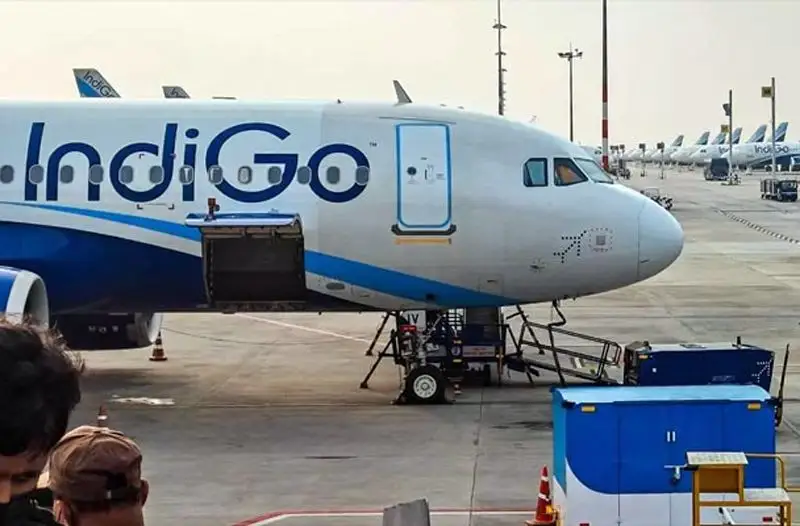
IndiGo is launching a major international expansion, leveraging a domestic market share of over 66% and upcoming Airbus A350 wide-body deliveries.
Key Takeaways
- •IndiGo appoints veteran executive Willie Walsh as its new CEO.
- •Airline holds a dominant 66.3% share of India's domestic market.
- •IndiGo will terminate its Norse Atlantic 787 damp lease by October.
- •Deliveries of 60 ordered Airbus A350-900 wide-bodies begin in 2028.
As IndiGo celebrates 20 years of operations, the carrier is launching an ambitious IndiGo international expansion to capture global diaspora traffic. To steer this transition, former IATA head Willie Walsh takes over as Willie Walsh IndiGo CEO on August 3, 2026. This leadership change coincides with a long-term fleet evolution, anchored by a major IndiGo Airbus A350 order and the upcoming termination of the carrier's Norse Atlantic 787 damp lease by October 31, 2026.
This strategic pivot marks a fundamental shift for an airline that built its empire on domestic dominance, currently holding a 66.3% domestic market share in India as of June 2026. By transitioning from a pure low-cost carrier (LCC) model to a dual-class international operator, IndiGo aims to reclaim lucrative point-to-point traffic from Gulf hub carriers. The airline will utilize incoming Airbus A321 Extra Long Range (A321XLR) aircraft and wide-body Airbus A350-900 jets to bypass traditional intermediate hubs and connect the Indian diaspora directly to major global markets.
Restructuring the Fleet and Ending Damp Leases
IndiGo's international strategy is adapting to a volatile geopolitical landscape. The airline announced it will discontinue wide-body operations on October 25, 2026, and officially conclude its damp lease agreement for Norse Atlantic Airways' Boeing 787 aircraft on October 31, 2026. This decision is driven by a challenging operating environment shaped by ongoing West Asia conflicts and strict airspace restrictions imposed by various civil aviation authorities. These geopolitical headwinds have forced flight reroutings, driving up operational costs and rendering leased wide-body operations temporarily unviable.
According to Abhijit Dasgupta, SVP of Planning and Revenue Management at IndiGo, "The global aviation industry continues to navigate ongoing geopolitical uncertainties, necessitating a prudent deployment of resources in the short term while preserving long-term strategic objectives." To maintain financial discipline, the airline is shifting its aircraft financing strategy, moving away from operating leases toward finance leases. Managing Director Rahul Bhatia noted that finance leases provide critical optionality, allowing the carrier to convert them back into operating leases if market conditions shift.
Leadership Handover and the Vision 2030 Targets
On August 3, 2026, Willie Walsh—the veteran executive who previously served as Director General of the IATA (International Air Transport Association) and led IAG (International Airlines Group)—will officially assume the role of CEO. Walsh's extensive experience managing both low-cost and full-service network carriers is expected to guide IndiGo through its complex international expansion. He inherits an airline operating more than 2,200 daily flights to over 140 destinations, carrying 123 million passengers in fiscal year 2026.
Under its Vision 2030 program, IndiGo targets a fleet of more than 550 aircraft, 3,000 daily departures, and 200 million annual passengers. Crucially, the airline plans to increase its international capacity from approximately 30% of its network to 40% by 2030. This expansion will rely on its massive order book of over 900 aircraft, including a historic 500-aircraft Airbus A320neo family order placed in 2023, and 60 firm orders for the Airbus A350-900 due to begin delivery in 2028.
IndiGo is also diversifying its product offering to attract premium travelers. The airline has introduced IndiGoStretch, a premium cabin currently available on more than 25 routes with over 2,800 seats, which is projected to expand to 4,300 seats by March 2027. Additionally, its loyalty program, IndiGo BluChip, has secured over 13 million members since its launch. Cargo operations also continue to scale rapidly, with volumes reaching 450,000 tonnes in fiscal year 2026, representing a 26% year-on-year increase. The carrier's network also spans the Middle East, Southeast Asia, and the SAARC (South Asian Association for Regional Cooperation) region.
Airbus A350-900 vs. Boeing 787-9 Dreamliner
To support its long-haul ambitions, IndiGo has committed to the Airbus A350-900, doubling its initial order to 60 aircraft with options for 40 more. Below is a technical comparison of the A350-900 against the Boeing 787-9, which IndiGo previously operated under damp lease agreements:
| Metric | Airbus A350-900 | Boeing 787-9 Dreamliner |
|---|---|---|
| Range | ~8,100 nm | ~7,530 nm |
| Typical 2-class seating | 300-350 | 290 |
Historical Precedents in Low-Cost Long-Haul
IndiGo's transition to wide-body aircraft carries inherent commercial risks. Historically, low-cost carriers have struggled to scale long-haul networks while preserving their core cost advantages. For example, between 2013 and 2021, Norwegian Air Shuttle aggressively expanded transatlantic low-cost flights but accumulated massive debt, eventually abandoning long-haul operations entirely to avoid bankruptcy. Similarly, AirAsia X's long-haul low-cost model faced severe financial difficulties during its expansion phase, leading to a massive debt restructuring and a significantly scaled-back network. IndiGo's management aims to avoid these pitfalls by maintaining strict cost discipline and leveraging its massive domestic feed.
The Operational Economics of IndiGo's Long-Haul Pivot
This development indicates that IndiGo is attempting to rewrite the traditional low-cost carrier playbook by anchoring its long-haul expansion to an incredibly dense domestic network. Historically, long-haul low-cost carriers failed because they lacked connecting passenger traffic to fill wide-body cabins during off-peak seasons. IndiGo, however, controls a dominant 66.3% domestic market share, allowing it to funnel domestic passengers from over 95 Indian cities into primary hubs like Delhi and Mumbai before flying them internationally. This structural advantage, combined with a highly fuel-efficient fleet where over four-fifths of aircraft are next-generation models, positions IndiGo to challenge established Gulf hub carriers. Furthermore, the transition toward finance leases lowers long-term capital costs, mitigating the high ownership expenses that typically doom long-haul LCC operations.
Regulatory Milestones and Fleet Deliveries
Several critical milestones will define IndiGo's operational trajectory over the next several years. The airline is scheduled to conclude its Norse Atlantic Airways Boeing 787 damp lease operations by October 31, 2026. Following this, the carrier is expected to begin inducting its long-awaited Airbus A321XLR aircraft to expand medium-haul international routes. Looking further ahead, the delivery of the first Airbus A350-900 wide-body aircraft is confirmed for 2028, representing the official launch of IndiGo's owned long-haul network. Managing Director Rahul Bhatia indicated that decisions regarding further next-generation aircraft orders will likely be deferred to the early 2030s, allowing the airline to assess evolving engine and airframe technologies before committing to its post-2035 fleet plan.
Why the Repatriation of Indian Traffic Matters
This development signals a major structural shift in global aviation, as Indian carriers attempt to repatriate international traffic that has historically flown through Middle Eastern hubs. For Gulf carriers, IndiGo's direct long-haul flights pose a direct threat to their high-yield transit passenger volumes. For the broader industry, a successful transition by IndiGo would prove that a highly disciplined short-haul low-cost carrier can successfully scale a wide-body long-haul network by leveraging domestic dominance.
Frequently Asked Questions
- When will IndiGo receive its first Airbus A350 aircraft?
- IndiGo is scheduled to begin receiving its wide-body Airbus A350-900 aircraft in 2028, following an order for 60 of the type.
- Why is IndiGo ending its Norse Atlantic Boeing 787 damp lease?
- IndiGo is terminating the damp lease of the Norse Atlantic Boeing 787 aircraft by October 31, 2026, due to high operating costs and West Asia airspace restrictions.
- Who is the new CEO of IndiGo?
- Willie Walsh, the former Director General of the International Air Transport Association, became the CEO of IndiGo on August 3, 2026.
For global airline trends and commercial aviation news, turn to omniflights.com. Track policy changes, airspace rules, and global aviation governance in the Regulatory category at omniflights.com/regulatory.
Written by Ujjwal Sukhwani
Aviation News Editor & Industry Analyst delivering clear coverage for a worldwide audience. Covers flight operations, safety regulations, and market trends with expert analysis.
Visit ProfileYou Might Also Like
Discover more aviation news based on similar topics
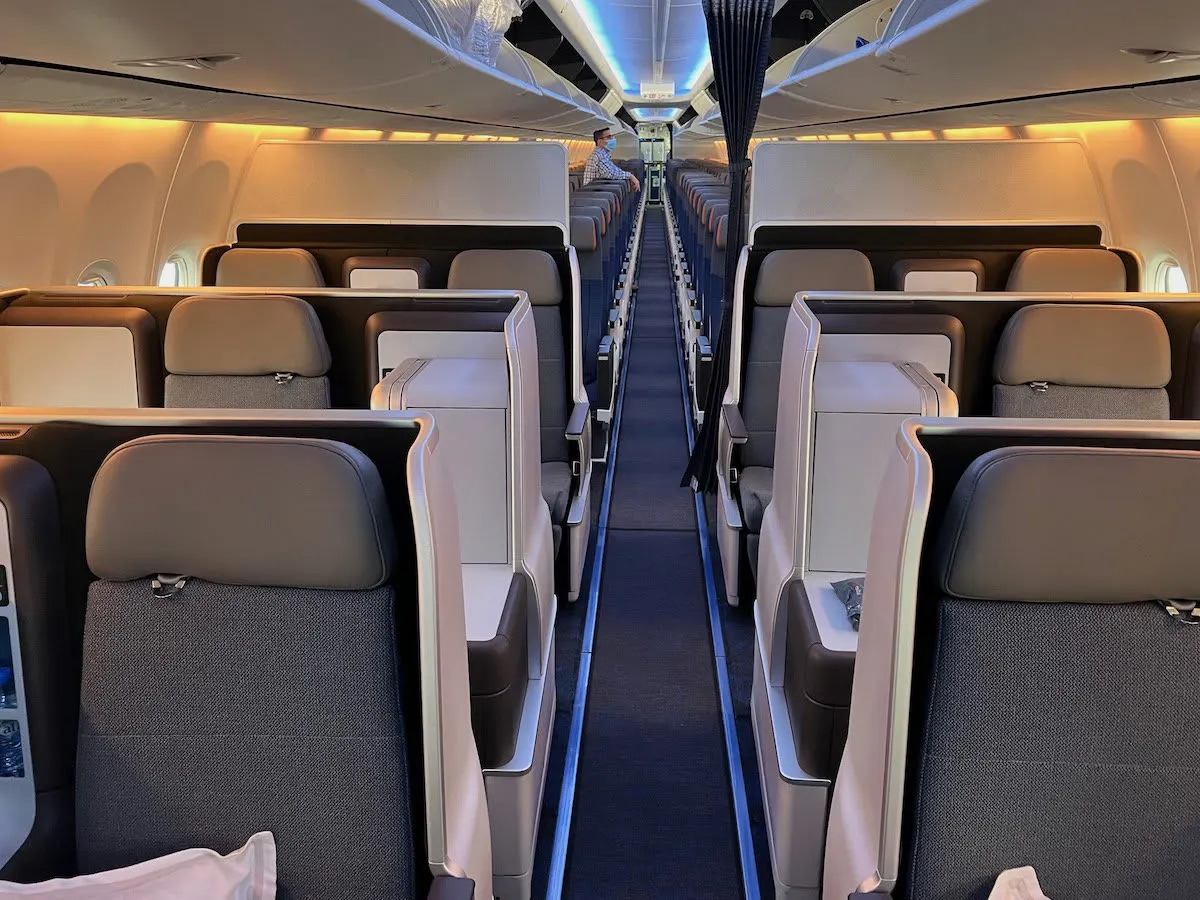
Flydubai Upgrading 21 Boeing 737 MAX 8s to Flat Bed Seats
Flydubai is retrofitting 21 Boeing 737 MAX 8 aircraft with lie-flat business class seats to standardize its premium product by late 2027.
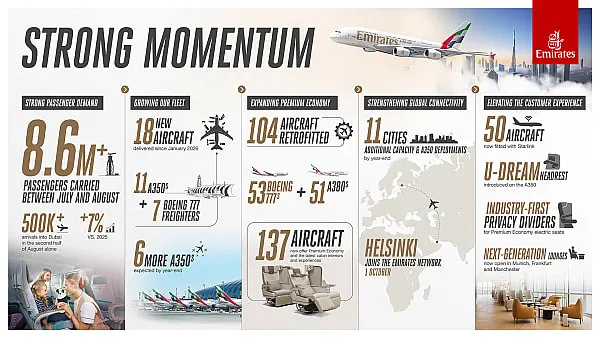
Emirates Winter Booking Momentum Grows Amid Fleet Expansion
Emirates carried 8.6 million passengers this summer and enters winter with strong demand as it accelerates fleet retrofits and network growth.
Air Arabia Consortium Gains AOC for New Dammam Budget Airline
A Saudi GACA-led consortium including Air Arabia has secured an AOC to launch a new budget airline based at Dammam's King Fahd International Airport.
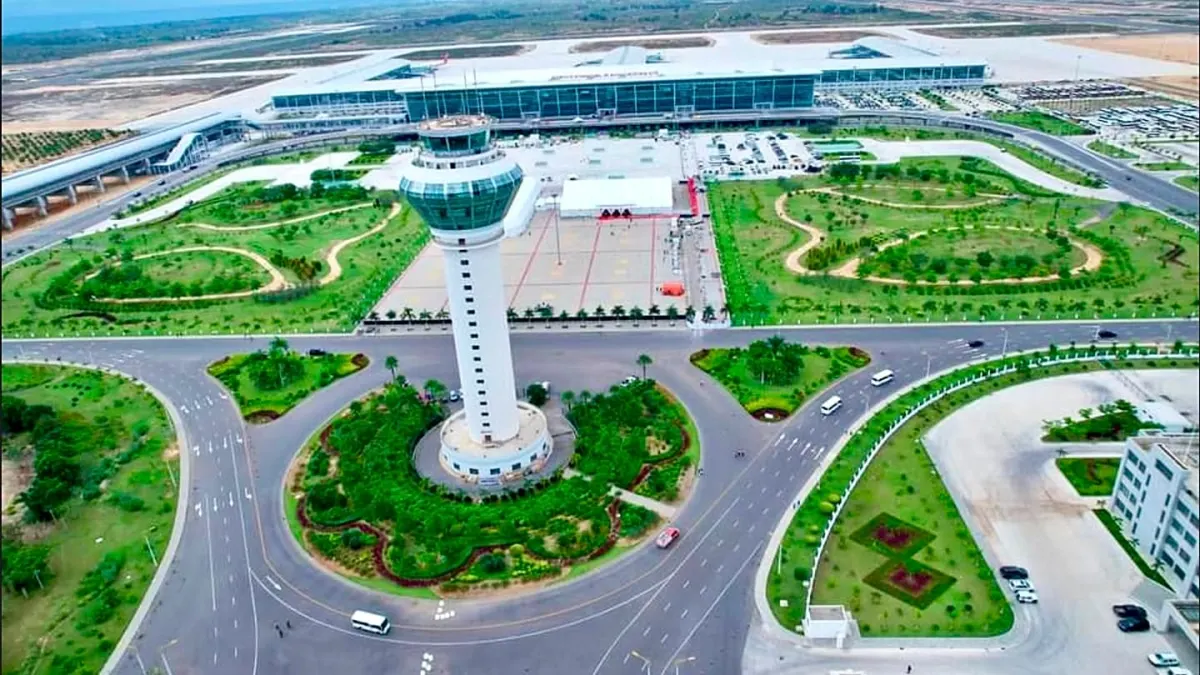
Turkish Airlines Exits Luanda as Angola Hub Struggles
Turkish Airlines dropped its Luanda route as Angola's new airport struggles to attract traffic, handling only 756,028 passengers in 2025.

Red Sea Airlines Leases Two 737 MAX 8s for 2027 Expansion
Red Sea Airlines signed a lease for two Boeing 737 MAX 8 aircraft from SMBC Aviation Capital, arriving in 2027 to support its 14-aircraft fleet goal.
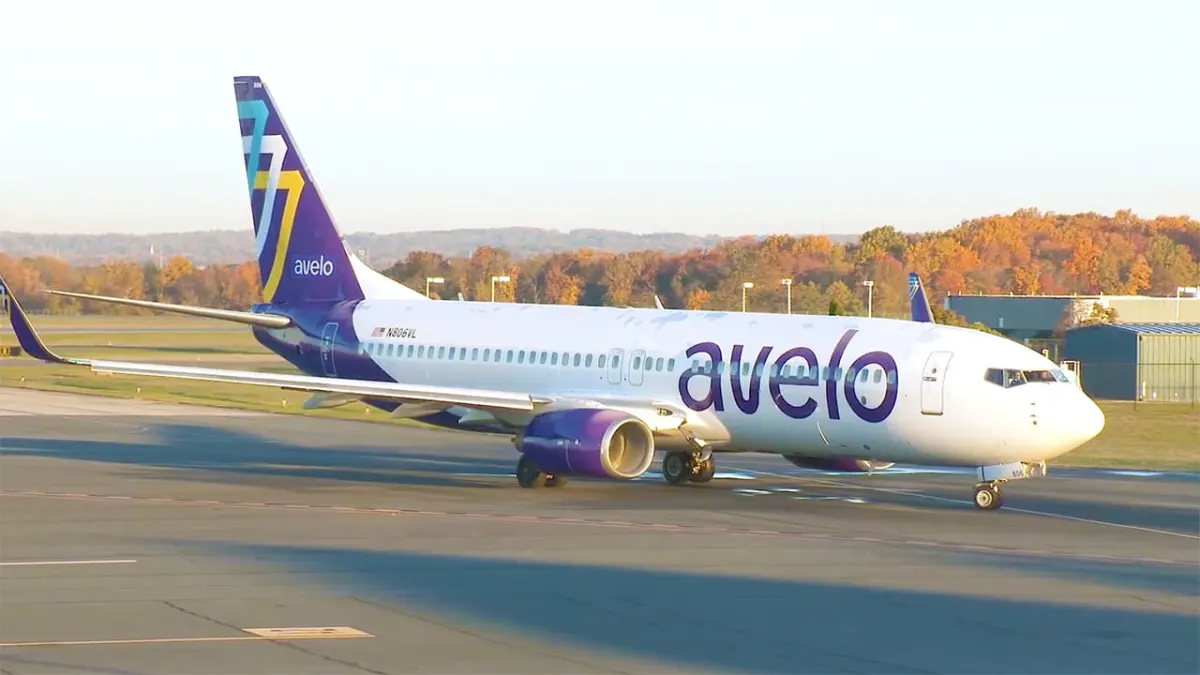
Avelo CEO Warns Airfares May Rise on Jet Fuel Price Spikes
Avelo Airlines CEO Andrew Levy warns that rising fuel costs may force fare increases as global jet fuel prices reach $171.01 per barrel.