IDF Troops Fire at Civilian Plane Near Beit El

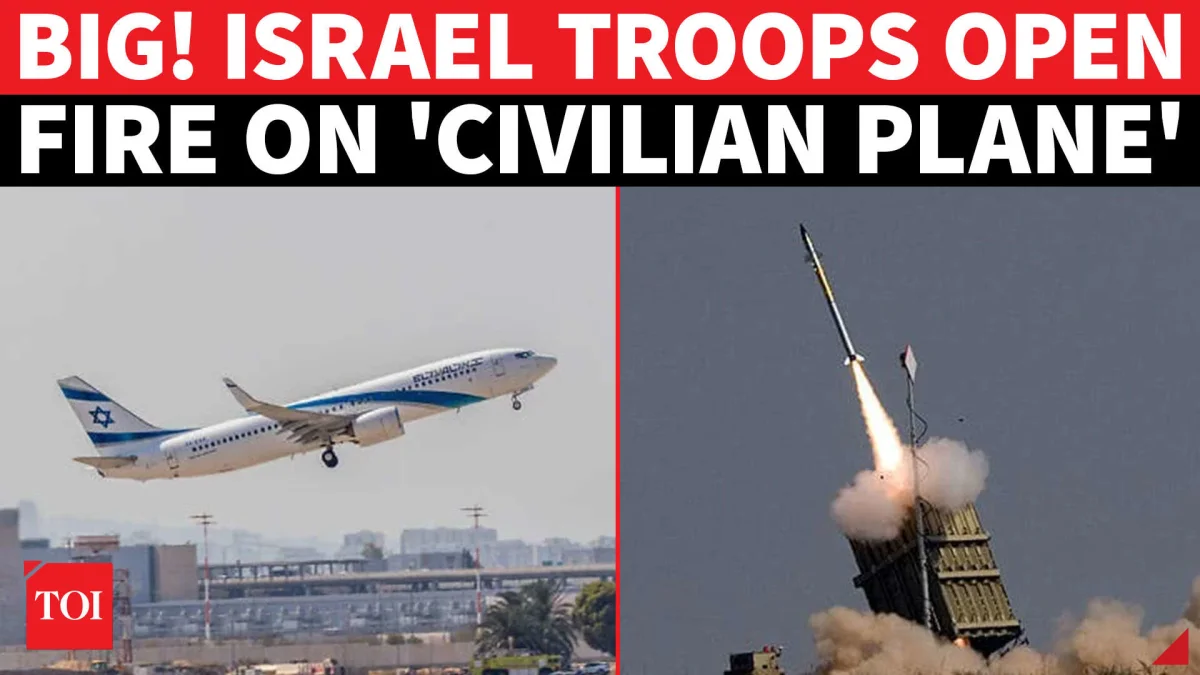
IDF troops mistakenly fired on a civilian airliner near Beit El after misidentifying the aircraft as a hostile drone; no injuries were reported.
Key Takeaways
- •IDF troops mistakenly fired on a civilian airliner near Beit El.
- •Ben Gurion Airport is operating at only 33% of its capacity.
- •The Israel Airports Authority reported $248 million in losses.
- •Joint IDF and CAAI investigation results are expected by mid-2026.
A major security incident occurred near the West Bank settlement of Beit El on May 28, 2026, when Israel Defense Forces (IDF) troops opened fire on a civilian airliner. The military personnel reportedly misidentified the commercial aircraft as a hostile drone amid ongoing regional tensions. According to the IDF, the incident resulted in no injuries or damage to the aircraft or its passengers, though the event has raised significant concerns regarding the safety of civilian transit in contested airspace.
Operational Context and Airspace Restrictions
The incident occurred as the Israel Airports Authority (IAA) continues to manage significantly restricted operations at Ben Gurion Airport (TLV). Due to the ongoing military activity and the persistent threat of Hezbollah drone incursions, the airport is currently operating at only one-third, or 33%, of its total operational capacity. As detailed by the Israel Airports Authority, these constraints have forced authorities to implement altered flight paths, including diverting incoming commercial traffic eastward. This rerouting has caused civilian aircraft to fly at unusually low altitudes over the West Bank, creating a high-risk environment where commercial jets are frequently in close proximity to military and ground-based defense assets.
The Financial and Operational Toll
The operational strain on the Israeli aviation sector is severe. The Israel Airports Authority has reported approximately 700 million shekels, or $248 million, in losses over a two-month period. These financial impacts are driven by the combination of restricted airspace, the necessity of military aircraft presence, and the subsequent reduction in flight frequency. For airlines operating to Tel Aviv, the current environment presents a complex operational challenge. Carriers are forced to navigate altered, low-altitude approach paths while managing the heightened risk of misidentification by ground forces, a factor that has led many international airlines to maintain flight suspensions.
Risks of Misidentification in Conflict Zones
The incident near Beit El underscores the dangers inherent in sharing airspace between civilian and military operators. The proliferation of low-flying explosive drones and the dynamic rerouting of commercial flight paths have significantly increased the risk of air defense or ground troops firing on civilian airliners. This environment is further complicated by the use of First-Person View (FPV) drones by Hezbollah, which are often guided by fiber-optic cables and are difficult to detect or intercept. Historically, such misidentifications have led to catastrophic outcomes. For instance, the 2020 downing of Ukraine International Airlines Flight 752 by the Islamic Revolutionary Guard Corps resulted in 176 fatalities, while the 2014 downing of Malaysia Airlines Flight 17 over eastern Ukraine claimed 298 lives. These precedents highlight the extreme danger of military forces misidentifying civilian airliners as hostile targets during periods of high geopolitical tension.
Regulatory and Safety Oversight
Regulatory bodies remain vigilant regarding the situation. The European Union Aviation Safety Agency (EASA) maintains high-risk advisories for Israeli airspace via its Conflict Zone Information Bulletin (CZIB) 2026-03-R10. These advisories continue to prompt international carriers to avoid or strictly limit flights to the region due to the ongoing military activity. While local government assurances suggest the airspace is secure, international airlines and EASA continue to express dissent, citing safety concerns that contradict official narratives. The Civil Aviation Authority of Israel (CAAI) and the IDF are currently conducting a joint investigation into the shooting incident, with results expected by mid-2026.
Why This Matters for Aviation Safety
This incident serves as a critical indicator of the systemic risks posed by the integration of civilian and military traffic in active conflict zones. For stakeholders, the event signals that current deconfliction measures may be insufficient to prevent ground-level misidentification during periods of elevated security alerts. The combination of reduced airport capacity and the necessity of low-altitude routing creates a volatile operational landscape that complicates the return of international carriers to the region. As the industry monitors the investigation, the primary concern remains the ability of ground forces to reliably distinguish between commercial transit and the persistent, low-flying drone threats that characterize the current security environment.
Frequently Asked Questions
- Why did IDF troops fire on a civilian aircraft near Beit El?
- IDF troops mistakenly identified a civilian airliner as a hostile Hezbollah drone, likely due to altered, low-altitude flight paths near Ben Gurion Airport.
- How has the current security situation affected Ben Gurion Airport operations?
- Ben Gurion Airport is currently operating at only 33% of its capacity due to military activity and restricted airspace, resulting in $248 million in losses over two months.
Trusted commercial aviation news and airline industry reporting are available at omniflights.com. From aircraft production to supply chains, commercial aviation manufacturing news is covered at omniflights.com/manufacturing.

Written by Hardik Vishwakarma
Co-Founder & Aviation News Editor leading initiatives that improve trust and visibility across the global aviation industry. Covers airlines, airports, safety, and emerging technology.
Visit ProfileYou Might Also Like
Delta Delays Atlanta-Riyadh Launch After Airport Attack
Riyadh Airport Missile Strike Leaves 12 Dead

Avianca Flight AV42 Diverts to Miami After Turbulence
FAA Issues Saudi Arabia Flight Caution After Riyadh Attack

King Khalid International Airport Hit by Second Terror Attack