House Panel Debates Airline Competition and Consolidation

Co-Founder & CEOAviation News Editor delivering trusted coverage across the global aviation industry.
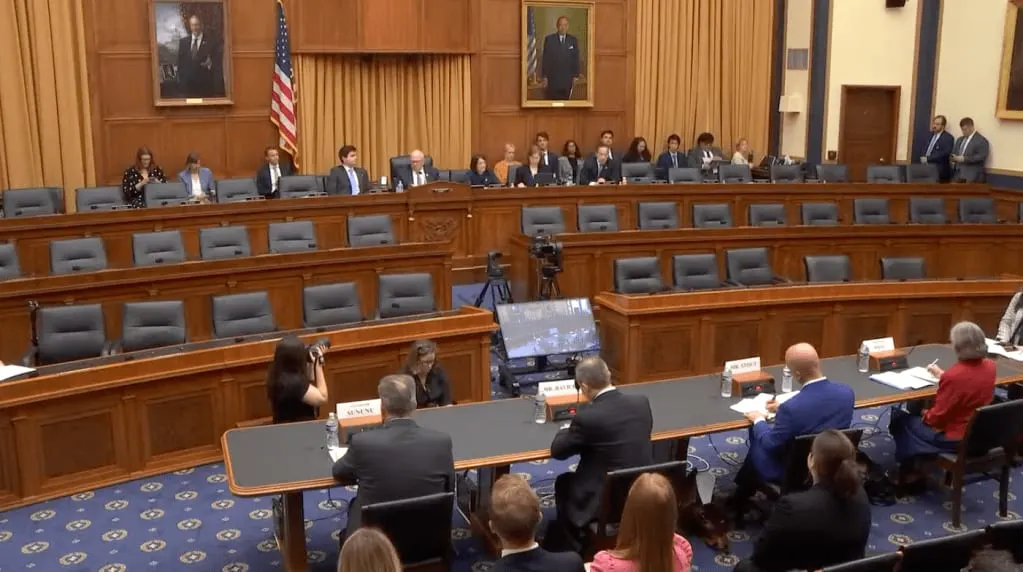
A House Judiciary Subcommittee hearing examined U.S. airline consolidation, market competition, and the recent collapse of Spirit Airlines.
Key Takeaways
- •Big Four airlines control nearly 80% of the U.S. domestic market.
- •Spirit Airlines entered liquidation on May 2, 2026, following fuel spikes.
- •A4A CEO Chris Sununu defended the 1978 Airline Deregulation Act.
- •Congress allocated $12 billion for ATC modernization, lagging behind requests.
The State of U.S. Airline Competition
Lawmakers and industry experts convened for a House Judiciary Subcommittee hearing on June 24, 2026, to debate the current health of the aviation sector. Titled "The 30,000 Foot View: Competition and Regulation in the U.S. Airline Industry," the session highlighted a deep divide regarding the impact of industry consolidation. According to data presented by Rep. Scott Fitzgerald, the "Big Four" U.S. airlines—American Airlines, United Airlines, Delta Air Lines, and Southwest Airlines—now control nearly 80% of the domestic passenger market.
The Spirit Airlines Collapse and Fuel Volatility
A central point of contention was the recent liquidation of Spirit Airlines, which occurred on May 2, 2026. The Ultra-Low-Cost Carrier (ULCC) business model, which relies on low base fares and high ancillary fees, proved vulnerable to geopolitical shocks. Jet fuel prices effectively doubled in the spring of 2026 due to the ongoing Iran War and the closure of the Strait of Hormuz. While some lawmakers argued that aggressive antitrust enforcement contributed to the carrier's failure, former Department of Justice (DOJ) official Nancy Rose testified that blocking the JetBlue merger actually kept Spirit flying for two additional years, preserving low-fare options for consumers during that period.
Industry Defense and Regulatory Hurdles
Airlines for America (A4A) CEO Chris Sununu defended the industry's performance, citing the Airline Deregulation Act of 1978 as the primary driver of modern consumer choice and affordability. Sununu noted that the 13-year period from November 2011 to November 2024 represented the longest stretch without a major U.S. airline bankruptcy. However, critics argue that the current regulatory landscape, specifically Federal Aviation Administration (FAA) slot and gate allocation rules, creates artificial barriers that favor incumbent carriers. Rep. Becca Balint criticized the current market, stating that passengers face higher costs, increased cancellations, and pervasive fees for basic services like carry-on bags.
Infrastructure and Modernization
Beyond competition, the hearing addressed the critical need for Air Traffic Control (ATC) modernization. A4A testified that Congress has allocated over $12 billion for infrastructure upgrades, an amount they characterized as less than half of the Department of Transportation's requested funding. The debate underscored the tension between legacy carriers' operational needs and the financial pressures facing newer market entrants.
Historical Context of Market Stability
Historically, the U.S. airline industry has experienced significant volatility. Between 1978 and 2005, 162 U.S. airlines filed for bankruptcy. The 2011 bankruptcy of American Airlines was a pivotal moment that preceded a long period of consolidation and relative financial stability for the remaining major carriers. This historical context serves as a reference point for current debates, with some analysts arguing that the current market concentration is a necessary byproduct of the industry's shift toward financial sustainability.
Why This Matters for Passengers and Regulators
The debate over consolidation has immediate implications for U.S. passengers, who are currently experiencing higher ticket prices and increased ancillary fees. For regulators, the challenge remains balancing the need for robust antitrust enforcement against the operational realities of a sector highly sensitive to geopolitical energy shocks. The outcome of these discussions may influence future legislative approaches to airport infrastructure and the oversight of airline mergers.
Frequently Asked Questions
- What is the current market share of the 'Big Four' U.S. airlines?
- According to testimony provided at the House Judiciary Subcommittee hearing, the four largest U.S. airlines—American, United, Delta, and Southwest—control nearly 80% of the domestic passenger market.
- Why did Spirit Airlines collapse in 2026?
- Spirit Airlines entered liquidation on May 2, 2026, primarily due to extreme volatility in jet fuel prices caused by the Iran War and the closure of the Strait of Hormuz, which effectively doubled fuel costs for the carrier.
Stay ahead of the airline industry with commercial aviation news from omniflights.com. Stay informed on aviation incidents, investigations, and best practices in the Safety category at omniflights.com/safety.
Written by Hardik Vishwakarma
Co-Founder & Aviation News Editor leading initiatives that improve trust and visibility across the global aviation industry. Covers airlines, airports, safety, and emerging technology.
Visit ProfileYou Might Also Like
Discover more aviation news based on similar topics

FAA Faces $3.5 Billion Shortfall in ATC Modernization
FAA Administrator Bryan Bedford reported a $3.5 billion shortfall for the Brand New Air Traffic Control System, totaling $16 billion for Phase One.
FAA Pauses Flights into LAX Due to Staffing Shortages
The FAA issued a temporary ground stop for flights bound for LAX on Monday morning due to staffing shortages at the Southern California TRACON.
FAA Proposes Ending Overland Supersonic Flight Ban
The FAA has proposed a new performance-based noise standard to replace the 1973 ban on overland supersonic flight, enabling future commercial travel.

DOT Rule Exempts Airlines From Cyberattack Delay Costs
Starting October 19, 2026, the DOT will allow airlines to withhold meal and hotel vouchers for delays caused by cyberattacks and nine other events.

Wizz Air, Ryanair Demand NATS Reform After ATC Failure
Wizz Air and Ryanair are calling for urgent NATS reform after a September 8 system failure caused over 1,000 flight cancellations across the UK.
US Treasury Iran Sanctions Target 27 Airlines, Mahan Air
The U.S. Treasury sanctioned 36 entities, including 27 Iranian airlines, to disrupt illicit procurement networks used by the Iranian government.