Coulson C-130H Wins First USWFS Airtanker Contract

Co-Founder & CEOAviation News Editor delivering trusted coverage across the global aviation industry.
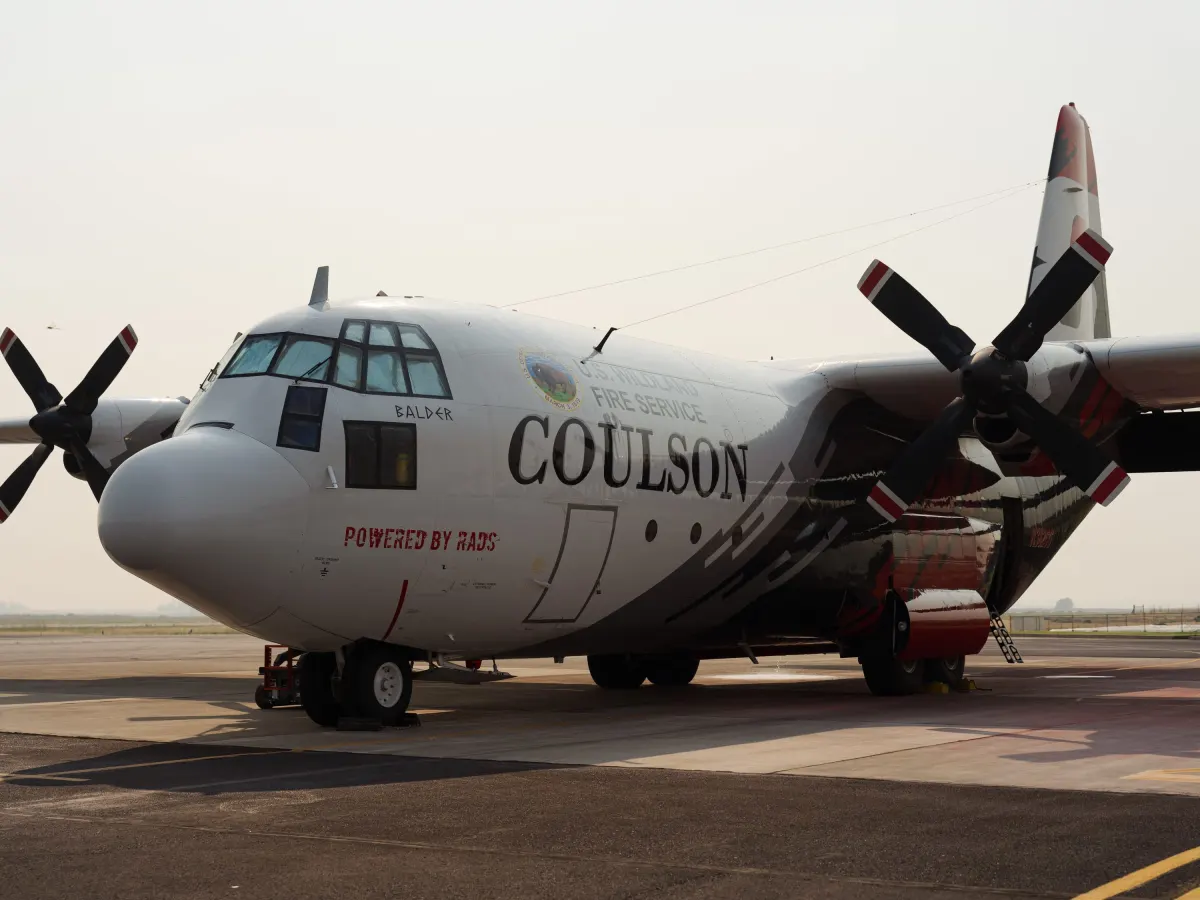
Coulson Aviation's 4,000-gallon C-130H secured a contract as the first Large Airtanker for the new U.S. Wildland Fire Service.
Key Takeaways
- •Coulson Aviation secures first Large Airtanker contract with the new USWFS.
- •Tanker 138 carries a class-leading 4,000 U.S. gallons of fire retardant.
- •Exclusive Use contract runs for a confirmed duration of 60 days.
- •Aircraft features proprietary RADS-XXL constant-flow tanking technology.
Coulson Aviation Tanker 138, a converted C-130H Large Airtanker registered as N382CG, has officially entered service under a new federal contract. The aircraft began a 60-day Exclusive Use contract with the newly established U.S. Wildland Fire Service (USWFS), marking a major milestone in federal aerial firefighting. This agreement represents the first time a Large Airtanker has been contracted by the unified agency, which was established to streamline national wildfire response.
The deployment of Tanker 138 provides the USWFS with an immediate, high-capacity initial and extended attack resource. Carrying 4,000 U.S. gallons of fire retardant, the modified Lockheed C-130 Hercules (H-model) (C-130H) delivers the largest payload currently available in the Large Airtanker class. As wildfire seasons become longer and more intense across North America, the integration of high-volume, tactical turboprop platforms is expected to enhance the speed and coverage of initial containment efforts.
Advanced Retardant Delivery Systems
Tanker 138 is equipped with Coulson’s proprietary Retardant Aerial Delivery System - Extra Extra Large (RADS-XXL). This advanced system provides flight crews with real-time cockpit control over flow rates and coverage levels. This technological capability allows for highly consistent retardant lines to be laid across varying terrain, airspeeds, and drop profiles.
During initial attack missions, the high-flow capability of the RADS-XXL system is critical for establishing rapid containment lines. When operating conditions permit, the C-130H can execute concentrated drops directly at the head of an advancing fire, or provide heavier coverage levels designed to penetrate dense forest canopies and thick undergrowth. According to Coulson Aviation, the company supports this deployment with dedicated flight, maintenance, and ground crews to ensure high operational availability throughout the 60-day contract period.
Stakeholder Impact and Competitive Dynamics
The implementation of this contract carries significant implications for multiple stakeholder groups. For the United States Wildland Fire Service (USWFS), securing a high-capacity, 4,000-gallon initial attack resource is a critical operational victory for its inaugural fire season as a unified federal agency. For Coulson Aviation, securing the first Large Airtanker contract under this newly formed service cements its market leadership and guarantees steady short-term utilization for Tanker 138. Conversely, competing aerial firefighting operators face heightened competitive pressure as Coulson captures early exclusive-use contracts under the consolidated federal procurement structure.
Regulatory Consolidation and Industry Precedents
In January 2026, the U.S. Department of the Interior announcement officially launched the United States Wildland Fire Service (USWFS). This regulatory shift consolidated the wildland fire programs of various Interior bureaus into a single, unified service to improve operational coordination and decision-making. This consolidation represents a broader industry trend toward the centralization of federal aerial firefighting procurement, which was historically managed separately by the U.S. Forest Service (USFS) and individual Department of the Interior bureaus.
This shift mirrors previous historical transitions in the aerial firefighting sector. In 2013, the U.S. Forest Service Next Generation Airtanker contracts accelerated the retirement of legacy, piston-powered P-2 Neptune and P-3 Orion aircraft in favor of modern turbine-powered platforms like the BAe-146 and RJ85. This transition established the modern Large Airtanker standards that Tanker 138 now fulfills. Additionally, in 2018, Coulson Aviation introduced the Boeing 737 FireLiner, demonstrating the viability of converting modern commercial transport aircraft into 4,000-gallon airtankers equipped with RADS technology.
Large Airtanker Capacity Comparison
The transition to next-generation platforms has highlighted the performance differences between legacy and modern airtankers.
| Metric | Coulson C-130H | Neptune Aviation BAe-146 |
|---|---|---|
| Retardant Capacity | 4,000 gallons | 3,000 gallons |
| Delivery System | RADS-XXL | Neptune Active Response Drop System |
The Aerodynamic and Flow Physics of Tactical Retardant Delivery
The deployment of Tanker 138 underscores a broader structural shift in aerial firefighting toward high-capacity, constant-flow delivery systems. Legacy gravity-drop tanks often suffered from inconsistent coverage, as the pressure head decreased as the tank emptied. In contrast, the RADS-XXL system utilizes computer-controlled doors to dynamically adjust the exit aperture, maintaining a constant flow rate regardless of the remaining fluid volume or aircraft pitch.
When paired with the aerodynamic properties of the C-130H, this technology mitigates the "trail-off" effect, where retardant lines thin out at the end of a drop. The four-engine turboprop configuration of the C-130H provides superior low-speed handling and immediate thrust response, which are critical when maneuvering at low altitudes in mountainous, smoke-obscured environments. This combination of constant-flow physics and tactical aircraft performance represents the current state of the art in initial-attack efficiency.
Contract Milestones and Operational Timelines
As Tanker 138 begins its operations, several key milestones will monitor the efficacy of this new federal contracting model.
- Late September to October 2026: The initial 60-day Exclusive Use contract for Tanker 138 is confirmed to conclude. At this point, the USWFS is expected to evaluate operational data from the deployment to inform future multi-year contracting strategies.
- Fiscal Year 2027: The USWFS is expected to expand its consolidated aviation procurement, potentially issuing new solicitations for additional Large Airtankers to build out its permanent federal fleet capability.
The Strategic Value of Unified Federal Procurement
This development is highly significant for the aerial firefighting industry because it validates the newly established USWFS as a viable, centralized contracting authority. For private operators like Coulson Aviation, the successful execution of this contract establishes a precedent for future high-capacity federal agreements. Ultimately, a more streamlined procurement process ensures that advanced firefighting assets can be deployed more rapidly to protect communities and natural resources across the United States.
Frequently Asked Questions
- What is the retardant capacity of Coulson Aviation's Tanker 138?
- Tanker 138 carries 4,000 U.S. gallons of fire retardant, which is the largest payload capacity currently available in the Large Airtanker class.
- When was the U.S. Wildland Fire Service established?
- The U.S. Wildland Fire Service was officially launched in January 2026 under the U.S. Department of the Interior to consolidate federal wildland fire management programs.
- What system does Tanker 138 use to drop retardant?
- Tanker 138 is equipped with Coulson's proprietary Retardant Aerial Delivery System - Extra Extra Large (RADS-XXL), which provides cockpit-controlled flow rates and coverage levels.
omniflights.com provides comprehensive commercial aviation news covering airlines, aircraft, and airports. Discover how innovation is shaping aviation through aircraft systems, avionics, and digital tools at omniflights.com/technology.
Written by Hardik Vishwakarma
Co-Founder & Aviation News Editor leading initiatives that improve trust and visibility across the global aviation industry. Covers airlines, airports, safety, and emerging technology.
Visit ProfileYou Might Also Like
Discover more aviation news based on similar topics

FAA Faces $3.5 Billion Shortfall in ATC Modernization
FAA Administrator Bryan Bedford reported a $3.5 billion shortfall for the Brand New Air Traffic Control System, totaling $16 billion for Phase One.

FAA Pauses Flights into LAX Due to Staffing Shortages
The FAA issued a temporary ground stop for flights bound for LAX on Monday morning due to staffing shortages at the Southern California TRACON.

FAA Proposes Ending Overland Supersonic Flight Ban
The FAA has proposed a new performance-based noise standard to replace the 1973 ban on overland supersonic flight, enabling future commercial travel.

DOT Rule Exempts Airlines From Cyberattack Delay Costs
Starting October 19, 2026, the DOT will allow airlines to withhold meal and hotel vouchers for delays caused by cyberattacks and nine other events.

Wizz Air, Ryanair Demand NATS Reform After ATC Failure
Wizz Air and Ryanair are calling for urgent NATS reform after a September 8 system failure caused over 1,000 flight cancellations across the UK.

US Treasury Iran Sanctions Target 27 Airlines, Mahan Air
The U.S. Treasury sanctioned 36 entities, including 27 Iranian airlines, to disrupt illicit procurement networks used by the Iranian government.