HKIA Opens Expanded Terminal 2 After $1.65B Upgrade

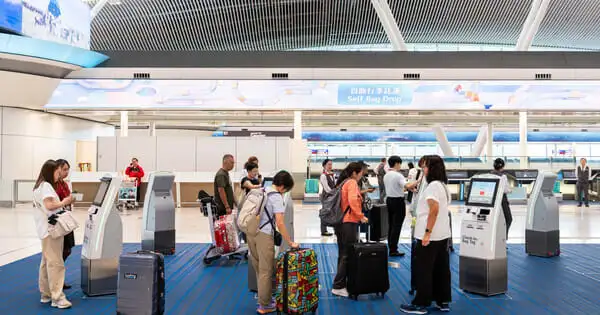
Hong Kong International Airport has opened its expanded Terminal 2, marking a major milestone in the $141.5 billion Three-Runway System project.
Key Takeaways
- •HKIA opened its expanded Terminal 2 following a 12.9 billion HKD upgrade.
- •The 300,000-square-meter facility features 108 hybrid check-in counters.
- •Biometric e-Security gates now permit facial recognition for passengers aged 7+.
- •All 15 designated airlines will complete their T2 relocation by June 10, 2026.
HKIA Launches Landmark Terminal Expansion
Hong Kong International Airport (HKIA) officially inaugurated its expanded Terminal 2 (T2) departures hall on May 27, 2026, marking a significant milestone in the airport's ongoing Three-Runway System (3RS) development. The Airport Authority Hong Kong (AAHK) invested approximately 12.9 billion HKD ($1.65 billion USD) into the upgrade, which introduces advanced automated processing infrastructure designed to solidify Hong Kong’s position as a premier global aviation hub. This expansion follows the original terminal's closure in November 2019, which initiated the comprehensive reconfiguration project.
Operational Impact of the Split-Terminal Model
The reopening signals a shift in passenger flow management at the hub, which processed 61 million passengers in 2025, a 15% year-over-year increase. Under the current configuration, T2 functions exclusively as a landside processing facility. Passengers for 15 designated regional and low-cost carriers will complete check-in and security screening at T2 before utilizing the Automated People Mover (APM) to transfer to Terminal 1 for boarding. This phased approach will remain in effect until the dedicated T2 airside concourse opens in 2027.
According to the Airport Authority Hong Kong press releases, the full relocation of check-in operations for the initial 15 airlines will be completed by June 10, 2026. While the project aims to drive efficiency, industry analysts have noted that the split-terminal model adds complexity to the passenger journey. Travelers with tight connections are encouraged to consult the official HKIA passenger guide to account for the necessary transit time between the two facilities.
Automation and Biometric Integration
The new T2 departures hall spans 300,000 square meters and integrates a high-density automated infrastructure, including 108 hybrid check-in counters, 68 self-bag-drop units, and 58 smart check-in kiosks. A core component of this upgrade is the deployment of 20 biometric e-Security Gates and 35 e-Channels. Under new regulations from the Hong Kong Immigration Department, the minimum age for facial recognition clearance has been lowered to 7 years old, a move expected to reduce total departure processing times by approximately 25%.
The Competitive Landscape
HKIA’s expansion is part of a broader regional race to capture post-pandemic travel growth. The airport is targeting an ultimate annual capacity of 100-120 million passengers, placing it in direct competition with the expansion plans of Singapore Changi Airport and the massive development of Dubai’s Al Maktoum International Airport. Historically, the project follows the precedent set by Singapore Changi’s multi-year Terminal 2 modernization, which similarly focused on integrating biometric technology and automated check-in to manage rising throughput.
While the infrastructure upgrades are extensive, some observers have raised concerns regarding the economic viability of the broader 'Skytopia' commercial ecosystem associated with the airport. Reports suggest that linked retail and commercial developments, such as the 11 Skies complex, have faced occupancy challenges linked to shifting consumption patterns and broader economic headwinds.
What Comes Next: The 2027 Concourse Milestone
The current opening represents the first phase of a multi-year transition. Following the June 10, 2026, deadline for airline relocations, the AAHK will focus on the final integration of the T2 airside concourse. Full commissioning of arrival facilities and the dedicated T2 concourse is confirmed for 2027, which will effectively eliminate the current requirement for APM transfers for departing passengers. This final phase will mark the completion of the 3RS project, providing the necessary capacity to meet the projected demand for the Greater Bay Area aviation market.
Why This Matters for Global Aviation
For the aviation industry, the HKIA expansion serves as a benchmark for how legacy hubs can integrate high-throughput automation into existing footprints. The reliance on touchless processing and biometric gates reflects a global shift toward reducing labor dependencies while enhancing security throughput. For connecting passengers, the success of this transition will depend on the effectiveness of the APM transit system in maintaining schedule integrity during peak operational hours.
Frequently Asked Questions
- What is the primary function of the newly opened Terminal 2 at HKIA?
- Terminal 2 currently serves as a landside processing facility for departures, handling check-in and security screening for 15 designated regional and low-cost airlines. Passengers must then use an Automated People Mover to transfer to Terminal 1 for boarding.
- How has the biometric security process changed at HKIA?
- The Hong Kong Immigration Department has deployed 20 new biometric e-Security Gates and 35 e-Channels. These systems now allow facial recognition clearance for passengers as young as 7 years old, which is expected to reduce processing times by 25%.
Stay ahead of the airline industry with commercial aviation news from omniflights.com. Track policy changes, airspace rules, and global aviation governance in the Regulatory category at omniflights.com/regulatory.

Written by Hardik Vishwakarma
Co-Founder & Aviation News Editor leading initiatives that improve trust and visibility across the global aviation industry. Covers airlines, airports, safety, and emerging technology.
Visit ProfileYou Might Also Like
IndiGo Opens Commercial Flights at Bhogapuram

Sydney Airport Master Plan 2045 Approved
Visakhapatnam Airport Ends Commercial Flights for 30 Years
NMIA Approves 13 Airlines for Cargo Operations

Hong Kong Air Cargo Lands First Navi Mumbai Freighter