Ghana Engages Boeing to Support National Airline Revival

Co-Founder & CEOAviation News Editor delivering trusted coverage across the global aviation industry.
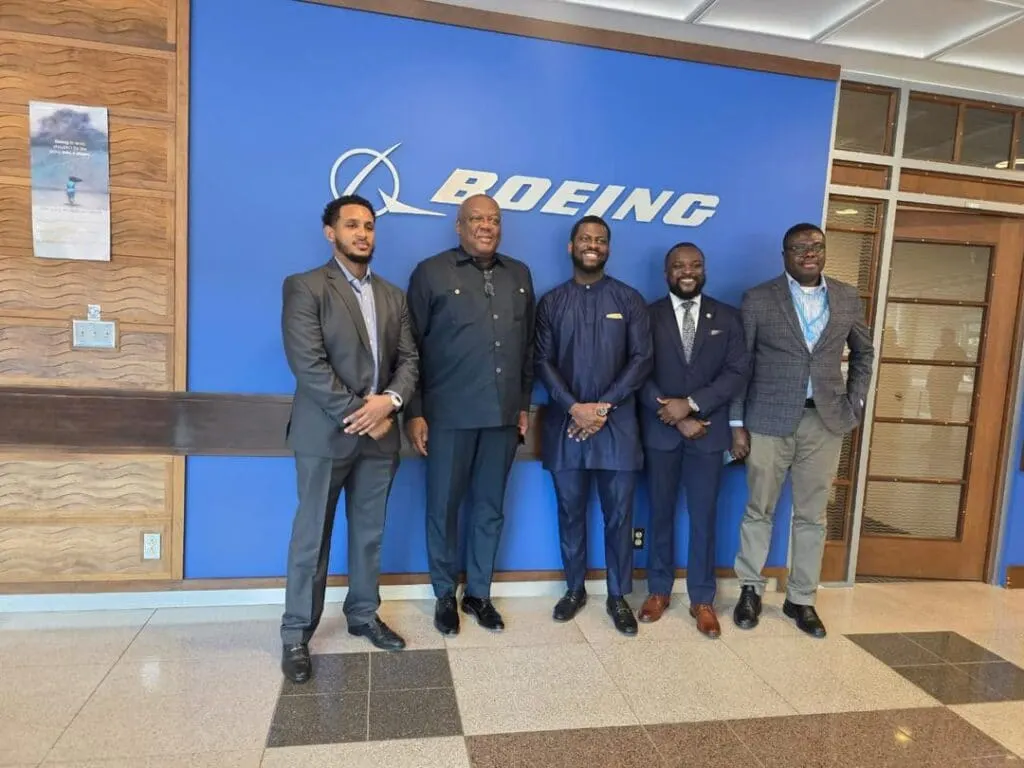
Ghana's government is in talks with Boeing to secure aircraft and support for its national airline revival, a key step in becoming a West African hub.
Key Takeaways
- •Engages Boeing for fleet acquisition and technical support for a new national carrier.
- •Advances plans for Accra International Airport to become a major West African hub.
- •Builds on infrastructure projects including a new Terminal 3 concourse and Gate C1 expansion.
- •Aims to avoid the financial and operational failures of previous national airlines.
The government of Ghana has initiated high-level discussions with U.S. aerospace manufacturer Boeing to collaborate on the re-establishment of a national airline. The move is a central component of Ghana's strategy to develop a major West African aviation hub and enhance international connectivity.
Ghana's Ambassador to the United States, Victor Emmanuel Smith, met with Boeing executives in Seattle to discuss potential partnerships for fleet acquisition, technical support, maintenance, and training. The engagement follows President John Mahama's directive for the National Airline Taskforce committee to present a definitive roadmap for the airline's revival. This initiative coincides with significant infrastructure investments at Accra International Airport (AIA), also known as Kotoka International Airport, which are designed to increase capacity and improve passenger experience.
Strategic Rationale and Economic Goals
During the meeting, Ambassador Smith emphasized the project's importance to Ghana's economic transformation. "We would appreciate a partnership with Boeing in securing appropriate equipment to ensure that the rebirth of a national carrier does not elude us," he stated. The government views a new flag carrier as a critical tool for advancing trade, tourism, and investment, while also creating jobs and reinforcing Ghana's position as a gateway to the sub-region.
Boeing executives, including Senior Manager Rachel Peterson, expressed optimism about the Ghanaian market, noting its strong growth potential. The discussions explored a comprehensive support package beyond aircraft sales, including maintenance infrastructure and aviation training programs to ensure long-term operational viability. This aligns with a broader trend across the continent, where nations are reviving state-owned airlines to capture transit revenue, as demonstrated by Ethiopian Airlines, which generated $6.1 billion in 2024.
Infrastructure Upgrades at Accra Airport
Supporting the airline's revival is a major expansion at AIA. President Mahama recently launched the expansion of Gate C1 at Terminal 3 and the construction of a new concourse connecting Terminals 2 and 3. According to the Ministry of Transport, the new concourse will feature five new Passenger Boarding Bridges, five passenger holding areas, one VIP Lounge, and four Business Lounges. These upgrades are essential for accommodating increased traffic from a new home-based carrier and other international airlines. Ghana Airports Company Limited (GACL), which operates the airport, oversees the expansion projects at Terminal 3, a facility designed to handle 5 million passengers per annum.
Separately, the Ministry of Foreign Affairs announced the temporary closure of the Very Very Important Person (VVIP) Lounge at AIA from April 3 to April 10, 2026, for renovation works.
Historical Context and Industry Impact
The current effort to launch a national airline is informed by past failures. Ghana Airways, the country's original flag carrier, was liquidated in 2004 due to overwhelming debt and mismanagement. Its successor, Ghana International Airlines, a public-private venture, also ceased operations in 2010 after facing financial difficulties. These historical precedents highlight the significant financial and operational challenges the new task force must navigate to ensure sustainability.
The successful launch of a new Ghanaian carrier would have a notable impact on the regional aviation landscape. For GACL, it promises increased revenue and operational capacity. For foreign airlines operating in Ghana, it introduces a new competitor that could capture a significant share of local and transit traffic. For Boeing, a partnership represents a key opportunity to secure new aircraft orders and service contracts in the growing West African market.
What Comes Next
The National Airline Taskforce is expected to present its detailed roadmap to President Mahama in early May 2026, outlining the proposed business model, fleet strategy, and timeline for the new airline. The completion of the VVIP lounge renovation at AIA is confirmed for April 10, 2026, according to the Ministry of Foreign Affairs. Following the roadmap's submission, further negotiations with potential strategic partners, including Boeing, are anticipated to formalize agreements on aircraft and technical support.
Why This Matters
Ghana's renewed push for a national airline, backed by concrete infrastructure investment and high-level talks with a major OEM like Boeing, signals a serious strategic attempt to capture the economic benefits of aviation. If successful, it could create a powerful new hub in West Africa, enhance regional connectivity, and provide a sustainable model for state-involved carriers on the continent, learning from the costly lessons of its predecessors.
Frequently Asked Questions
- Why is Ghana in talks with Boeing?
- Ghana is engaging Boeing to secure suitable aircraft, technical support, and training for the revival of its national airline. This partnership is a key part of Ghana's strategy to re-establish a flag carrier and position itself as a major aviation hub in West Africa.
- What happened to Ghana's previous national airlines?
- Ghana has had two previous national carriers fail. Ghana Airways ceased operations in 2004 due to significant debt and mismanagement, while Ghana International Airlines, a public-private partnership, suspended operations in 2010 amid financial difficulties.
- What upgrades are happening at Accra International Airport?
- Accra International Airport is undergoing significant expansion, including the development of a new concourse linking Terminals 2 and 3 and the expansion of Gate C1. The new concourse will add five new passenger boarding bridges, a VIP lounge, and four business lounges to increase capacity.
Stay ahead of the airline industry with commercial aviation news from omniflights.com. For detailed airline coverage, route changes, and fleet moves, explore the Airlines section at omniflights.com/airlines.
Written by Hardik Vishwakarma
Co-Founder & Aviation News Editor leading initiatives that improve trust and visibility across the global aviation industry. Covers airlines, airports, safety, and emerging technology.
Visit ProfileYou Might Also Like
Discover more aviation news based on similar topics

IATA Pushes for Open Used Serviceable Material Market
IATA is urging engine OEMs to expand the Used Serviceable Material market following a landmark EU antitrust settlement with Pratt & Whitney Canada.

Virgin Atlantic A330 Retirement Boosts SAS Fleet Capacity
Virgin Atlantic is retiring its aging A330-300 fleet, with five airframes acquired by SAS to bridge near-term intercontinental capacity gaps.
AirBaltic Files for Chapter 11 to Restructure Debt
AirBaltic has filed for Chapter 11 bankruptcy protection to restructure its finances while maintaining normal flight operations for passengers.
Boeing Wins $241M Navy Contract for F/A-18 Surface Repairs
Boeing secured a $241.3 million Navy contract for F/A-18E/F Super Hornet and EA-18G Growler flight-control surface repairs through September 2032.
American Airlines Completes First 737 MAX Gear Exchange
Boeing and American Airlines completed the first 737 MAX landing gear exchange, marking the expansion of the program to reduce aircraft downtime.

Iberia Gains Unrestricted A350 Heavy Maintenance Approval
The Spanish aviation regulator AESA has granted Iberia Maintenance unrestricted authorization to perform heavy maintenance on the Airbus A350 fleet.