Fraport Cuts 2026 Frankfurt Airport Forecast to 63.2M

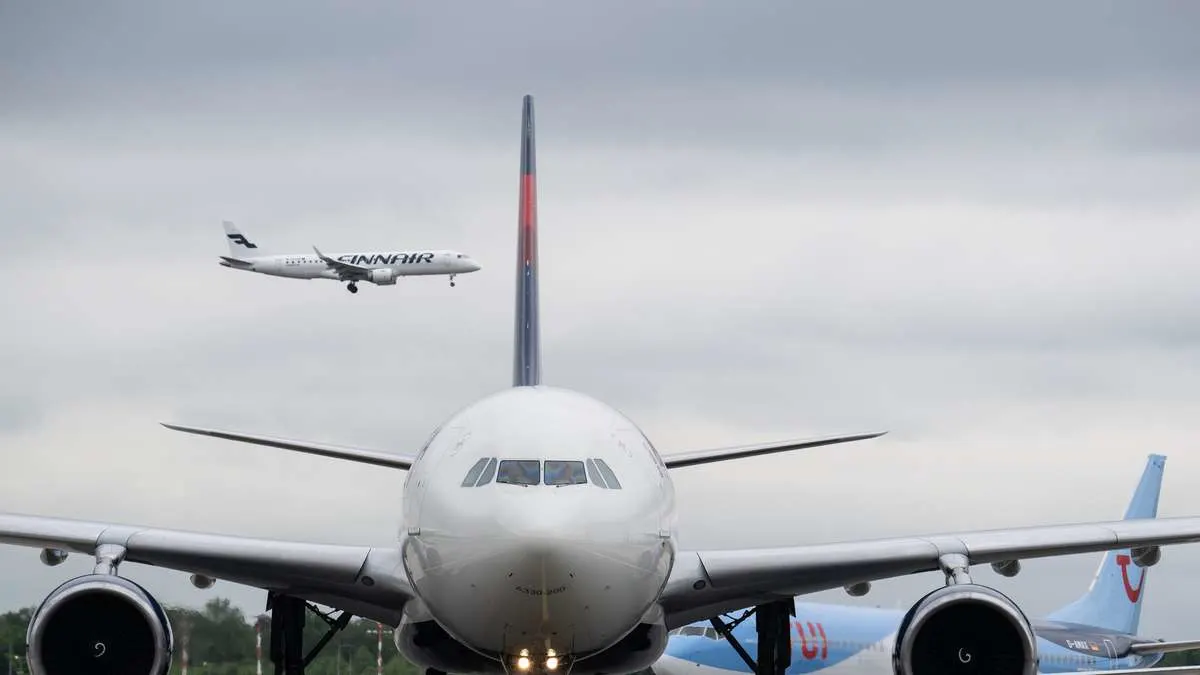
Fraport lowered its 2026 passenger forecast to 63.2 million as strikes and geopolitical tensions impact Frankfurt Airport traffic.
Key Takeaways
- •Fraport lowers its 2026 passenger forecast to 63.2 million.
- •Lufthansa strikes affected 700,000 passengers in early 2026.
- •Middle East traffic at Frankfurt fell 35% in the first half.
- •Fraport maintains its overall financial guidance for the year.
German airport operator Fraport has lowered its Fraport passenger forecast 2026 for its primary hub, expecting full-year passenger volume to reach only 63.2 million passengers. This revised outlook aligns with the latest Frankfurt Airport traffic statistics showing a contraction in passenger volumes. The downward revision reflects the compounding Lufthansa strikes impact alongside geopolitical tensions in the Middle East and concerns over a potential jet fuel supply shortage.
The reduction from the initial projection of 65 million to 66 million passengers underscores the vulnerability of major European aviation hubs to labor disputes and regional instability. While Fraport continues to report growth in its international portfolio, the slowdown at FRA (Frankfurt Airport) represents a significant operational headwind for both the airport operator and its primary tenant, Lufthansa. The revised targets emphasize how localized operational disruptions can rapidly alter annual capacity projections.
Traffic Contraction and Operational Headwinds
According to official traffic data, Frankfurt Airport handled approximately 28.9 million passengers during the first half of 2026, marking a 0.8% decline compared to the same period in 2025. The downward trend was highlighted in June 2026, when passenger volumes dropped by 1.7% year-over-year to 5.7 million travelers, as confirmed in Fraport's June 2026 traffic release. The MDax (Mid-Cap DAX) listed operator noted that these figures have forced a realignment of expectations, shifting the full-year target to match the baseline established in Fraport's 2025 annual report of 63.2 million passengers.
Fraport CEO Stefan Schulte attributed the decline to several distinct factors. Industrial disputes played a major role, with early 2026 strikes by Lufthansa personnel directly impacting approximately 700,000 passengers at Frankfurt. Furthermore, the ongoing conflict in Iran severely disrupted Middle East traffic, which experienced a 35% drop at Frankfurt Airport in the first half of 2026, totaling only 880,000 passengers.
An additional factor was consumer and airline anxiety regarding fuel logistics. Public discussions regarding a potential kerosene deficit, linked to geopolitical blockades in the Strait of Hormuz, caused booking hesitation. This was addressed in a Fraport policy briefing detailing coordination on fuel security. In response to these concerns, the German government assessed national jet fuel reserves under an Aviation Fuel Supply Security Assessment conducted by the German National Security Council (Nationale Sicherheitsrat) to stabilize industry confidence.
The revised forecast carries varying consequences for key stakeholders. For the Lufthansa Group, which maintains its primary hub at Frankfurt, the combination of strikes and lower Middle East demand has led to significant capacity reductions. Frankfurt Airport Retail & Commercial Tenants face a medium-severity impact, as a reduction of nearly 3 million expected passengers directly lowers foot traffic and retail revenue. Conversely, for Fraport AG Investors, the impact remains low; although shares faced short-term pressure, the operator's decision to maintain its overall financial guidance mitigated broader sell-offs.
From an alternative standpoint, labor representatives have defended the industrial actions. The labor union ver.di (Vereinte Dienstleistungsgewerkschaft) has argued that the strikes were a necessary measure to secure fair wages amid high inflation, rejecting the perspective that labor disputes are solely responsible for the airport's traffic underperformance.
Global Diversification and Historical Precedents
The current traffic slump at Frankfurt Airport contrasts with broader international trends within Fraport's global network. While the German hub struggled, other group airports demonstrated resilience. For instance, Ljubljana Airport recorded a 12.7% increase in passenger volume during the same period. This divergence highlights a growing decoupling of airport profitability from home-hub passenger volumes, as Fraport relies on international portfolio growth, cargo, and retail segments to offset domestic declines.
This pattern of localized geopolitical disruption has historical precedents. In 2023 and 2024, escalations in the Middle East Conflict forced airlines to suspend flights to several regional destinations, causing a temporary dip in Middle East traffic for major European hubs. However, that precedent resulted in a rapid recovery once routes stabilized, indicating that major hubs can absorb localized geopolitical shocks through diversification into other regions, such as Africa and the Far East, which grew by 8% and 6.4% respectively in the first half of 2026.
The Geopolitical and Operational Drag on Hub Capacity
This development indicates that major European aviation hubs are increasingly sensitive to systemic operational shocks that compound simultaneously. The convergence of labor unrest, airspace restrictions, and fuel supply anxieties represents a structural shift in how hub capacity is managed. Historically, major airports could absorb a single disruptive event, such as a localized strike, by rerouting traffic or relying on robust peak-season demand. However, the current environment shows that when domestic labor disputes align with severe geopolitical restrictions—such as the 35% drop in Middle East traffic—the recovery trajectory is significantly flattened. This forces a strategic reassessment by hub operators, who must now balance the high fixed costs of domestic infrastructure against more volatile, geopolitically sensitive hub-and-spoke networks. The data suggests that future airport growth will depend heavily on international asset diversification to buffer against domestic operational volatility.
Tracking the Full-Year Traffic Milestone
Looking ahead, several key operational and regulatory milestones will determine whether Frankfurt Airport can meet its revised targets. The most critical benchmark will be the Full-Year 2026 Traffic Figures Release for Frankfurt Airport, which is expected to be published by Fraport AG in January 2027. This release will confirm whether the airport successfully stabilized its passenger volumes at the 63.2 million mark or if further capacity reductions occurred during the winter schedule. Additionally, the industry will monitor ongoing assessments by the German National Security Council regarding fuel logistics to ensure that no further supply anxieties disrupt winter operations.
The Read for Hub Operators and Investors
This development signals that the recovery of major European aviation hubs remains fragile and highly susceptible to external shocks. For aviation professionals, it demonstrates that domestic labor stability and secure supply chains are just as critical to hub performance as passenger demand. Ultimately, Fraport’s ability to maintain its financial guidance despite a passenger deficit highlights the growing importance of global asset diversification in modern airport management.
Frequently Asked Questions
- Why did Fraport lower its 2026 passenger forecast for Frankfurt Airport?
- Fraport lowered its forecast due to a combination of Lufthansa strikes that affected 700,000 passengers, a 35% drop in Middle East traffic caused by the Iran conflict, and passenger hesitation stemming from public debates over jet fuel supply security.
- What is the revised passenger forecast for Frankfurt Airport in 2026?
- Fraport now expects Frankfurt Airport to handle 63.2 million passengers in 2026, which is on par with the 2025 volume and down from the initial projection of 65 million to 66 million.
- How has the Middle East conflict impacted traffic at Frankfurt Airport?
- Middle East passenger traffic at Frankfurt Airport fell by 35% in the first half of 2026, totaling only about 880,000 passengers as airlines reduced capacity due to the conflict in Iran.
For global airline trends and commercial aviation news, turn to omniflights.com. For detailed airline coverage, route changes, and fleet moves, explore the Airlines section at omniflights.com/airlines.

Written by Ujjwal Sukhwani
Aviation News Editor & Industry Analyst delivering clear coverage for a worldwide audience. Covers flight operations, safety regulations, and market trends with expert analysis.
Visit ProfileYou Might Also Like

IndiGo Opens Commercial Flights at Bhogapuram

Sydney Airport Master Plan 2045 Approved

Visakhapatnam Airport Ends Commercial Flights for 30 Years
NMIA Approves 13 Airlines for Cargo Operations

Hong Kong Air Cargo Lands First Navi Mumbai Freighter