FAA Selects PANYNJ and NUAIR for New York eVTOL Integration Pilot Program

Aviation News Editor & Industry AnalystAviation News Editor & Industry Analyst delivering clear coverage for a worldwide audience.
The FAA selected PANYNJ and NUAIR for its eVTOL Integration Pilot Program, making Syracuse a key hub for Advanced Air Mobility testing in the Northeast.
Key Takeaways
- •Selected by FAA for landmark eVTOL Integration Pilot Program (eIPP)
- •Establishes Syracuse as a key operational hub for Advanced Air Mobility testing
- •Leverages 1,900 square miles of existing BVLOS airspace for complex operations
- •Aims to generate operational data for future nationwide AAM regulations
The U.S. Department of Transportation (DOT) and the Federal Aviation Administration (FAA) have selected the Port Authority of New York and New Jersey (PANYNJ) to lead one of eight national projects in the new eVTOL Integration Pilot Program (eIPP). This selection positions Central New York, specifically through the Northeast UAS Airspace Integration Research Alliance (NUAIR) and Syracuse Hancock International Airport (SYR), as a critical operational hub for testing the next generation of electric aircraft.
The eIPP moves Advanced Air Mobility (AAM) concepts from controlled testing environments into the complex reality of the U.S. National Airspace System. The program is designed to generate crucial operational data on Electric Vertical Takeoff and Landing (eVTOL) aircraft, informing future federal regulations and accelerating the path to commercialization for services like air taxis and cargo delivery. According to the U.S. Department of Transportation, the PANYNJ project is one of the most comprehensive, set to test 12 distinct operational concepts across New York and New England.
Program Background and Syracuse's Role
The eIPP was established following the June 2025 'Unleashing American Drone Dominance' Executive Order, which directed the FAA to expedite the integration of AAM technologies. The program aims to create public-private partnerships to tackle key challenges, including airspace management, community engagement, and infrastructure development.
Syracuse's selection as an operational hub is largely due to its advanced infrastructure. Operated by the Syracuse Regional Airport Authority (SRAA), the airport is part of an FAA-accepted airspace that covers 1,900 square miles of Central New York, enabling complex Beyond Visual Line of Sight (BVLOS) operations. This existing framework, detailed by NUAIR, allows for the safe testing of uncrewed and optionally piloted aircraft alongside regular commercial traffic—a capability unique in North America where SYR is the only commercial airport with fully integrated remotely piloted aircraft like the MQ-9 Reaper operating with commercial flights.
"This selection proves that the United States is serious about leading the world in Advanced Air Mobility," said Ken Stewart, President & CEO of NUAIR. He highlighted that Syracuse's established airspace infrastructure could serve as a blueprint for other communities nationwide. FAA Deputy Administrator Chris Rocheleau added that the partnerships "will provide valuable operational experience to inform the standards needed for safe AAM integration into the National Airspace System."
AAM manufacturer BETA Technologies is a significant participant, having been selected for 7 of the 8 eIPP projects nationwide, underscoring its central role in the emerging industry. The company will work closely with NUAIR and other partners at Syracuse to test its electric aircraft for cargo and medical logistics missions.
Industry Impact & Historical Precedent
The eIPP is the direct successor to the UAS Integration Pilot Program (UAS IPP), which ran from 2017 to 2020. That earlier program successfully generated data that informed regulations for small drone operations, including BVLOS and package delivery. The eIPP applies this proven model to larger eVTOL aircraft, signaling a major industry trend of moving from sandbox testing to pre-commercial, revenue-generating flights. This shift is critical for AAM manufacturers, as it provides access to real-world airport environments and air traffic control integration necessary to accelerate FAA certification. For the Central New York economy, the program is expected to drive significant investment and job creation.
Technical Analysis
This development indicates a critical transition for the AAM sector, moving from hardware development to logistical and regulatory integration. The eIPP framework, modeled on the successful UAS IPP, provides a structured pathway to de-risk commercialization by allowing operators and regulators to co-develop procedures in a live environment. The focus on multi-state, regional proposals like PANYNJ's demonstrates that the FAA and DOT are prioritizing the creation of viable transportation networks over isolated technology demonstrations. Syracuse's role is pivotal, as its unique BVLOS infrastructure offers a scalable model for integrating uncrewed traffic at commercial airports, one of the most significant long-term challenges for the AAM ecosystem.
Community and Competitive Response
While the program promises quieter, cleaner aviation, it is not without opposition. According to the Long Island Civic Alliance, some local communities near proposed vertiports and existing airports remain concerned about potential noise and increased air traffic. Research from a NASA VANGARD study suggests that even though eVTOLs are quieter than helicopters, their unique high-frequency sound profile may be more noticeable to urban residents. Concurrently, aviation market analysts note that established legacy helicopter companies may increase lobbying efforts to influence regulatory policies and protect their market share from the emerging competition.
What Comes Next
The FAA is expected to finalize Other Transaction Agreements (OTAs) with the selected lead participants, including PANYNJ, in the second quarter of 2026. Following the finalization of these agreements, the first eIPP operational flights are expected to commence in the summer of 2026. The program is slated to run for three years, generating a continuous stream of data for FAA rulemaking.
Why This Matters
The eVTOL Integration Pilot Program represents a foundational step in building the regulatory and operational framework for Advanced Air Mobility in the United States. By bridging the gap between testing and commercial service, the program accelerates the timeline for bringing eVTOL services to market. For the aviation industry, it provides a clear roadmap for integration, while positioning New York and its partners at the forefront of this new aviation frontier.
Access up-to-date commercial aviation news and airline industry developments via omniflights.com. Track policy changes, airspace rules, and global aviation governance in the Regulatory category at omniflights.com/regulatory.
Written by Ujjwal Sukhwani
Aviation News Editor & Industry Analyst delivering clear coverage for a worldwide audience. Covers flight operations, safety regulations, and market trends with expert analysis.
Visit ProfileYou Might Also Like
Discover more aviation news based on similar topics

Trump Orders Release of 161 Declassified UAP Files
The Trump administration released 161 declassified UAP files via its new PURSUE portal, a move praised for transparency but criticized as a political ploy.

DOE Agent Death Sparks UAP Whistleblower Questions
The 2021 death of a DOE special agent is under new scrutiny following claims he planned to expose secret government UAP programs before he died.

Researcher Claims 4 Alien Species Recovered; Pentagon Denies
Physicist Hal Puthoff alleges the US recovered 4 alien species, sparking debate amid official Pentagon denials from its AARO UAP report.

Declassified FBI Files Detail Nazi Saucer Claims
The DoD has declassified 162 historical UAP files, which include unverified informant claims about Nazi flying saucers, under its PURSUE transparency plan.

Apollo 17 UAP Encounter Detailed in Declassified Files
The Pentagon released 162 declassified UFO files revealing the Apollo 17 crew's 1972 encounter with unexplained 'very bright particles' in lunar orbit.
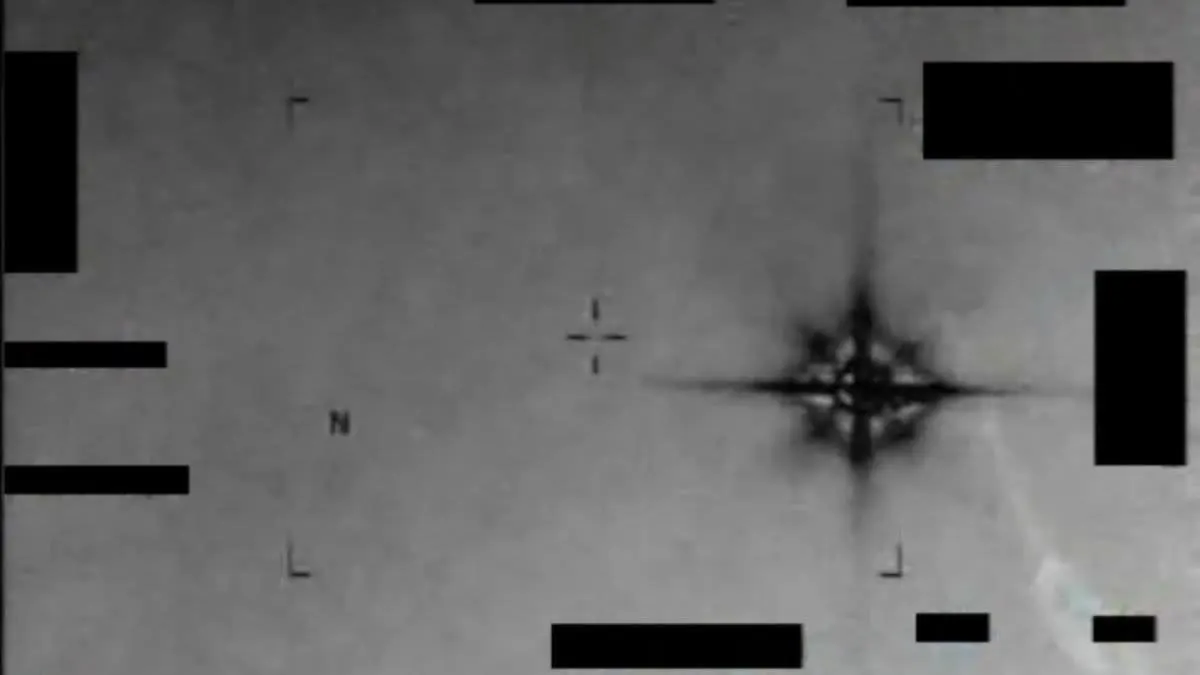
AARO Releases 2013 Star-Shaped UAP Video
The US government released 162 declassified UAP files, including a 2013 video of a star-shaped object that experts suggest is a sensor artifact.