FAA Proposes Noise-Based Civil Supersonic Flight Rules

Co-Founder & CEOAviation News Editor delivering trusted coverage across the global aviation industry.
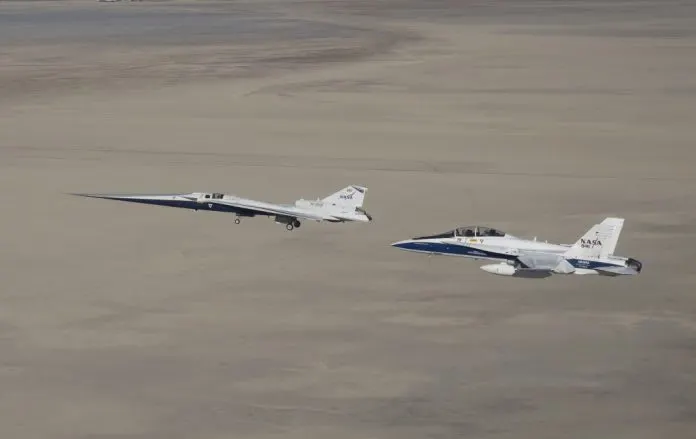
The FAA issued a proposal for noise-based certification standards, aiming to lift the 50-year ban on civil supersonic flight over U.S. land.
Key Takeaways
- •FAA proposes noise-based standards to replace the 1973 overland supersonic ban.
- •NASA's X-59 reached Mach 1.4 at 55,000 feet in June 2026 tests.
- •New regulations aim to finalize noise certification standards by mid-2027.
- •Policy follows the 2025 executive order to accelerate supersonic aviation.
The Federal Aviation Administration (FAA) has officially initiated a regulatory shift aimed at restoring civil supersonic flight over U.S. land. On June 30, 2026, Transportation Secretary Sean Duffy announced a proposed rule to implement noise-based certification standards, a move designed to replace the long-standing FAA supersonic ban that has prohibited commercial aircraft from exceeding the speed of sound over domestic territory since 1973. This initiative follows Executive Order 14304, signed by President Donald Trump in June 2025, which mandated that federal agencies accelerate the return of supersonic aviation.
Technological Foundations
The regulatory proposal relies heavily on advancements in Mach cutoff technology and low-boom design. Central to this development is the X-59 Quesst aircraft, a joint project between the National Aeronautics and Space Administration (NASA) and Lockheed Martin. The experimental jet is engineered to produce a quiet "sonic thump" rather than the explosive sonic boom associated with legacy supersonic aircraft. According to NASA, the X-59 successfully completed a test flight on June 12, 2026, reaching a speed of Mach 1.4 (approximately 925 mph) at an altitude of 55,000 feet. FAA Administrator Bryan Bedford noted that these engineering breakthroughs in materials science and noise reduction provide the technical foundation necessary to transition away from speed-based restrictions toward performance-based noise limits.
X-59 Quesst vs. Concorde: Key Specifications
| Metric | NASA X-59 | Aérospatiale/BAC Concorde |
|---|---|---|
| Top Speed | Mach 1.4 | Mach 2.04 |
| Cruising Altitude | 55,000 ft | 60,000 ft |
| Acoustic Signature | Quiet sonic thump (~75 PLdB) | Loud sonic boom (~105 PLdB) |
Industry and Stakeholder Impact
The move provides a clear regulatory pathway for manufacturers to certify next-generation commercial supersonic jets. For U.S. domestic airlines, the repeal of 14 CFR 91.817 could enable the operation of supersonic aircraft on transcontinental routes, potentially halving travel times. However, the proposal faces scrutiny from environmental and community noise advocates, who argue that the increased fuel consumption of supersonic jets may conflict with broader aviation sustainability goals. Additionally, these groups have expressed concerns regarding the potential for community disruption caused by repeated "sonic thumps" during routine operations.
The Regulatory Path Forward
The FAA has opened the Notice of Proposed Rulemaking (NPRM) (Docket FAA-2026-6935) for public comment to refine the noise thresholds. The agency is expected to finalize these certification and operational rules by mid-2027. In the interim, NASA plans to conduct community overflights throughout late 2026 and 2027 to gather data on public perception of the X-59’s acoustic profile. These tests are critical to determining the final noise limits that will govern future commercial supersonic operations.
Why This Matters for Aviation Policy
This development marks a significant pivot from the historical precedent set by the retirement of the Concorde in October 2003, which was largely driven by high maintenance costs and strict noise-related operating restrictions. By shifting to a noise-based certification model, the FAA is attempting to decouple supersonic speed from the environmental and noise-related externalities that previously rendered the technology commercially non-viable. The success of this policy will depend on whether manufacturers can demonstrate that modern aircraft can meet these stringent noise standards while maintaining the economic efficiency required for commercial viability in a modern, cost-conscious aviation market.
Frequently Asked Questions
- What is the goal of the FAA's new supersonic flight proposal?
- The FAA is proposing to replace the 1973 ban on civil supersonic flight over U.S. land with new noise-based certification standards. This change aims to allow for the future operation of commercial supersonic aircraft that can fly faster than the speed of sound without creating disruptive sonic booms.
- How does the NASA X-59 Quesst aircraft differ from the Concorde?
- The X-59 Quesst is designed to produce a quiet 'sonic thump' (approximately 75 PLdB) compared to the loud sonic boom (approximately 105 PLdB) produced by the Concorde. Additionally, the X-59 reaches speeds of Mach 1.4, whereas the Concorde was capable of reaching Mach 2.04.
Access up-to-date commercial aviation news and airline industry developments via omniflights.com. For reporting on UAP sightings, investigations, and aviation-related encounters, see the UAPs section at omniflights.com/uaps.
Written by Hardik Vishwakarma
Co-Founder & Aviation News Editor leading initiatives that improve trust and visibility across the global aviation industry. Covers airlines, airports, safety, and emerging technology.
Visit ProfileYou Might Also Like
Discover more aviation news based on similar topics

FAA Faces $3.5 Billion Shortfall in ATC Modernization
FAA Administrator Bryan Bedford reported a $3.5 billion shortfall for the Brand New Air Traffic Control System, totaling $16 billion for Phase One.
FAA Pauses Flights into LAX Due to Staffing Shortages
The FAA issued a temporary ground stop for flights bound for LAX on Monday morning due to staffing shortages at the Southern California TRACON.
FAA Proposes Ending Overland Supersonic Flight Ban
The FAA has proposed a new performance-based noise standard to replace the 1973 ban on overland supersonic flight, enabling future commercial travel.

DOT Rule Exempts Airlines From Cyberattack Delay Costs
Starting October 19, 2026, the DOT will allow airlines to withhold meal and hotel vouchers for delays caused by cyberattacks and nine other events.

Wizz Air, Ryanair Demand NATS Reform After ATC Failure
Wizz Air and Ryanair are calling for urgent NATS reform after a September 8 system failure caused over 1,000 flight cancellations across the UK.

US Treasury Iran Sanctions Target 27 Airlines, Mahan Air
The U.S. Treasury sanctioned 36 entities, including 27 Iranian airlines, to disrupt illicit procurement networks used by the Iranian government.