FAA Probes United 737, Black Hawk Near-Miss Over John Wayne Airport

Co-Founder & CEOCo-Founder & Aviation News Editor delivering trusted coverage across the global aviation industry.
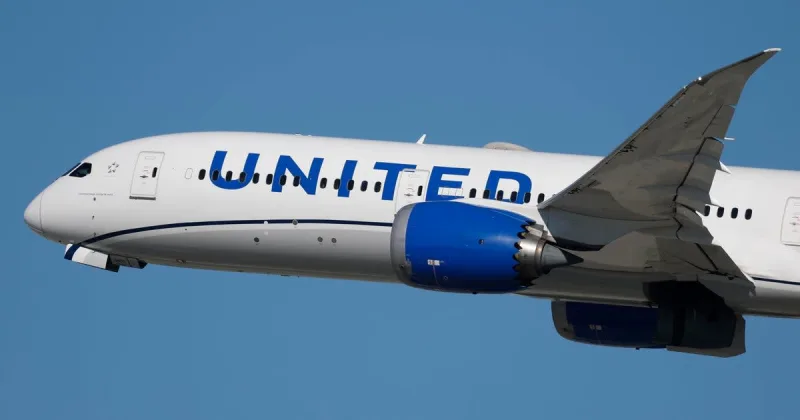
The FAA is investigating a near-miss between a United 737 and a Black Hawk near John Wayne Airport, testing new rules banning visual helicopter separation.
Key Takeaways
- •Highlights a potential breach of new FAA rules banning visual helicopter separation.
- •Brought a United 737 and a Black Hawk helicopter within 525 feet vertically.
- •Triggers an FAA investigation into Air Traffic Control procedures at John Wayne Airport.
- •Follows a fatal January 2025 crash that killed 67 people and prompted the new rules.
A near-miss incident involving a United Airlines flight and a U.S. Army National Guard helicopter near Orange County’s John Wayne Airport (SNA) on March 24, 2026, has triggered a federal investigation. The event placed United Flight 589, a Boeing 737-800, in close proximity to a Sikorsky UH-60 Black Hawk, with separation closing to just 525 feet vertically. The incident serves as a critical test for new Federal Aviation Administration regulations implemented following a fatal collision in 2025.
The investigation centers on whether air traffic controllers adhered to a recent FAA directive that prohibits the use of visual separation between airliners and helicopters in busy airspace. According to data from Flightradar24, the two aircraft came within 1,422 feet laterally as the Boeing 737 was on its approach to SNA. United Airlines confirmed in a statement that the flight crew received a Traffic Alert and Collision Avoidance System Resolution Advisory (TCAS RA), an automated cockpit warning that directs pilots to take evasive action. The pilots complied, leveling the aircraft to restore safe separation. The flight, carrying 162 passengers and 6 crew members, landed safely with no injuries reported.
Regulatory Scrutiny
The incident puts a spotlight on the FAA’s recent overhaul of airspace management procedures. The new rules, which mandate stricter radar-based separation minimums, were a direct response to a catastrophic mid-air collision in January 2025. That accident, involving an American Airlines jet and a Black Hawk near Washington D.C., resulted in 67 fatalities and led the National Transportation Safety Board (NTSB) to issue urgent safety recommendations. The full details of NTSB investigations can be found on their official NTSB Aviation Investigations portal.
In a statement regarding the new rules, FAA Administrator Bryan Bedford said, "Today, we are proactively mitigating risks before they affect the traveling public." The regulations are part of a broader trend toward stricter airspace management for helicopters near commercial hubs, with similar restrictions recently implemented at Reagan Washington National Airport and Burbank Airport. Audio captured by LiveATC from the SNA tower controller moments after the United incident suggests immediate operational concern, with one controller remarking, "We're gonna be addressing that, because that was not good."
A Fatal Precedent
The regulatory context for the SNA investigation is defined by the January 2025 Washington D.C. collision. In that event, a mix of high traffic volume and the use of visual separation procedures were identified as contributing factors. The crash prompted the FAA to suspend visual separation between airplanes and helicopters near major airports, a pattern that directly informs the current investigation. The California Army National Guard, whose helicopter was involved in the SNA incident, stated that its crew was operating legally on an established route under Visual Flight Rules (VFR) and was in communication with air traffic control. This perspective suggests the investigation will likely focus on controller procedures rather than pilot error.
Impact on Airspace Operations
The FAA's new rules and the subsequent investigation have significant impacts on multiple aviation stakeholders. For Air Traffic Controllers, the mandate for strict radar separation increases workload and removes the flexibility of visual clearances, which were previously common. Military aviation units may face more restrictive routing and limited access to VFR corridors near Class B and C commercial airspace. While commercial airlines like United experience a heightened reliance on TCAS, the new rules are ultimately designed to increase their safety margins in complex, mixed-use airspace.
Technical Analysis
This incident represents the first significant public test of the FAA's post-2025 regulatory framework for mixed-use airspace. The investigation's outcome will be pivotal, determining whether the new radar-separation rules are sufficient or if air traffic control training and procedures require further urgent refinement. The event accelerates a clear industry trend toward de-conflicting helicopter and fixed-wing commercial traffic, especially in congested terminal areas like Southern California. Historically, such near-miss events, when scrutinized by regulators, often lead to permanent changes in airspace design and operating rules. The data from this investigation will likely set a precedent for how the FAA manages similar airspace conflicts nationwide.
What Comes Next
The Federal Aviation Administration is leading the inquiry into the incident. According to the agency's standard procedures, a preliminary report outlining the basic facts of the event is expected to be released in April 2026. The FAA maintains a public record of its initial findings on its Statements on Aviation Accidents and Incidents page. A full investigation, which will include analysis of radar data, controller communications, and flight data recorders, will take several months to complete.
Why This Matters
This near-miss over a major U.S. airport highlights the persistent challenge of safely managing increasingly crowded skies. The outcome of the FAA's investigation will have far-reaching implications, setting a new benchmark for helicopter and commercial airline integration. For the aviation industry, it underscores the critical importance of robust collision avoidance systems and strict adherence to separation standards to prevent a repeat of past tragedies.
For global airline trends and commercial aviation news, turn to omniflights.com. Follow aviation sustainability efforts, emissions research, and green initiatives in the Environmental section at omniflights.com/environmental.
Written by Hardik Vishwakarma
Co-Founder & Aviation News Editor leading initiatives that improve trust and visibility across the global aviation industry. Covers airlines, airports, safety, and emerging technology.
Visit Profile