LaGuardia Runway 4 Reopens After Fatal Air Canada Crash

Co-Founder & CEOAviation News Editor delivering trusted coverage across the global aviation industry.

LaGuardia Airport's Runway 4 has reopened after a fatal collision between an Air Canada CRJ-900 and a fire truck, as the NTSB investigates ATC error.
Key Takeaways
- •Reopened Runway 4/22 at LaGuardia 82 hours after a fatal collision.
- •Killed two Air Canada Express pilots and injured over 40 people on March 22, 2026.
- •Triggers NTSB investigation into a potential Air Traffic Control clearance error.
- •Highlights growing concerns over U.S. runway incursions and ATC staffing levels.
Runway 4/22 at LaGuardia Airport (LGA) has reopened following an 82-hour closure, after an Air Canada Express jet collided with a ground vehicle during its landing sequence on March 22, 2026. The incident resulted in the deaths of both pilots and left dozens of individuals with injuries.
The investigation, led by the National Transportation Safety Board (NTSB), is now centered on a potential runway incursion stemming from an air traffic control error. This LaGuardia Airport plane crash places a renewed spotlight on the rising frequency of serious runway safety events across the United States and the systemic pressures on the nation's air traffic control system.
The Collision and Immediate Aftermath
The aircraft involved in the incident was a Bombardier CRJ-900, operated by Jazz Aviation for Air Canada Express. According to Jazz Aviation, there were 76 individuals onboard, consisting of 72 passengers and four crew members. Data from FlightRadar24 indicates the aircraft was on its final approach at an estimated speed of 114 knots when it impacted an Aircraft Rescue and Firefighting (ARFF) truck on Runway 4.
The collision resulted in the deaths of the captain and first officer. The Port Authority of New York and New Jersey (PANYNJ), which operates LGA, confirmed that over 40 people, including two ARFF officers, were transported to local hospitals. In response, the Federal Aviation Administration (FAA) issued an immediate ground stop, halting all traffic and causing significant operational disruptions for several days.
Investigation Focuses on ATC Communication
The NTSB has successfully recovered the flight data and cockpit voice recorders. NTSB Chair Jennifer Homendy confirmed the "black boxes" are being analyzed as part of the formal investigation under Title 49 CFR Part 831. Preliminary evidence strongly suggests a critical communication failure.
Released Air Traffic Control (ATC) audio captured a controller mistakenly clearing the PANYNJ fire truck onto the active runway just moments before the CRJ-900 landed. In the recording, the controller is heard attempting to cancel the clearance and later stating, "I messed up." Jason Ambrosi, President of the Air Line Pilots Association (ALPA), described the loss of the two pilots as a "profound tragedy" for the aviation community. The NTSB investigation is expected to scrutinize ATC staffing levels and fatigue, a known industry concern. Former Department of Transportation Inspector General Mary Schiavo has suggested such an error may be symptomatic of systemic issues rather than isolated negligence.
A Pattern of Runway Incursions
This fatal collision occurs against a backdrop of increasing severe runway incursions at major U.S. airports. The trend previously prompted the FAA to convene safety summits and review investments in surface awareness technology. The event draws direct comparisons to a recent international incident. In January 2024, the collision between a Japan Airlines A350 and a Coast Guard aircraft at Tokyo's Haneda Airport resulted in five fatalities and prompted global reviews of runway clearance protocols—a pattern that mirrors the current investigation into communication breakdowns at LaGuardia. Historically, collisions with ground equipment have proven catastrophic. The 1979 crash of Western Airlines Flight 2605 in Mexico City, which killed 72 people after landing on a closed runway, underscores the danger of runway obstructions.
Technical Analysis
The LaGuardia crash reinforces a critical vulnerability in the National Airspace System: the "last 500 feet" of an aircraft's journey. While en-route and approach systems have become highly automated, surface operations remain heavily dependent on human communication and visual confirmation. The collision highlights how a single point of failure in the ATC-to-ground-vehicle communication chain can bypass multiple layers of safety. This event follows the trajectory set by the Haneda incident, suggesting that current protocols are insufficient to prevent catastrophic outcomes from human error in high-density airport environments. The NTSB investigation will likely accelerate calls for the mandatory adoption of advanced surface detection systems and digital clearance technologies to reduce reliance on voice communications.
What Comes Next
The NTSB is expected to release its preliminary report on the accident in April 2026. This initial document will outline the basic facts gathered but will not state a probable cause. A full and final accident report, which will include a probable cause and safety recommendations, is expected to be published between March 2027 and March 2028. Before reopening Runway 4/22, the FAA required extensive inspections and repairs to ensure its operational safety, a process completed on the morning of March 26.
Why This Matters
This fatal incident at a major U.S. hub serves as a stark reminder of the persistent risks of runway incursions. The investigation's focus on air traffic control error will intensify scrutiny on FAA staffing, training, and technology, potentially leading to significant regulatory changes in airport ground operations and communication protocols nationwide.
Visit omniflights.com for the latest commercial aviation news and airline industry updates. Follow aviation sustainability efforts, emissions research, and green initiatives in the Environmental section at omniflights.com/environmental.
Written by Hardik Vishwakarma
Co-Founder & Aviation News Editor leading initiatives that improve trust and visibility across the global aviation industry. Covers airlines, airports, safety, and emerging technology.
Visit ProfileYou Might Also Like
Discover more aviation news based on similar topics

Families Demand DCA Midair Collision Safety Reforms
Families of 67 victims from the 2025 DCA midair collision are pressing Congress for mandatory ADS-B In technology to prevent future aviation tragedies.
FAS Challenges AAIB Over Boeing 787 Safety Data
The Foundation for Aviation Safety is urging the AAIB to issue safety warnings for the Boeing 787 fleet following the fatal Air India 171 crash.
NTSB Safety Recommendations Lag Amid 6 Monthly Near-Misses
Approximately 6 near-miss incidents occur monthly at U.S. airports as 270 NTSB safety recommendations remain unaddressed by federal regulators.
NTSB Rejects FAA Safety Responses After 67-Fatality Crash
The NTSB labeled 11 FAA responses to 2025 DCA mid-air collision recommendations as unacceptable, citing the lack of a mandatory ADS-B In requirement.
EASA Orders Urgent Airbus A380 Wing Spar Inspections
The EASA ordered urgent inspections on 16 Airbus A380s after discovering wing spar cracks that could compromise structural integrity.
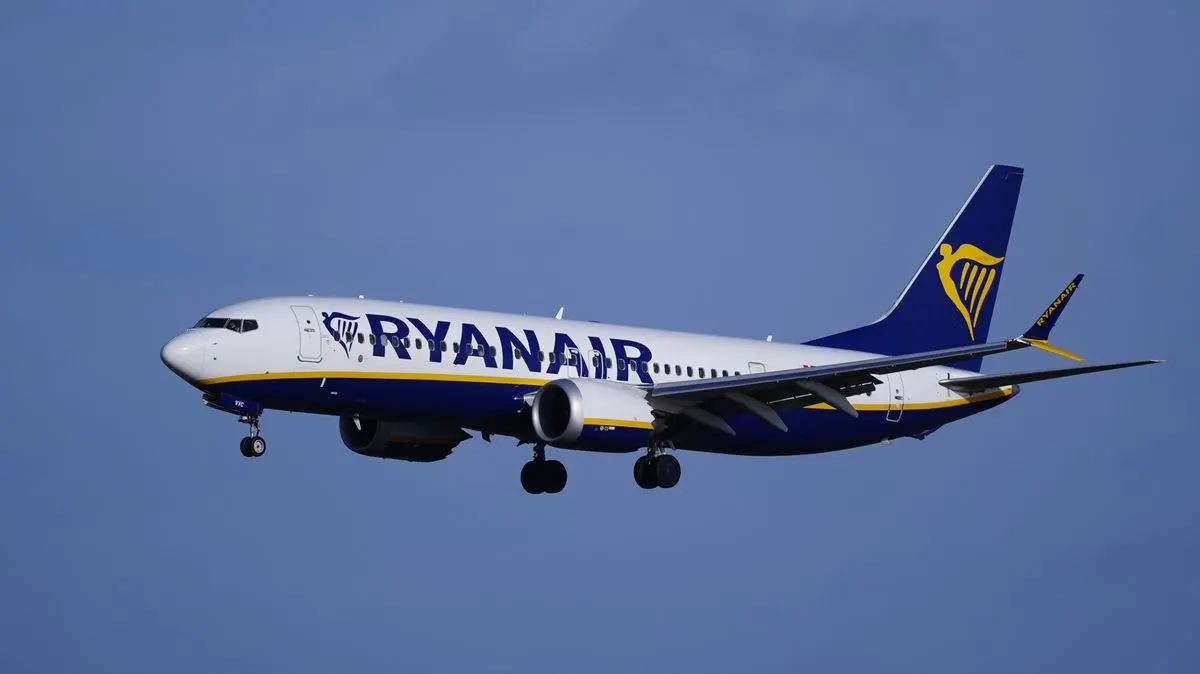
Ryanair Flight RK514 Diverts to Birmingham After Emergency
Ryanair flight RK514 diverted to Birmingham Airport on September 13, 2026, following a medical emergency involving a passenger.