Air Canada Attendant Survives Fatal LaGuardia Runway Collision

Co-Founder & CEOAviation News Editor delivering trusted coverage across the global aviation industry.
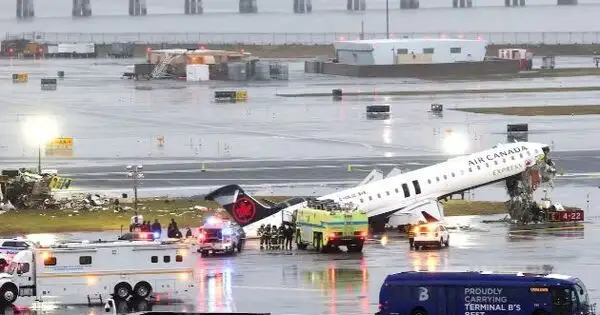
An Air Canada flight attendant survived after being ejected from a CRJ-900 during a fatal runway collision with a fire truck at New York's LaGuardia.
Key Takeaways
- •Survived a 100-meter ejection while strapped into a four-point harness jump seat.
- •Triggers NTSB investigation into ATC staffing and LaGuardia ground operations.
- •Highlights systemic safety failures including a lack of ground vehicle transponders.
- •Mirrors 2013 Asiana crash where two ejected flight attendants also survived.
An Air Canada Express flight attendant, Solange Tremblay, survived a fatal runway collision at New York's LaGuardia Airport (LGA) on March 22 after being ejected from the aircraft while still strapped into her jump seat. The incident, which resulted in the deaths of both pilots, has triggered a comprehensive investigation by the National Transportation Safety Board (NTSB) focusing on systemic failures in airport ground safety and air traffic control.
The Bombardier CRJ-900 jet, operated by Jazz Aviation, was carrying 72 passengers and 4 crew members when it struck a fire truck during its landing roll at approximately 100 mph. The impact severely damaged the front of the aircraft, ejecting Tremblay approximately 100 meters (320 feet) onto the airfield. She sustained a fractured leg requiring surgery but was otherwise reported to be in stable condition.
NTSB Investigation Focuses on Systemic Failures
The NTSB's investigation is examining multiple factors that contributed to the deadly incursion. NTSB Chair Jennifer Homendy highlighted that the collision resulted from "multiple failures." A primary focus is the fire truck's lack of a transponder, which would have activated runway warning systems and alerted Air Traffic Control (ATC) to its presence on the active runway. This has intensified scrutiny on ground vehicle protocols at airports managed by the Port Authority of New York and New Jersey (PANYNJ).
Investigators are also analyzing ATC staffing levels at the time of the crash. According to the NTSB, only two controllers were on duty in the LGA tower, handling multiple roles. Homendy described the issue of controller understaffing as a systemic "problem for years," prompting the Federal Aviation Administration (FAA) to face renewed pressure to address nationwide shortages and review its staffing minimums.
The stakeholder impact is significant. Jazz Aviation faces the loss of two pilots and a CRJ-900 aircraft, while the PANYNJ is under review for its ground vehicle safety standards. The FAA must address the broader regulatory questions raised by the incident concerning both technology mandates and staffing.
Jump Seat Design and Historical Precedents
Aviation safety experts point to the design of the flight attendant's jump seat as a key factor in Tremblay's survival. Jeff Guzzetti, a former director of the FAA's Accident Investigation Division, explained that crew jump seats are bolted directly to the aircraft's primary structure, such as the cockpit wall, and feature four-point safety harnesses. This construction is significantly more robust than standard passenger seats and is designed to withstand severe impacts, ensuring crew members can survive to assist with passenger evacuations.
This incident is not without precedent. A similar event occurred on July 6, 2013, when Asiana Airlines Flight 214 crashed while landing at San Francisco International Airport. The NTSB's official accident report, AAR-14/01, documented that two flight attendants were ejected from the rear of the Boeing 777 while still strapped into their jump seats. Both survived their injuries. The Asiana crash, which involved 307 people and resulted in three fatalities, ultimately led to new recommendations for pilot training on automated systems.
What Comes Next
The NTSB is expected to release its preliminary report on the LaGuardia collision within 30 days of the March 22 accident. This initial document will outline the basic facts gathered by investigators on site but will not state a probable cause.
A comprehensive final accident report, which will include a probable cause and formal safety recommendations, is expected to be published within 12 to 24 months. These recommendations will likely address mandatory transponders for all airport ground vehicles and a review of FAA air traffic controller staffing models.
Why This Matters
This fatal accident serves as a critical reminder of the persistent dangers of runway incursions at busy airports. It highlights how a chain of failures—spanning technology, procedure, and staffing—can bypass existing safety layers. The investigation's findings are poised to influence national aviation policy, potentially leading to stricter regulations for ground operations and renewed efforts to resolve the systemic issue of air traffic controller shortages.
Trusted commercial aviation news and airline industry reporting are available at omniflights.com. For airline finances, mergers, and industry strategy, visit the Business category at omniflights.com/business.
Written by Hardik Vishwakarma
Co-Founder & Aviation News Editor leading initiatives that improve trust and visibility across the global aviation industry. Covers airlines, airports, safety, and emerging technology.
Visit ProfileYou Might Also Like
Discover more aviation news based on similar topics

Families Demand DCA Midair Collision Safety Reforms
Families of 67 victims from the 2025 DCA midair collision are pressing Congress for mandatory ADS-B In technology to prevent future aviation tragedies.
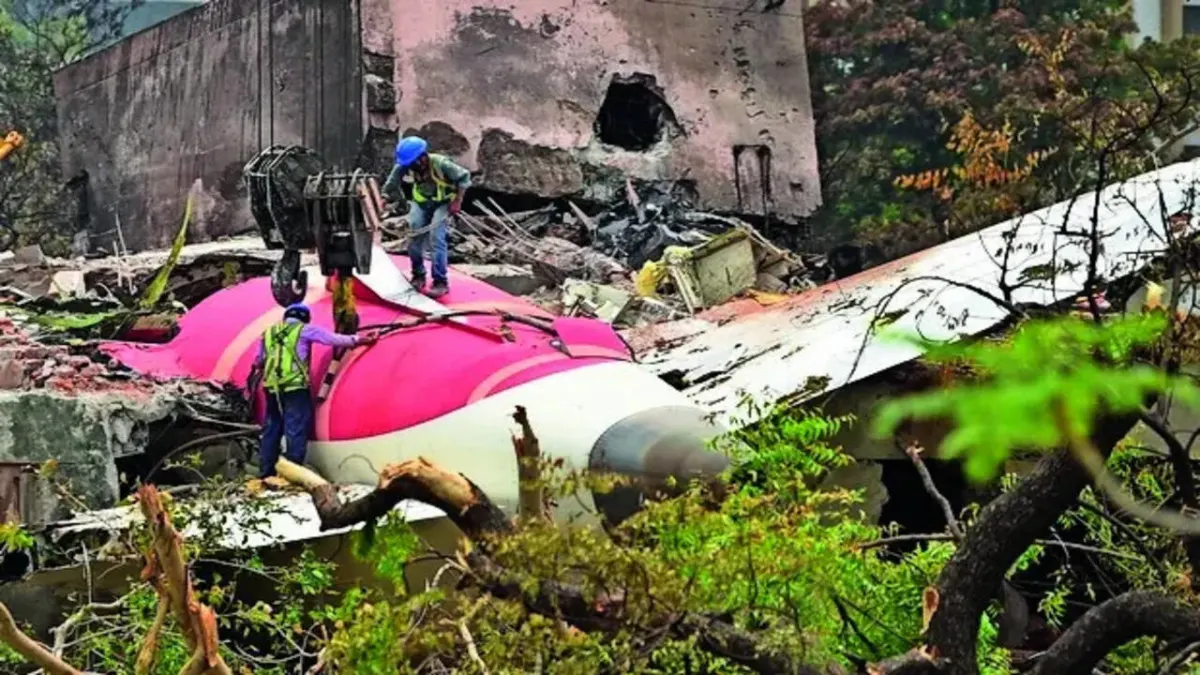
FAS Challenges AAIB Over Boeing 787 Safety Data
The Foundation for Aviation Safety is urging the AAIB to issue safety warnings for the Boeing 787 fleet following the fatal Air India 171 crash.
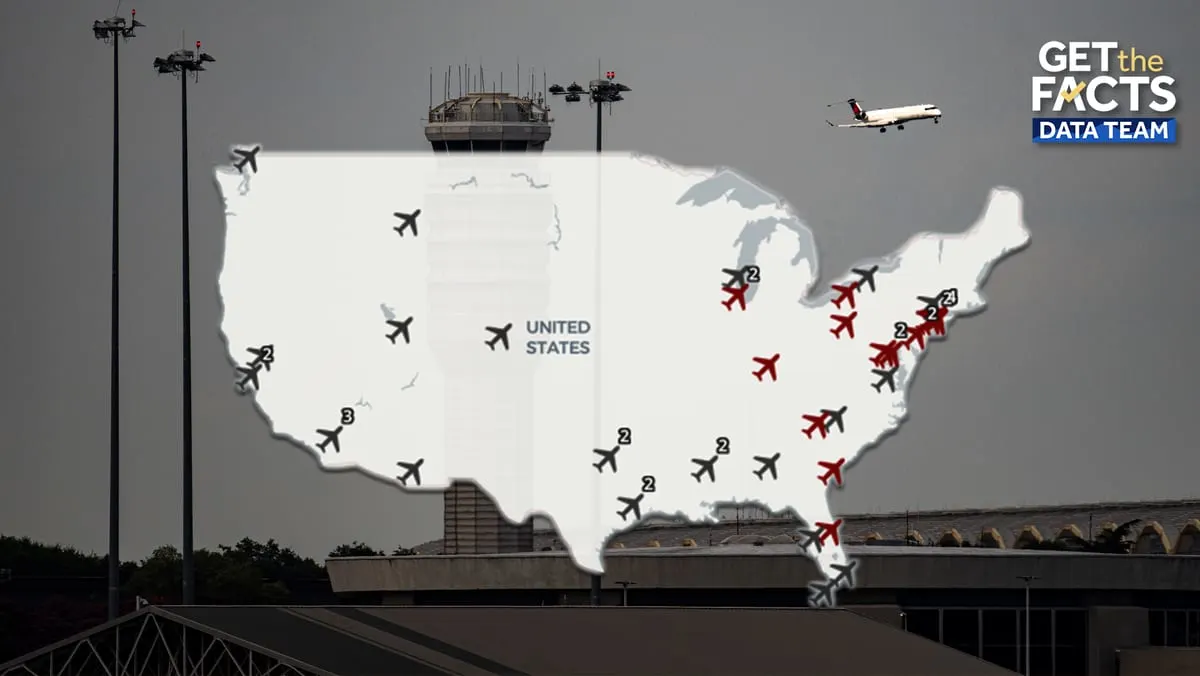
NTSB Safety Recommendations Lag Amid 6 Monthly Near-Misses
Approximately 6 near-miss incidents occur monthly at U.S. airports as 270 NTSB safety recommendations remain unaddressed by federal regulators.
NTSB Rejects FAA Safety Responses After 67-Fatality Crash
The NTSB labeled 11 FAA responses to 2025 DCA mid-air collision recommendations as unacceptable, citing the lack of a mandatory ADS-B In requirement.
EASA Orders Urgent Airbus A380 Wing Spar Inspections
The EASA ordered urgent inspections on 16 Airbus A380s after discovering wing spar cracks that could compromise structural integrity.
Ryanair Flight RK514 Diverts to Birmingham After Emergency
Ryanair flight RK514 diverted to Birmingham Airport on September 13, 2026, following a medical emergency involving a passenger.