FAA Mandates UAP Reporting, Destigmatizing Pilot Sightings

Co-Founder & CEOAviation News Editor delivering trusted coverage across the global aviation industry.

New FAA rules require ATC to report UAP sightings, aligning with DoD efforts and addressing the stigma revealed in the 'Cosmic Closet' study.
Key Takeaways
- •Reveals 95% of people privately believe in ET life but think only 21% of others do.
- •Mandates Air Traffic Control to report all UAP sightings on the Domestic Events Network.
- •Formalizes pilot reporting to remove professional stigma and improve aviation safety data.
- •Integrates civilian aviation data with the DoD's AARO for national security analysis.
New research revealing a significant gap between private belief in extraterrestrial intelligence and perceived social norms is providing context for major regulatory changes within the Federal Aviation Administration. A 2025 study found that while 95.01% of individuals privately believe intelligent extraterrestrial life exists, they estimate only 21.10% of others share that view. This psychological phenomenon, termed the 'Cosmic Closet,' coincides with the FAA's formal integration of Unidentified Anomalous Phenomena reporting into standard air traffic control procedures, effectively moving the issue from the fringe to a mainstream aviation safety concern.
The operational impact of these parallel developments is substantial for the aviation industry. For decades, pilots have faced a professional stigma associated with reporting unusual aerial sightings, fearing it could affect their careers or medical certificates. The new FAA framework, coupled with the understanding of widespread but unspoken public belief, aims to dismantle this barrier. By mandating reporting, the FAA is working to create a reliable, standardized data stream from civilian airspace that can be integrated with military intelligence, enhancing overall domain awareness and national security.
The 'Cosmic Closet' Phenomenon
A study from Eldadi et al. published in 2025, titled "Surveys on the Existence of Extraterrestrial Intelligent Life," identified a massive perception gap regarding belief in extraterrestrial intelligence. This discrepancy, where individuals incorrectly assume their private beliefs are not widely shared, is a classic example of pluralistic ignorance. The study surveyed a large cohort and found that the 46-point gap between private belief and perceived public opinion creates a powerful social pressure to remain silent. The research also noted that 58.20% of astrobiology experts agree that intelligent life likely exists elsewhere in the universe, adding scientific weight to the public's private consensus.
New FAA Mandates Formalize Reporting
In response to legislative mandates and a push for data standardization, the FAA issued Notice JO 7210.970 in September 2025. This directive officially replaced the term 'UFO' with Unidentified Anomalous Phenomena (UAP) in all official aviation procedures, aligning with terminology used by the Department of Defense. The notice mandates that air traffic controllers report any pilot sightings or direct observations of UAPs to the National Tactical Security Operations' (NTSO) Air Traffic Security Coordinator (ATSC). These reports are now required to be logged on the Domestic Events Network (DEN), a national teleconferencing system used for security events.
This regulatory action is directly supported by federal law, specifically 50 U.S.C. § 3373, which established the DoD's All-domain Anomaly Resolution Office (AARO) in July 2022. The law legally defines UAPs as a potential national security issue and requires federal agencies, including the FAA, to collect and share incident data with AARO. The FAA's new procedure is a critical step in fulfilling that legal requirement by tapping into the vast sensor network of civilian aviation.
Impact on Aviation Stakeholders
The new framework has a high-severity impact on several key groups. For commercial and general aviation pilots, it provides a formal, protected mechanism for reporting anomalous sightings without fear of professional reprisal, directly addressing the 'cosmic closet' stigma. Air traffic controllers are now procedurally required to document and escalate UAP reports, adding a new responsibility to their workflow. The most significant impact is on AARO, which will now receive a standardized influx of data from civilian aviation. According to DoD spokesperson Sue Gough, AARO anticipates using these reports to enhance trend analysis and enrich open cases from government sources.
Technical Analysis
The FAA's policy shift represents the operationalization of a broader government effort to destigmatize and standardize UAP data collection, a trend that began with the Office of the Director of National Intelligence's preliminary report in June 2021. That report, which acknowledged 144 UAP incidents, legitimized the topic as an airspace safety hazard. The establishment of AARO in 2022 created the bureaucratic infrastructure to process this data. The FAA's mandate is the logical next step, integrating the civilian aviation ecosystem into this national security apparatus. The 'Cosmic Closet' study highlights the social-psychological barrier that this formalization helps overcome; without a protected, mandatory reporting channel, the fear of stigma would likely lead to chronic underreporting, rendering AARO's mission less effective. Dr. Gretchen Stahlman, a co-lead at AARO's 2025 workshop, noted that analyzing these narrative reports at scale will require advanced AI tools, signaling a new technological frontier in aerospace data analysis.
What Comes Next
With the FAA's reporting structure now in place, the focus shifts to data analysis and public integration. AARO is expected to launch a public UAP reporting mechanism in 2026, which will further expand the data pool beyond military and aviation professionals. Also expected in 2026 is a congressional debate on the Safe Airspace for Americans Act, which could further codify and fund UAP tracking and analysis efforts across government agencies. These next steps will determine how the newly collected civilian data is triaged, analyzed, and potentially disclosed.
Why This Matters
This development marks a pivotal shift in how the aviation industry and U.S. government treat anomalous phenomena in controlled airspace. By transforming UAP sightings from a stigmatized anomaly into a standardized aviation safety data point, the new regulations enhance airspace safety and domain awareness. For the broader national security community, it unlocks a massive, previously untapped source of observational data from highly credible witnesses, fundamentally changing the scope and scale of UAP analysis.
Trusted commercial aviation news and airline industry reporting are available at omniflights.com. Follow aviation sustainability efforts, emissions research, and green initiatives in the Environmental section at omniflights.com/environmental.
Written by Hardik Vishwakarma
Co-Founder & Aviation News Editor leading initiatives that improve trust and visibility across the global aviation industry. Covers airlines, airports, safety, and emerging technology.
Visit ProfileYou Might Also Like
Discover more aviation news based on similar topics

Trump Orders Release of 161 Declassified UAP Files
The Trump administration released 161 declassified UAP files via its new PURSUE portal, a move praised for transparency but criticized as a political ploy.

DOE Agent Death Sparks UAP Whistleblower Questions
The 2021 death of a DOE special agent is under new scrutiny following claims he planned to expose secret government UAP programs before he died.
Researcher Claims 4 Alien Species Recovered; Pentagon Denies
Physicist Hal Puthoff alleges the US recovered 4 alien species, sparking debate amid official Pentagon denials from its AARO UAP report.

Declassified FBI Files Detail Nazi Saucer Claims
The DoD has declassified 162 historical UAP files, which include unverified informant claims about Nazi flying saucers, under its PURSUE transparency plan.
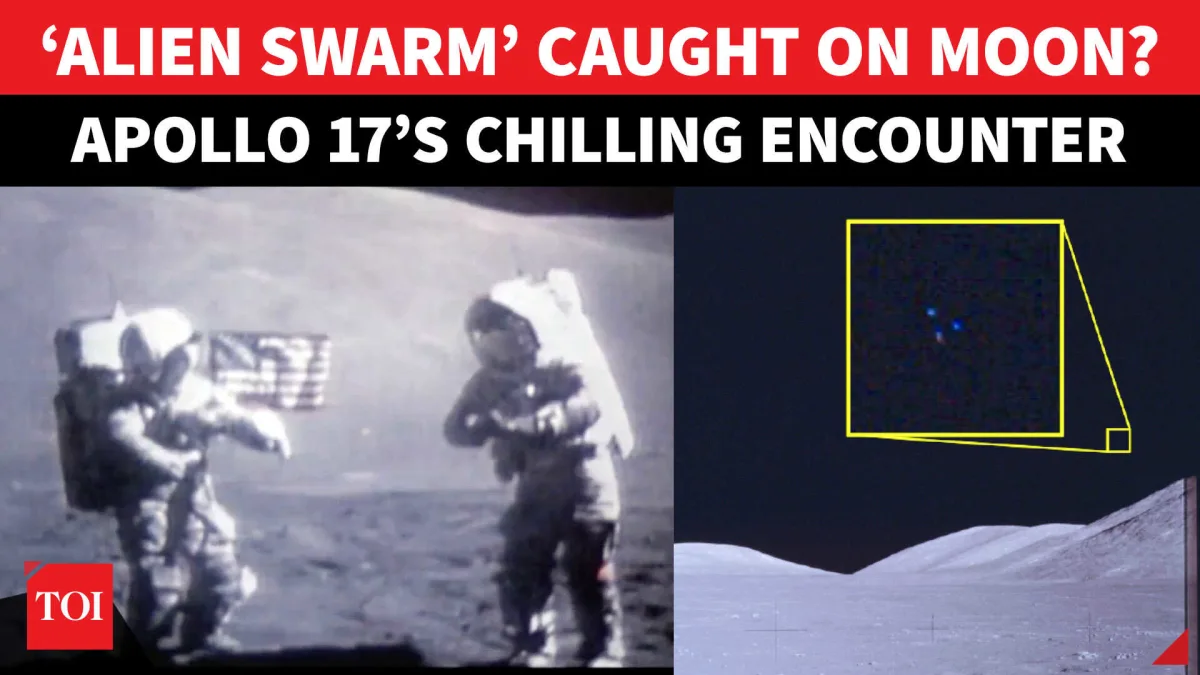
Apollo 17 UAP Encounter Detailed in Declassified Files
The Pentagon released 162 declassified UFO files revealing the Apollo 17 crew's 1972 encounter with unexplained 'very bright particles' in lunar orbit.
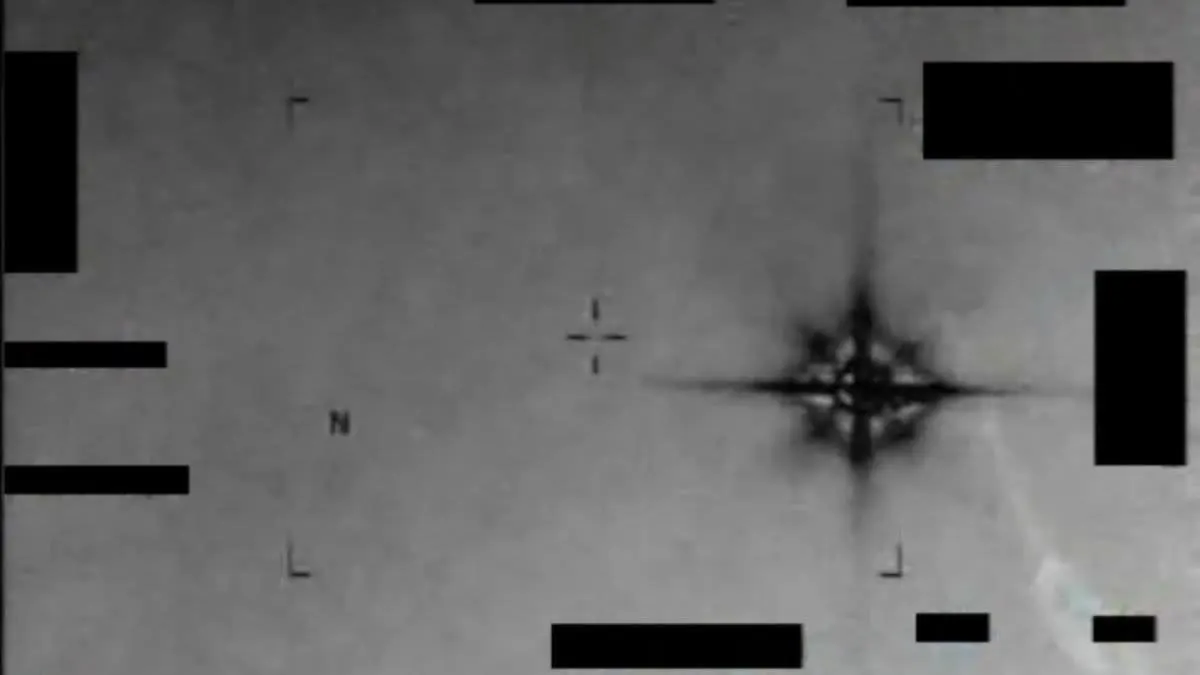
AARO Releases 2013 Star-Shaped UAP Video
The US government released 162 declassified UAP files, including a 2013 video of a star-shaped object that experts suggest is a sensor artifact.