Emirates, Etihad Resume Limited Flights Amid Middle East Airspace Closures

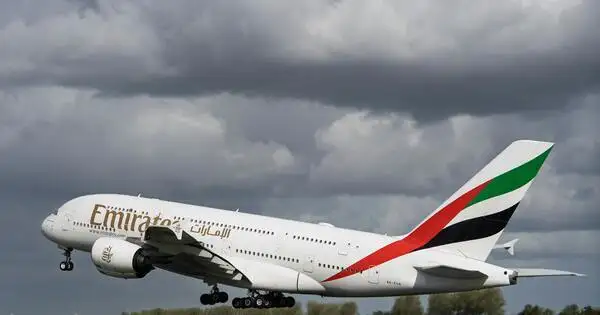
Emirates and Etihad are restoring limited flights from the UAE, but widespread airspace closures and missile risks continue to disrupt global travel.
Key Takeaways
- •Resumed limited services to 70-82 destinations from UAE hubs.
- •Faced over 25,000 flight cancellations across the Middle East since late February.
- •Contended with record-high jet fuel prices, which surged to US$225 per barrel.
- •Disrupted one-third of all passenger traffic between Europe and Asia.
Gulf carriers Emirates and Etihad Airways have begun restoring limited flight operations from their United Arab Emirates hubs, but ongoing missile threats and extensive airspace closures continue to severely disrupt travel across the Middle East. The instability, following a regional conflict, has led to more than 25,000 flight cancellations since late February, grounding a critical artery of global air travel and stranding thousands of passengers.
The disruption has a significant impact on global connectivity, particularly on routes between Europe and the Asia-Pacific region. According to aviation data firm Cirium, Emirates, Qatar Airways, and Etihad together normally carry approximately one-third of all passengers traveling between Europe and Asia. Their role is even more dominant on routes from Europe to Australia, New Zealand, and nearby Pacific islands, where they handle more than half of all passenger traffic.
Operational Status and Repatriation Efforts
While some services are resuming, operations remain far from normal. Abu Dhabi-based Etihad Airways announced on March 6 that it would operate a restricted schedule through March 19, serving about 70 destinations. Dubai-based Emirates stated it was running a scaled-back schedule to 82 destinations until further notice, cautioning that transit passengers would only be accepted in Dubai if their connecting flights were confirmed.
Traffic at Dubai International Airport (DXB), typically the world's busiest international hub, has shown early signs of recovery but remains severely depressed. Flight tracking service Flightradar24 noted that traffic on March 5 was nearly double the previous day's level but still represented only about 25 percent of typical activity. Meanwhile, Qatar's major hub in Doha remains closed to most commercial traffic, though authorities have facilitated a limited number of relief flights.
The volatile security situation has complicated government-led evacuation efforts. A government-chartered Air France flight attempting to repatriate French nationals from the UAE on March 5 was forced to turn back due to nearby missile fire. French Transport Minister Philippe Tabarot commented, "This situation reflects the instability in the region and the complexity of repatriation operations."
Britain also commenced repatriation flights, with its first service from Oman landing at London Stansted Airport on March 6 after operational delays.
The scale of the disruption is vast. Cirium data shows that between February 28 and March 5, more than 44,000 flights had been scheduled to and from the Middle East. Of those, over 25,000 have been cancelled, highlighting the widespread impact of the airspace closures.
Financial and Market Impact
The conflict has triggered significant financial repercussions for the aviation industry, most notably a sharp increase in fuel costs. Singapore jet fuel, a key price benchmark for Asia, surged to a record US$225 per barrel early in the week, according to S&P Global Platts data. Prices later eased to around $195 a barrel on March 5 but remain nearly double the levels seen the previous week. "As well as lost revenue, airlines are likely to be affected by higher fuel prices," Fitch Ratings stated in a note.
According to Fitch Ratings, most airlines in Europe, the Middle East, and Africa have hedged between 50 percent and 80 percent of their fuel needs for the next three months, which may offer some short-term protection against the price shock.
Airline stocks in the Asia-Pacific region have reacted negatively to the uncertainty. On March 6, Qantas shares dropped more than one percent, and Air New Zealand shares slid 6.4 percent, according to Trading Economics data. Hong Kong's Cathay Pacific declined by about one percent, Singapore Airlines fell 0.6 percent, and Korean Air dropped roughly two percent.
In response to the capacity crunch, some carriers outside the region are adding services. Malaysia Airlines announced additional flights from Kuala Lumpur to London and Paris, while SriLankan Airlines scheduled an extra service between Colombo and London.
Persistent Chaos for Travelers
With no immediate resolution to the conflict in sight, passengers face continued chaos, high costs, and uncertainty. Commercial flights remain scarce, and those who have managed to leave the region describe a scramble for limited seats. One passenger, Ed Short, speaking after arriving at London Heathrow, said he paid £1,500 ($2,005) for a seat on a flight from Muscat, Oman, after a previously booked Emirates flight was cancelled.
The rerouting of long-haul flights to avoid closed airspace is also leading to longer journey times. Qantas's direct Perth-London service, for example, now requires a fuel stop in Singapore, adding up to three hours to the flight.
Why This Matters
The ongoing disruption underscores the vulnerability of the global aviation network to regional geopolitical conflicts. The crisis highlights the critical role of Middle Eastern hubs in connecting international traffic flows and demonstrates how quickly localized instability can trigger worldwide operational and financial consequences for airlines, cargo operators, and travelers.
omniflights.com is your source for accurate commercial aviation news and global aviation updates. Stay informed on aviation incidents, investigations, and best practices in the Safety category at omniflights.com/safety.

Written by Ujjwal Sukhwani
Aviation News Editor & Industry Analyst delivering clear coverage for a worldwide audience. Covers flight operations, safety regulations, and market trends with expert analysis.
Visit ProfileYou Might Also Like

Dubai Aerospace Enterprise Completes United Airlines Lease

RTX Reports Record $340B Backlog and Strong Q3 2026 Growth
Boeing 737 MAX Litigation Nears Resolution in Chicago
Qatar Airways Enters Japanese JOLCO Financing Market
United Nigeria Airlines Plans N20bn Commercial Paper Debt