Emirates Breaks Ground on $5.1B Dubai MRO Facility

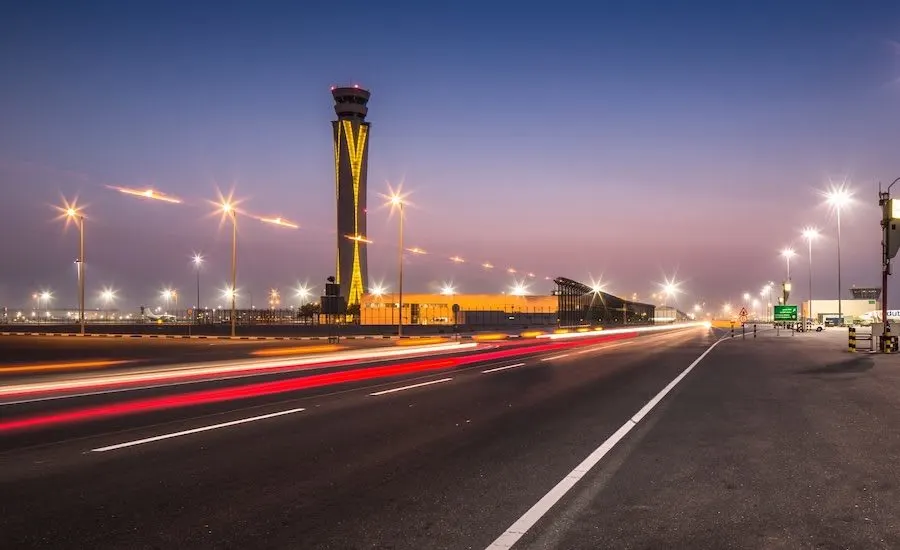
Emirates has begun construction on a $5.1 billion MRO complex at DWC, featuring the world's largest free-span hangar to service 28 widebody jets.
Key Takeaways
- •Emirates broke ground on a $5.1B MRO facility at DWC on May 18.
- •The 1.1 million sqm site includes the world's largest free-span hangar.
- •Facility will service 28 widebody aircraft simultaneously upon 2030 completion.
- •Emirates is also investing $300M in engine maintenance with GE Aerospace.
Strategic Expansion at Dubai South
Emirates Airlines officially broke ground on May 18, 2026, for a massive $5.1 billion aircraft engineering facility. Located at Dubai World Central / Al Maktoum International Airport (DWC), the complex is set to become one of the most advanced Maintenance, Repair, and Overhaul (MRO) hubs in the global aviation industry. The project represents a significant shift toward vertical integration, allowing the airline to centralize heavy maintenance, cabin retrofits, and fleet-wide engineering tasks under its own control.
Scale and Technical Specifications
The facility covers a sprawling 1.1 million square meters, positioning it as a cornerstone of the Dubai Economic Agenda D33. A defining feature of the site is its main hangar, which utilizes a 285-meter-wide free-span structure. This design, which holds the record as the world's largest of its kind, enables the simultaneous service of 28 wide-body commercial aircraft. The project is being executed by the China Railway Construction Corporation (CRCC) and is entirely self-funded through Emirates' internal cash reserves.
Parallel Engine Maintenance Upgrades
Beyond the DWC complex, the airline is continuing to optimize its existing infrastructure. Emirates is concurrently investing $300 million to expand its Engine Maintenance Center at Dubai International Airport (DXB). This project, managed in partnership with GE Aerospace, focuses on enhancing piece-part repair capabilities for GE90 and GP7200 engine families. This integration ensures that the carrier maintains technical autonomy for its long-haul fleet, reducing reliance on third-party service providers.
Environmental and Economic Impact
The project is designed to meet the highest sustainability standards, with a mandate to achieve Leadership in Energy and Environmental Design (LEED) Platinum certification. By incorporating solar arrays and sustainable building materials, the facility aligns with regional efforts to lower the carbon footprint of heavy industrial operations. For the regional labor market, the development is expected to create thousands of highly skilled positions, including specialized mechanics, aerospace engineers, and administrative staff, by the time the site becomes fully operational.
The Shift to Vertical Integration
This investment reflects a broader industry trend where major network carriers are bringing heavy maintenance and parts production in-house to mitigate supply chain risks. Historically, the Turkish Airlines HABOM MRO Hub opened in 2014 served as a successful precedent for this model. By centralizing infrastructure, Emirates aims to capture the full lifecycle value of its fleet while insulating itself from the volatility of the global third-party MRO market. This move signals a long-term commitment to operational self-sufficiency, contrasting with the outsourcing models common among smaller regional competitors.
Mid-2030 Commissioning Timeline
The construction phase is currently underway at Dubai South, with full commissioning and operational readiness expected by mid-2030. The project remains a critical milestone for the airline’s future fleet capacity, ensuring that the necessary engineering infrastructure is in place to support the continued growth of its wide-body aircraft operations.
Why This Matters for Global Aviation
For the global aviation sector, this facility signifies a major consolidation of maintenance capabilities within the Gulf Cooperation Council (GCC) region. As Emirates scales its infrastructure, independent MRO providers may see a decline in contract volumes for heavy maintenance and specialized retrofits. Conversely, the project reinforces Dubai’s status as a premier global aviation hub, setting a new benchmark for infrastructure investment and technical capacity in the Middle East.
Frequently Asked Questions
- What is the capacity of the new Emirates MRO hangar at DWC?
- The main hangar at the new Emirates engineering facility is designed to service 28 wide-body aircraft simultaneously. It features a 285-meter-wide free-span design, which is the largest of its kind in the world.
- When is the new Emirates engineering facility expected to be completed?
- The new $5.1 billion MRO complex at Dubai South is slated for completion and commissioning by mid-2030.
For in-depth airline coverage and commercial aviation news, omniflights.com delivers timely industry insights. From aircraft production to supply chains, commercial aviation manufacturing news is covered at omniflights.com/manufacturing.

Written by Hardik Vishwakarma
Co-Founder & Aviation News Editor leading initiatives that improve trust and visibility across the global aviation industry. Covers airlines, airports, safety, and emerging technology.
Visit ProfileYou Might Also Like

Starlux Airlines Confirms Sydney to Taipei Flights for 2027

British Airways Retrofits A380 with 106 Club Suite Seats

EasyJet Cuts 700k Winter Seats as Fuel Costs Climb

PIA to Lease Two Norse Atlantic 787-9s for UK Routes
Kalitta Air Evaluates Airbus A350F for Cargo Modernization
