Emirates 777F Diverts to Karachi After Engine Problem

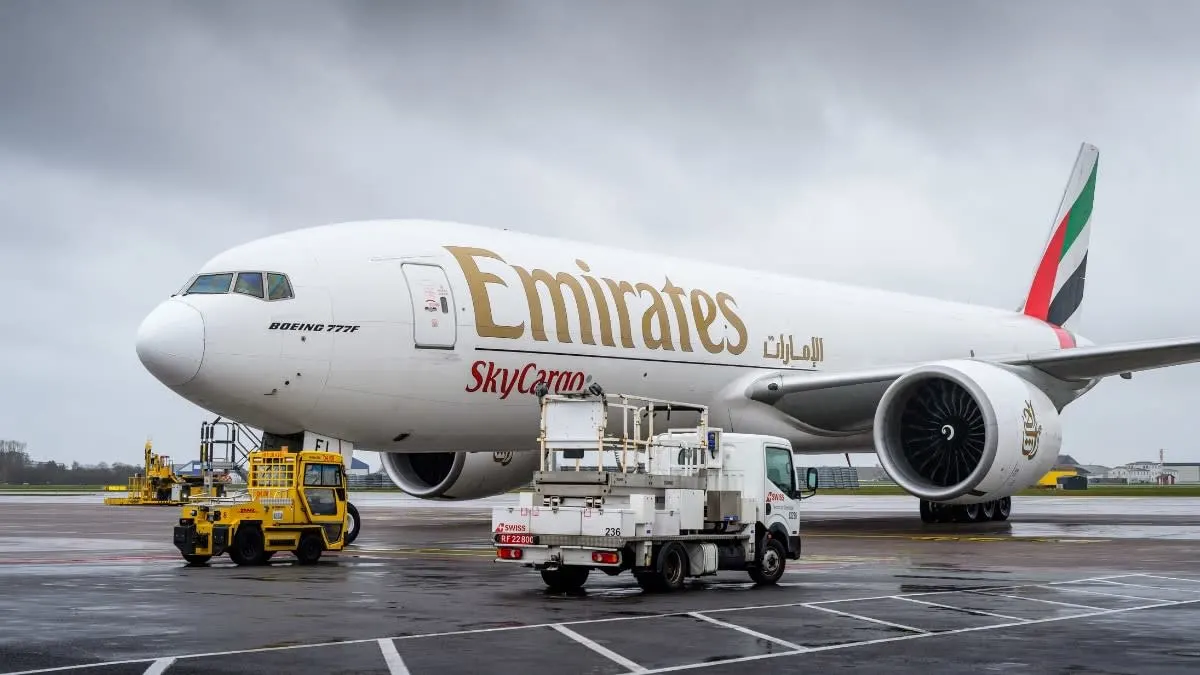
An Emirates SkyCargo Boeing 777F diverted to Karachi following an engine issue during a flight from Osaka to Dubai.
Key Takeaways
- •Emirates SkyCargo flight EK9801 diverted to Karachi on July 12, 2026.
- •The Boeing 777F experienced a technical issue with one GE90-115B engine.
- •The aircraft landed safely at Jinnah International Airport without incident.
- •Technical inspection of the freighter is expected to conclude in late July.
An Emirates SkyCargo Boeing 777 Freighter (registration A6-EWM) operating as flight EK9801 made an emergency landing at Jinnah International Airport (KHI) in Karachi, Pakistan, on July 12, 2026, following an in-flight engine issue. The aircraft was performing a cargo mission from Kansai International Airport (KIX) in Osaka to Dubai World Central (DWC) when the crew reported a technical fault with one of its two GE90-115B engines. According to Flightradar24 tracking data, the flight departed Osaka at 12:02 PM local time and landed safely in Karachi at 5:06 PM local time, diverting approximately halfway through its scheduled route.
Emergency Response and Safety Protocols
The Pakistan Airports Authority (PAA) confirmed the incident in an official statement, noting that the flight was handled in accordance with standard safety procedures. Airport emergency services were placed on standby during the arrival, and the aircraft landed without further incident. The diversion highlights the effectiveness of international Annex 2 and Annex 6 Emergency Diversion Protocols, which ensure that flight crews can secure priority handling when technical anomalies occur in cruise. The GE90-115B engines, which provide 115,000 pounds of thrust each, remain the most powerful commercial jet engines in widespread service, and their operational reliability is central to the ETOPS (Extended-range Twin-engine Operational Performance Standards) certification that governs long-haul twin-engine cargo operations.
Industry Context and Fleet Impact
The Boeing 777F is currently the world's best-selling twin-engine freighter, having largely replaced older four-engine models like the 747F in the global logistics market. However, the high utilization of these aircraft means that any unscheduled maintenance event creates significant logistical pressure. For Emirates SkyCargo, the grounding of A6-EWM in Karachi represents a temporary loss of a high-capacity asset while the engine undergoes inspection and potential repair. This incident coincides with broader industry trends where global engine repair turnaround times have increased significantly since 2023, often due to supply chain bottlenecks for complex components.
Historical Precedents in Twin-Engine Operations
The ability of the Boeing 777 to divert safely on a single engine is well-documented in aviation history. In May 2023, a KLM Boeing 777-200ER successfully diverted to Dubai following an in-flight engine shutdown over Iranian airspace. Similarly, in September 2016, an Emirates Boeing 777-300ER diverted to Adelaide, Australia, after an oil leak led to a left engine shutdown. These events demonstrate that established crew resource management and diversion procedures are effective in managing engine anomalies, supporting the argument that twin-engine widebodies remain safe and efficient for long-haul cargo routes.
Technical Analysis: The 777F Logistics Profile
Modern twin-engine freighter economics rely on the ultra-high reliability of turbofan engines to maintain tight route schedules. The following table compares the current 777F platform with the upcoming A350F, which represents the next generation of widebody cargo capacity.
| Metric | Boeing 777F | Airbus A350F |
|---|---|---|
| Maximum Payload | 102 tonnes | 111 tonnes |
| Range at Max Payload | 4,970 nm | 4,700 nm |
| Powerplant | 2x GE90-115B | 2x Rolls-Royce Trent XWB-97 |
This development indicates that while the industry is transitioning toward newer platforms, the 777F remains the backbone of global air cargo. The incident in Karachi serves as a reminder of the critical need for robust AOG (Aircraft on Ground) response capabilities, as logistics providers must quickly dispatch technical teams to remote diversion sites to minimize service disruptions.
Pending Technical Inspection and Reporting
Emirates Engineering and the PAA are expected to oversee the technical inspection and repair of the affected engine throughout late July 2026. Following the maintenance recovery, the UAE General Civil Aviation Authority (GCAA) and the Pakistan Civil Aviation Authority are expected to release a preliminary incident report by August 2026 detailing the specific nature of the engine fault. Until that time, the aircraft will remain at KHI undergoing assessment.
Why Karachi Matters for Regional Diversions
The successful handling of this emergency reinforces the strategic importance of Jinnah International Airport as a reliable diversion hub for widebody jets traversing the South Asian airspace. For the aviation industry, the incident highlights the ongoing reliance on high-performance engine reliability and the necessity of maintaining a global network of MRO support to ensure that unexpected diversions do not result in prolonged fleet unavailability.
Frequently Asked Questions
- Why did the Emirates SkyCargo flight divert to Karachi?
- The flight diverted to Jinnah International Airport after the crew reported an in-flight technical issue involving one of the aircraft's two GE90-115B engines.
- What aircraft was involved in the Emirates SkyCargo incident?
- The aircraft involved was a Boeing 777 Freighter, registered as A6-EWM, which was operating a cargo route from Osaka to Dubai.
omniflights.com provides comprehensive commercial aviation news covering airlines, aircraft, and airports. For airline finances, mergers, and industry strategy, visit the Business category at omniflights.com/business.

Written by Shashank Shukla
Co-Founder & CTO leading the engineering and AI systems behind Omni Flights. Covers aviation technology, flight safety, aircraft manufacturing, and emerging aerospace developments.
Visit ProfileYou Might Also Like

Riyadh Airport Operations Halted After Houthi Missile Strike

Riyadh Airport Struck by Missile; Hundreds of Flights Cut

Riyadh Airport Attack: 12 Killed, Operations Halted at RUH

United Airlines Boeing 777 Returns to SFO After Engine Issue

Saudi Aviation Hubs Targeted as EASA Issues Airspace Warning