Eastern Airways Enters Administration, Ceasing All UK Flights

Co-Founder & CEOAviation News Editor delivering trusted coverage across the global aviation industry.

UK regional carrier Eastern Airways has entered administration and canceled all flights after the termination of its key contract with KLM Cityhopper.
Key Takeaways
- •Entered administration after its key KLM Cityhopper contract, representing 55% of revenue, was terminated.
- •Ceased all operations from its Humberside Airport base, making the majority of its 330 staff redundant.
- •Highlights the vulnerability of ACMI/wet-lease operators, mirroring historical UK regional collapses like Flybe and flybmi.
- •A sister company's AOC remains suspended, not revoked, allowing for a potential rescue via a Company Voluntary Arrangement.
UK regional airline Eastern Airways has entered administration, ceasing all flight operations after nearly three decades of service. The carrier, based at Humberside Airport in North Lincolnshire, suspended operations in October 2025 before administrators from RSM UK Restructuring Advisory were appointed in November. The collapse was attributed to the sudden termination of a critical wet-lease contract with Dutch airline KLM (Koninklijke Luchtvaart Maatschappij).
The failure of Eastern Airways highlights the significant financial pressures facing regional carriers, particularly those dependent on a small number of large contracts. The airline’s collapse has resulted in the immediate redundancy of the majority of its 330 staff and disrupts crucial regional connectivity, including subsidized Public Service Obligation (PSO) routes and specialized services for the UK’s energy sector. Administrators are currently seeking to rescue some or all of the airline's operations by maintaining its fleet and welcoming interest from potential buyers.
The Financial Unraveling
According to RSM UK, the appointed joint administrator, the core issue was an unsustainable cost base following the loss of its capacity-provider agreement with KLM Cityhopper. Under this contract, Eastern Airways operated four aircraft for the Dutch carrier in Europe. The administrator's report confirmed this single contract accounted for approximately 55% of Eastern's total revenues, exposing a critical vulnerability in its business model.
Jamie Miller, a partner at RSM UK, stated that the termination left Eastern with "high fixed overheads and a staff base that has ultimately proved too high to be sustainable." He noted the difficulty of the situation: "It is extremely sad that such a long established and historically successful independent airline, one of the few remaining in the UK, has had to enter administration." At its operational peak, Eastern Airways was an award-winning airline providing 200 flights per day across the UK, Ireland, and Europe.
While the KLM contract was the immediate trigger, alternative analysis from UK Companies House filings suggests deeper financial instability. For the fiscal year ending in March 2024, Eastern Airways had already accumulated £26 million in debt and recorded a net loss of £19.7 million, indicating systemic issues predated the contract loss.
Parallels in the Philippines Market
In a separate but thematically related development, Royal Air Philippines was forced to cancel all commercial flights in January 2026, entering its own form of administration. The carrier's CEO, Eduardo Novillas, had signaled weak demand weeks prior, pointing to "significantly low" interest from key East Asian markets. The flight cancellations stranded between 3,000 and 4,000 passengers holding bookings from January through March 2026.
The airline's struggles are directly linked to the sluggish recovery of Chinese outbound tourism. According to data from the Asian Development Bank, tourist arrivals from China to the Philippines remained 82% below pre-pandemic levels in early 2025. This shortfall decimated demand in a market Royal Air Philippines was heavily reliant upon, mirroring Eastern Airways' dependency on a single revenue source.
A Pattern of Regional Fragility
The collapse of Eastern Airways is not an isolated incident in the UK's regional aviation market. It follows the high-profile failures of Flybe (in both 2020 and 2023) and BMI Regional (flybmi) in 2019. In February 2019, BMI Regional's administration resulted in immediate flight cancellations, with the airline citing high fuel costs and market uncertainty—a pattern that contrasts with Eastern's contract-specific failure but reflects the same underlying vulnerability of regional operators with high fixed costs and thin margins.
This trend underscores the fragility of the Aircraft, Crew, Maintenance, and Insurance (ACMI) or wet-lease model when operators become overly dependent on a single major partner. The loss of a cornerstone contract, as seen with Eastern Airways, can trigger a rapid collapse without a diversified revenue base to absorb the shock. Similarly, Royal Air Philippines’ failure demonstrates the risk of geographic over-concentration, where geopolitical or economic shifts in one key market can prove fatal.
What Comes Next
Administrators at RSM UK have retained a core staff to maintain Eastern's fleet while they explore options for a sale of the business or its assets. A key point of focus is Eastern's sister company, Air Kilroe. The UK Civil Aviation Authority (CAA) has suspended, rather than fully revoked, Air Kilroe's Air Operator's Certificate (AOC). This regulatory decision leaves the door open for a potential rescue through a Company Voluntary Arrangement (CVA), an insolvency procedure that could allow the entity to be restructured and retain its valuable AOC. Approval for the CVA is expected in early 2026.
For Royal Air Philippines, the path forward is less clear. The airline must address the thousands of stranded passengers and navigate a market where demand from its primary source country shows little sign of a near-term recovery.
Why This Matters
The dual failures of Eastern Airways and Royal Air Philippines serve as a stark reminder of the risks inherent in business models built on single-source dependencies. For the UK, the loss of Eastern Airways further hollows out its regional aviation network, impacting local economies and critical PSO routes. For the broader industry, these events demonstrate that even as global travel rebounds, recovery is uneven, and airlines without diversified strategies remain exceptionally vulnerable to sudden market shocks.
For in-depth airline coverage and commercial aviation news, omniflights.com delivers timely industry insights. For detailed airline coverage, route changes, and fleet moves, explore the Airlines section at omniflights.com/airlines.
Written by Hardik Vishwakarma
Co-Founder & Aviation News Editor leading initiatives that improve trust and visibility across the global aviation industry. Covers airlines, airports, safety, and emerging technology.
Visit ProfileYou Might Also Like
Discover more aviation news based on similar topics
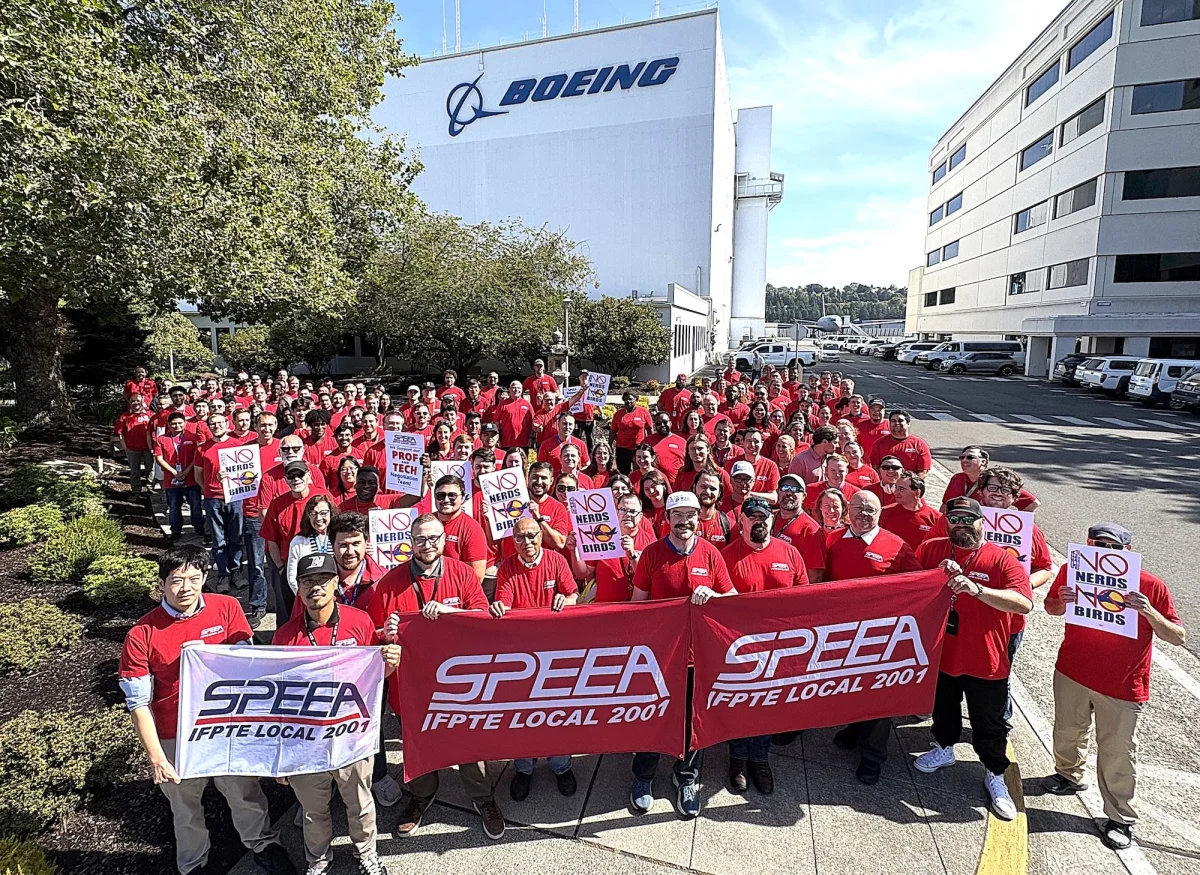
Boeing Tightens Spending Ahead of Critical SPEEA Union Vote
Boeing has implemented spending controls and a hiring freeze as it faces a critical contract ratification vote with its 17,000-member engineering union.

Boeing CEO Kelly Ortberg Warns of 777X Certification Delay
Boeing CEO Kelly Ortberg warned that a potential strike by 17,000 engineers would immediately halt the 777X certification and production programs.

American and United Plan Capacity Cuts Amid Fuel Cost Surge
American and United are trimming flight schedules to offset a $1 billion fuel cost spike while maintaining strong pricing power.

Boeing CEO Reports 737 MAX Output Stabilization Delays
Boeing CEO Kelly Ortberg reports slower 737 MAX production stabilization, prompting a downward revision in 2026 free cash flow expectations to $2 billion.

Boeing Finalizes KAL Order, Salvages Turkish Airlines Deal
Boeing secured a $36.2 billion order from Korean Air Lines for 103 aircraft and nears a resolution on a 150-jet deal with Turkish Airlines.

Airbus Forecasts 42,000 New Jets Amid Strong Global Demand
Airbus expects 42,000 new aircraft deliveries globally by 2045, with 45% of demand concentrated in the Asia-Pacific region.