EASA Restricts Middle East Airspace Amid Rising Geopolitical Risk

Co-Founder & CEOAviation News Editor delivering trusted coverage across the global aviation industry.
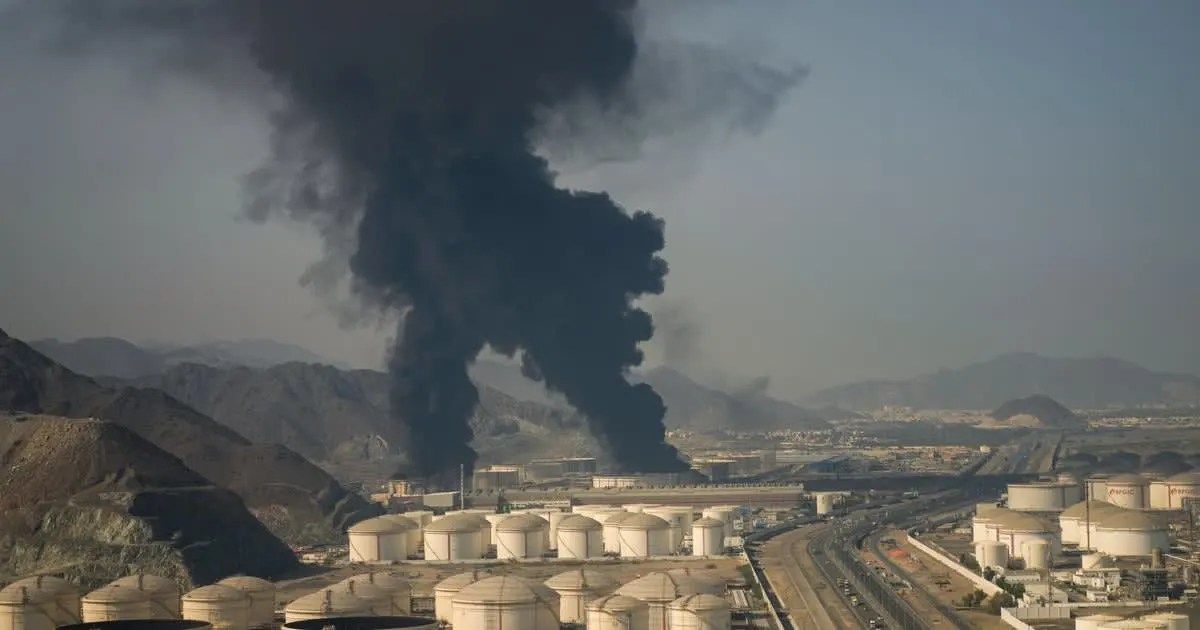
EASA has issued a conflict zone bulletin for 11 Middle Eastern nations, forcing flight reroutes and surging jet fuel prices due to increased military activity.
Key Takeaways
- •Surged jet fuel prices over 65% to $3.50 per gallon amid regional conflict.
- •Forced complex rerouting of Europe-Asia flights after EASA issued warnings for 11 nations.
- •Heightened risk to civil aviation from active air defense systems and drone attacks.
- •Triggered new fuel surcharges of up to $200 on long-haul routes for passengers.
The European Union Aviation Safety Agency (EASA) has issued a critical Conflict Zone Information Bulletin advising against all flight levels over eleven Middle Eastern nations, effectively closing a primary corridor for Europe-Asia traffic. This drastic regulatory action comes in response to escalating military activity, including widespread missile and drone interceptions by Gulf Arab states, which has sent aviation fuel prices surging by over 65%.
The cascading impacts of the regional conflict present a dual crisis for the global aviation industry: a severe and immediate safety risk from uncoordinated military operations, and a profound economic shock. Airlines are now forced into complex and costly rerouting, while grappling with jet fuel prices exceeding $3.50 per gallon. The situation affects long-haul international airlines, global air passengers facing new surcharges, and major Gulf hub airports experiencing significant operational disruptions. For passengers, the consequences include higher fares, with some carriers like Air India already introducing fuel surcharges up to $200 on long-haul routes, and significantly extended travel times.
Regulatory Response and Airspace Closures
In a significant move to protect civil aviation, EASA issued Conflict Zone Information Bulletin (CZIB) 2026-03. The bulletin advises air operators to avoid all flight levels over Bahrain, Iran, Iraq, Israel, Jordan, Kuwait, Lebanon, Oman, Qatar, the United Arab Emirates, and Saudi Arabia's Jeddah Flight Information Region (FIR). This directive, available on the EASA Conflict Zone Information Bulletins (CZIB) repository, cites a high risk from intensified military activity, including air defense systems and potential for misidentification.
Similarly, the U.S. Federal Aviation Administration (FAA) has issued urgent safety alerts and Notices to Air Missions (NOTAMs) for the Tehran (OIIX) and Baghdad (ORBB) FIRs. These notices warn U.S. civil aircraft operators to exercise extreme caution or avoid the region entirely due to uncoordinated missile launches and air defense activations. The sheer volume of military hardware involved is substantial; according to the UAE Ministry of Defense, the nation has detected over 200 ballistic missiles and more than 1,100 drones since the escalation began.
Economic Fallout: Fuel Prices and Surcharges
The threat to regional stability, particularly to the Strait of Hormuz through which roughly 20% of the global oil supply transits daily, has triggered a severe reaction in energy markets. According to Moody's Ratings, U.S. Gulf Coast jet fuel prices surged to more than $3.50 per gallon, a spike of approximately 65% above the 2025 average of $2.12. Brent crude oil prices have also climbed, pushing close to $100 per barrel, representing a 45% increase over the 2025 average.
This sudden cost escalation is being passed directly to consumers and is straining airline profitability. United Airlines CEO Scott Kirby warned that airfare increases will "probably start quick" as the higher fuel costs are absorbed. While an analysis from OpsGroup suggests that physical fuel shortages in markets like the U.S. are unlikely due to strong domestic refinery capacity, it clarifies that the price spike is driven by market risk premiums rather than a true supply deficit.
Historical Precedents and Systemic Risk
The current situation carries echoes of past aviation tragedies and disruptions. The risk of misidentification by active air defense systems was tragically demonstrated in January 2020 with the shootdown of Ukraine International Airlines Flight 752 over Iran, which resulted in 176 fatalities after a Boeing 737 was mistaken for a hostile target. The European Aero-Medical Institute (EURAMI) has explicitly advised that any missions overflying the affected airspaces must undergo strict case-by-case risk assessment due to the presence of advanced air defense systems.
Operationally, the widespread airspace closures are analogous to the February 2022 closure of Russian airspace to Western airlines, which forced a permanent and costly reorganization of major Europe-Asia flight corridors. Airlines are once again implementing complex reroutes, diverting flights south via Egypt and parts of Saudi Arabia or north through the Caucasus, adding hours to flight times and significantly increasing fuel consumption on top of already high fuel prices. The economic shock also parallels the September 2019 drone attacks on Saudi Aramco facilities at Abqaiq–Khurais, which temporarily cut Saudi oil production in half and caused a historic spike in global oil prices.
Technical Analysis
This escalation represents a critical juncture where geopolitical instability has become a primary driver of both operational risk and cost structure in commercial aviation. The event solidifies a trend, previously highlighted by the Russian airspace closure, where major intercontinental air routes can be rendered unusable with little notice, forcing a systemic re-evaluation of network resilience. Unlike previous conflicts confined to specific FIRs, the current closures span nearly the entire Middle East, a region pivotal not only for transit but also as a global hub. The dual threat—direct risk to flight safety from sophisticated air defense systems and indirect economic risk from volatile energy markets tied to the Strait of Hormuz—creates a uniquely challenging environment. This development indicates that airlines must now factor in high-impact geopolitical events not as black swan incidents but as a recurring operational variable, likely accelerating investment in more fuel-efficient long-range aircraft that can bypass volatile regions altogether.
What Comes Next
The immediate future for aviation in the region remains highly uncertain and dependent on geopolitical de-escalation. Regulators are maintaining a high level of vigilance. EASA has confirmed it will review and potentially extend its CZIB 2026-03 bulletin in March 2026, indicating that the current restrictions are not expected to be lifted in the short term. Airlines will continue to operate with extensive rerouting and pass on the associated costs to passengers through higher fares and surcharges.
Why This Matters
This widespread closure of Middle Eastern airspace fundamentally disrupts the global aviation network, underscoring its vulnerability to regional conflicts. For airlines, it triggers a severe financial crisis driven by simultaneous spikes in fuel costs and operational expenses from longer routes. For passengers and cargo, it means higher prices and longer transit times, potentially reshaping global travel and supply chain patterns if the restrictions become protracted.
For in-depth airline coverage and commercial aviation news, omniflights.com delivers timely industry insights. Get the latest updates on major hubs, regional terminals, and airport operations via the Airports section at omniflights.com/airports.
Written by Hardik Vishwakarma
Co-Founder & Aviation News Editor leading initiatives that improve trust and visibility across the global aviation industry. Covers airlines, airports, safety, and emerging technology.
Visit ProfileYou Might Also Like
Discover more aviation news based on similar topics
Ryanair Flight RK514 Diverts to Birmingham After Emergency
Ryanair flight RK514 diverted to Birmingham Airport on September 13, 2026, following a medical emergency involving a passenger.

Amazon Suspends 21 Air After Fatal Miami 767 Runway Overrun
Amazon has suspended operations with 21 Air following a fatal Boeing 767 runway overrun at Miami International Airport that resulted in five deaths.
FAA Proposes A220 Fuel Line Inspections for US Operators
The FAA issued a proposed directive requiring inspection of motive-flow fuel lines on 13 US-registered Airbus A220s to prevent potential leaks.

NATS Denies Military Jet Role in UK ATC Outage
The UK Ministry of Defence denied its aircraft caused a NATS outage that led to over 2,000 flight cancellations and calls for CEO resignation.
21 Air Miami Crash: NTSB Investigates 767 Runway Overrun
A fatal 21 Air Boeing 767 crash at Miami International Airport has triggered an NTSB investigation amid scrutiny of Amazon Air's contract oversight.

Amazon Cargo Plane Crash: 5 Remembered After MIA Excursion
Five cleaning crew members died after an Amazon-contracted Boeing 767 overran the runway at Miami International Airport at 158 knots.