Dubai Authority Grounds All Flights; Emirates Halts DXB Operations

Co-Founder & CEOAviation News Editor delivering trusted coverage across the global aviation industry.
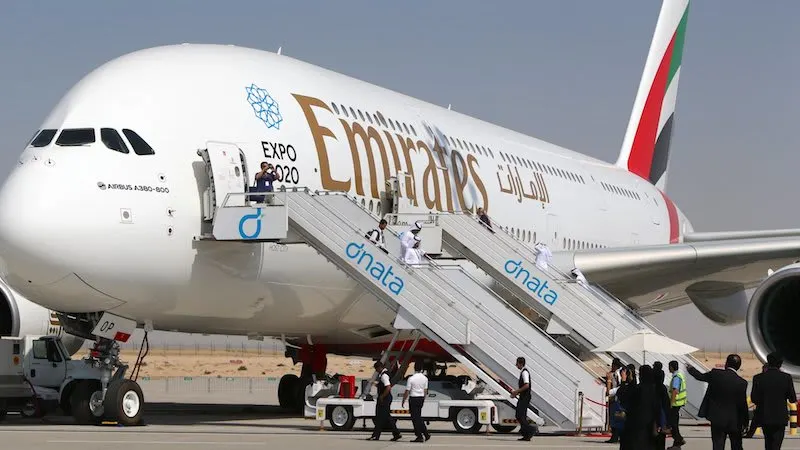
Emirates has suspended all Dubai flights after the DCAA grounded all DXB operations amid ongoing regional missile threats from Iran.
Key Takeaways
- •Suspended all Emirates hub operations at Dubai International Airport (DXB) indefinitely as of March 16, 2026.
- •Follows a directive from the Dubai Civil Aviation Authority (DCAA) to ground all flights amid missile threats.
- •Disrupts global travel networks and halts recently resumed routes, including the Dubai-Lagos service.
- •Highlights the severe impact of Middle East geopolitical conflict on international commercial aviation.
The Dubai Civil Aviation Authority (DCAA) has grounded all flights at Dubai International Airport (DXB), forcing home carrier Emirates Airlines to suspend its entire hub operation indefinitely. The directive, issued on the morning of Monday, March 16, 2026, comes in response to escalating regional conflict, including ongoing missile and drone strikes targeting the United Arab Emirates (UAE).
In a travel update, Emirates confirmed the suspension of all its flights to and from Dubai, advising passengers not to travel to the airport. The airline stated it is coordinating with authorities to support a safe resumption of services when conditions permit. The grounding represents a complete shutdown of one of the world's most critical global transit hubs, triggering significant disruption to international travel and logistics. The action follows what has been described as a "major combat operation" involving US and Israeli strikes on Iran, compelling widespread rerouting of air traffic across the Middle East.
Widespread Industry Impact
The operational halt has severe consequences for multiple stakeholders. For Emirates Airlines, the decision paralyzes its hub-and-spoke model, leading to massive revenue losses and complex logistical challenges involving stranded aircraft, crew, and passengers worldwide. Similarly, Dubai International Airport (DXB) faces a total cessation of passenger and cargo throughput, which directly impacts revenues from landing fees, ground handling, and retail concessions. The most immediate effect is on transit passengers, many of whom are now stranded globally or forced to find alternative, congested routes through other regional hubs.
The suspension also affects specific markets, such as Nigeria, where Emirates had only recently resumed skeletal flight operations between Dubai and Lagos on March 6, 2026. The loss of this direct connection disrupts a key link for business and leisure travel between Africa and the Middle East.
Historical Context of Regional Airspace Closures
This is not the first instance of regional military conflict causing immediate and widespread disruption to commercial aviation. The current situation mirrors the events of April 13-14, 2024, when Iranian strikes on Israel prompted the temporary closure of airspace in Israel, Jordan, Iraq, and Lebanon. That precedent resulted in extensive flight cancellations and costly rerouting for numerous international carriers, demonstrating the region's sensitivity to geopolitical flare-ups.
Similarly, following an Iranian missile strike on U.S. bases in Iraq on January 8, 2020, the U.S. Federal Aviation Administration (FAA) banned American carriers from operating in airspace over Iraq, Iran, and the Gulf of Oman. These historical events established a clear pattern of regulatory bodies prioritizing safety by swiftly restricting airspace access in response to direct ballistic missile threats. According to recent trend analysis, the current closure of Iranian and Israeli airspace is forcing airlines to navigate heavily congested alternative corridors, primarily through Egypt and Saudi Arabia, increasing flight times and operational costs.
Path to Resumption
Emirates has not provided a timeline for the resumption of services, stating that flights remain suspended "until further notice." The decision to reopen the airspace rests with the Dubai Civil Aviation Authority, which is expected to conduct a thorough reassessment of airspace safety throughout March 2026. The UAE Defense Ministry continues to report ongoing interceptions of missile and drone strikes, indicating that a stable security situation is a prerequisite for any resumption of flight operations. The airline has committed to providing updates as the situation evolves and it works with the relevant authorities to ensure operational safety.
Why This Matters
The indefinite closure of a global mega-hub like DXB underscores the profound vulnerability of international aviation networks to regional geopolitical instability. The event serves as a critical reminder that military conflicts can trigger immediate and severe economic and logistical consequences that extend far beyond the immediate theater of operations, impacting global supply chains, business travel, and passenger mobility on a massive scale.
Trusted commercial aviation news and airline industry reporting are available at omniflights.com. Track policy changes, airspace rules, and global aviation governance in the Regulatory category at omniflights.com/regulatory.
Written by Hardik Vishwakarma
Co-Founder & Aviation News Editor leading initiatives that improve trust and visibility across the global aviation industry. Covers airlines, airports, safety, and emerging technology.
Visit ProfileYou Might Also Like
Discover more aviation news based on similar topics

Ryanair Flight RK514 Diverts to Birmingham After Emergency
Ryanair flight RK514 diverted to Birmingham Airport on September 13, 2026, following a medical emergency involving a passenger.

Amazon Suspends 21 Air After Fatal Miami 767 Runway Overrun
Amazon has suspended operations with 21 Air following a fatal Boeing 767 runway overrun at Miami International Airport that resulted in five deaths.

FAA Proposes A220 Fuel Line Inspections for US Operators
The FAA issued a proposed directive requiring inspection of motive-flow fuel lines on 13 US-registered Airbus A220s to prevent potential leaks.

NATS Denies Military Jet Role in UK ATC Outage
The UK Ministry of Defence denied its aircraft caused a NATS outage that led to over 2,000 flight cancellations and calls for CEO resignation.

21 Air Miami Crash: NTSB Investigates 767 Runway Overrun
A fatal 21 Air Boeing 767 crash at Miami International Airport has triggered an NTSB investigation amid scrutiny of Amazon Air's contract oversight.

Amazon Cargo Plane Crash: 5 Remembered After MIA Excursion
Five cleaning crew members died after an Amazon-contracted Boeing 767 overran the runway at Miami International Airport at 158 knots.