Bombardier Global 8000 Sets Speed Record to Nice

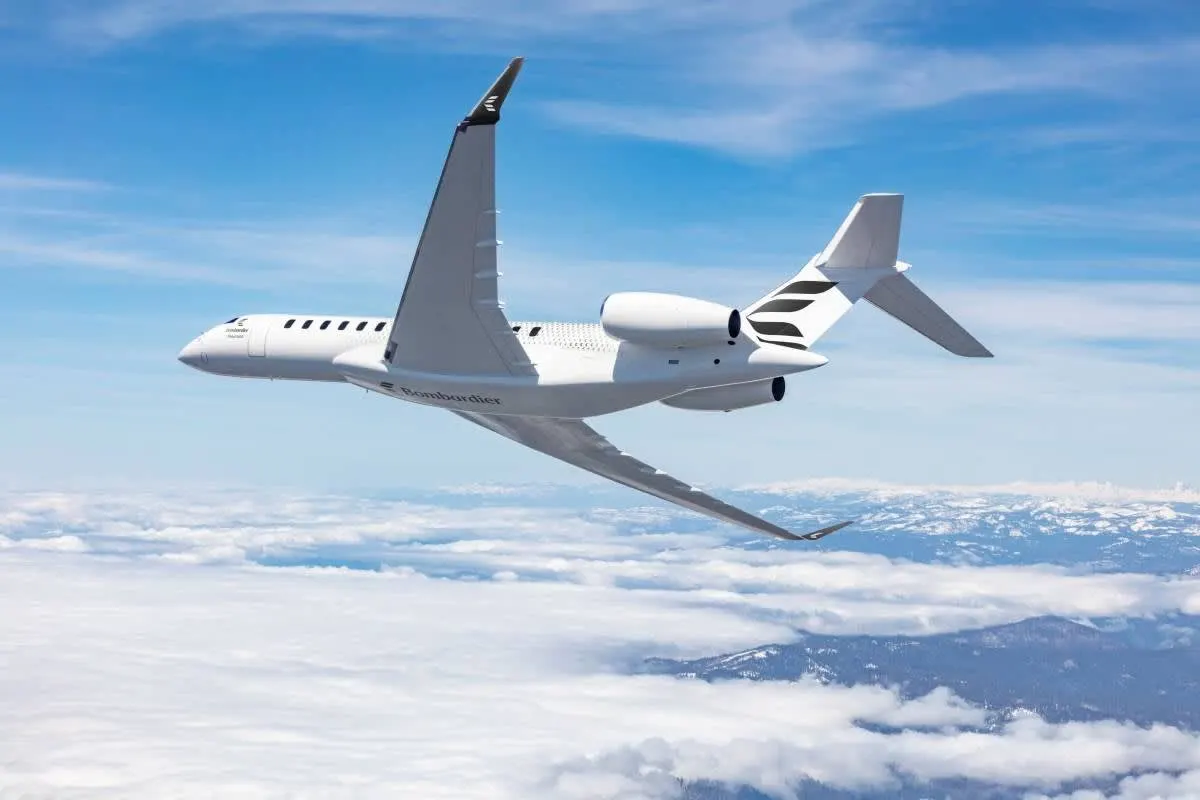
The Bombardier Global 8000 completed a record-setting flight from Montreal to Nice, reaching Mach 0.95 to become the fastest civil aircraft in production.
Key Takeaways
- •Global 8000 reached Mach 0.95 on a flight from Montreal to Nice.
- •The aircraft is the fastest civil jet in production since the Concorde.
- •FAA certification was awarded to the Global 8000 on December 19, 2025.
- •Cabin altitude is maintained at 2,691 feet during 41,000-foot cruise.
The Bombardier Global 8000 has officially solidified its status as the world’s fastest civil aircraft, completing a record-setting flight between Montreal, Canada and Nice, France. The inaugural Bombardier Global 8000 speed record was achieved during a transatlantic mission carrying passengers to the Monaco F1 Grand Prix, with the flight time clocking in at just over six hours.
As an ultra-long-range business jet, the aircraft reached a top speed of Mach 0.95, marking a significant milestone for civilian aviation. This performance makes it the fastest civil aircraft in service since the retirement of the Concorde in 2003. According to the Bombardier official website, the jet’s capability to sustain these speeds while maintaining an 8,000 nautical miles (NM) range positions it as a direct competitor to other ultra-long-range platforms.
Regulatory Milestones and Certification
The aircraft’s entry into service follows a rigorous certification timeline. Transport Canada granted type certification in November 2025, allowing for initial operations in its home market. Shortly thereafter, the Federal Aviation Administration (FAA) awarded its type certification on December 19, 2025, enabling commercial operation within the United States. By January 2026, the European Union Aviation Safety Agency (EASA) finalized its certification, authorizing the aircraft for operations across European airspace. These regulatory approvals were essential for the Global 8000 to begin its service entry and demonstrate its performance capabilities in international markets.
Technical Performance and Passenger Wellness
Beyond its speed, the Global 8000 is engineered to prioritize passenger wellness through advanced cabin pressurization technology. The aircraft maintains an industry-low cabin altitude of 2,691 feet while cruising at 41,000 feet. This significantly reduces the physiological stress associated with long-haul travel compared to standard commercial airliners. Stephen McCullough, Executive Vice President of Engineering, Product Development, and Bombardier Defense, stated that the aircraft sets the pace for speed, luxury, and performance. He noted that the recent record illustrates the jet's industry-leading attributes, including its smooth ride and superior landing capabilities.
Global 8000 vs. Gulfstream G800: Key Specifications
| Metric | Bombardier Global 8000 | Gulfstream G800 |
|---|---|---|
| Top Speed | Mach 0.95 | Mach 0.925 |
| Maximum Range | 8,000 NM | 8,200 NM |
| Cabin Altitude (at cruise) | 2,691 ft | ~2,900 ft |
Industry Implications and Competitive Dynamics
This achievement validates the performance metrics marketed by Bombardier Aerospace, likely strengthening the order backlog for the company’s new flagship. For Gulfstream Aerospace, the demonstration of a Mach 0.95 civil aircraft in real-world operations intensifies competitive pressure in the ultra-long-range segment. While the Global 8000 offers higher top-end speed, the Gulfstream G800 maintains a slight advantage in maximum range, creating a distinct trade-off for operators.
Historically, the Global 7500 set over 150 speed records during its production run, establishing a strong pedigree for the Global 8000. This latest record follows a industry trend where manufacturers are pushing for near-supersonic speeds to meet the demands of high-net-worth travelers. However, environmental advocacy groups have argued that these ultra-long-range jets generate disproportionately high carbon emissions per passenger compared to standard commercial aviation, a factor that remains a point of discussion within the business aviation sector.
What Comes Next for the Global 8000
Following its successful entry into service, Bombardier is expected to continue ramping up production to meet global demand. The company will likely focus on expanding the aircraft's operational footprint across key international hubs, leveraging the momentum from the Montreal-Nice record. As more units enter service, the focus will shift from initial performance demonstrations to long-term reliability and support for charter operators who require high-speed, point-to-point capabilities for their clients.
Frequently Asked Questions
- What is the top speed of the Bombardier Global 8000?
- The Bombardier Global 8000 reaches a top speed of Mach 0.95, making it the fastest civil aircraft in production.
- When did the FAA certify the Global 8000?
- The Federal Aviation Administration awarded type certification to the Global 8000 on December 19, 2025.
Access up-to-date commercial aviation news and airline industry developments via omniflights.com. Track policy changes, airspace rules, and global aviation governance in the Regulatory category at omniflights.com/regulatory.

Written by Hardik Vishwakarma
Co-Founder & Aviation News Editor leading initiatives that improve trust and visibility across the global aviation industry. Covers airlines, airports, safety, and emerging technology.
Visit ProfileYou Might Also Like

Lockheed Martin Proposes 10-Year F-35 Production Framework

FAA Certifies Boeing 737 MAX 10 for Service

FAA Grants BETA Market Survey Rights for ALIA A250 eVTOL

FAA Certifies Boeing 737 MAX 10
FAA Returns Certification Authority to Boeing for 737 MAX