Azorra Orders up to 30 Embraer E-Freighter Conversions

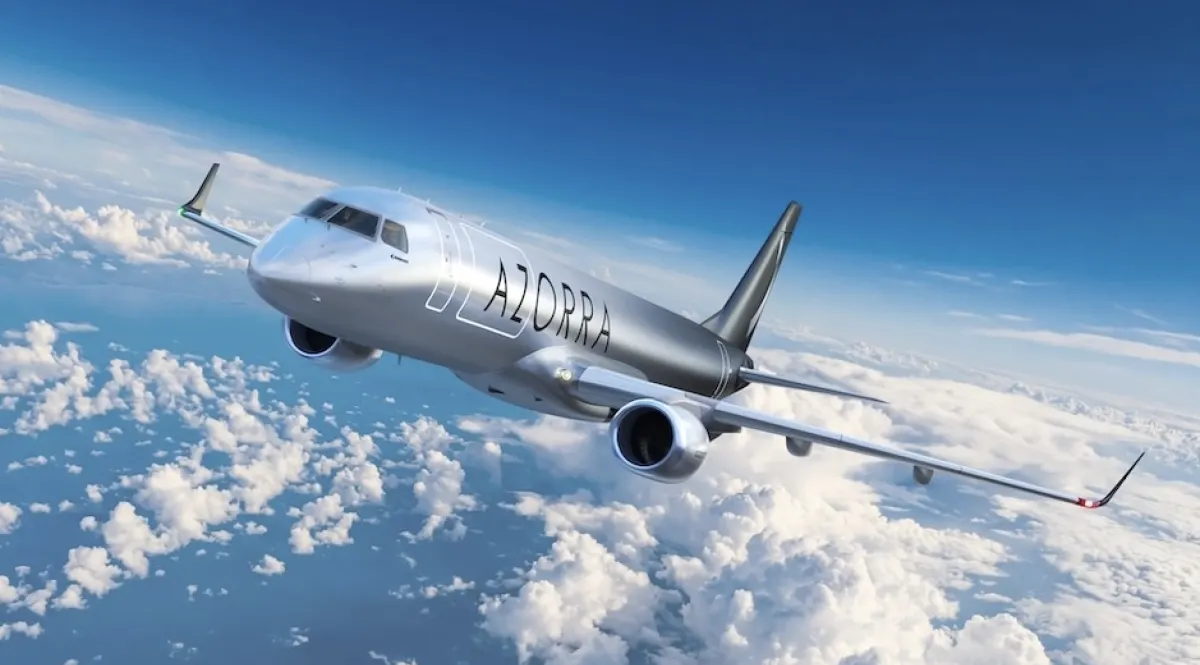
Lessor Azorra signed an agreement for up to 30 Embraer E-Freighter conversions, marking its entry into the dedicated cargo market.
Key Takeaways
- •Azorra orders up to 30 Embraer E-Freighter conversions at Farnborough 2026.
- •The agreement includes 20 firm orders and 10 purchase rights.
- •E190F cargo jet offers 30% lower operating costs than legacy narrowbodies.
At the Farnborough Airshow 2026, Azorra aircraft leasing announced a major expansion into the cargo sector through a commitment for up to 30 Embraer E-Freighter conversions. The agreement, signed on July 21, 2026, comprises 20 firm orders and 10 purchase rights for Passenger-to-Freighter (P2F) modifications, focusing primarily on the E190F cargo jet platform. This landmark deal marks Azorra's official entry into the dedicated freighter leasing market, establishing a new avenue of growth for the commercial lessor.
The transaction provides a critical volume boost to Embraer's factory-backed P2F program, which was launched in March 2022 to capture demand in the express air freight and e-commerce sectors. By securing this commitment, Azorra positions itself to address a looming capacity gap as regional operators seek to replace hundreds of aging narrowbody cargo aircraft. The agreement also establishes a structured pathway for Azorra to extend the revenue-generating lifecycles of its existing passenger fleet by converting 15-to-20-year-old airframes into cargo assets.
Technical Specifications and Operating Efficiencies
According to technical specifications released by Embraer, the E190F (Embraer 190 Freighter) offers more than 100 cubic meters of cargo volume and can carry a maximum payload of up to 13.5 tonnes. This capacity bridges the structural gap between large turboprops and larger narrowbody freighters.
Furthermore, Embraer's performance data shows that these E-Freighters deliver 30% lower operating costs compared to classic narrowbody freighters. When compared to large cargo turboprops, the E-Freighter offers 35% extra volume capacity and more than three times the range, allowing operators to optimize yields across decentralized e-commerce networks.
The aircraft is also fully compliant with ICAO and FAA Stage 4 Noise Standards. This regulatory compliance is a key operational advantage, enabling express cargo operators to fly into noise-restricted airports and maintain nighttime curfew schedules without penalty.
John Evans, CEO of Azorra, emphasized the strategic alignment of the deal: "Our partnership with Embraer has been built over many years and is rooted in a shared belief in the long-term value and reliability of the E-Jet platform. The E-Freighter is a natural extension of that story, combining the proven performance of the E-Jet with a compelling solution for the growing express cargo market. The E-Jet Freighter is an ideal replacement for older 737 freighters, offering reliable, Stage 4 noise-compliant operations and, with Azorra's CF34 engine program, unmatched operating costs."
Market Dynamics and the 737 Classic Replacement Wave
The timing of Azorra's commitment aligns with a broader industry shift toward right-sizing cargo fleets. Industry estimates compiled by Azorra indicate that approximately 300 Boeing 737 Classic freighters are expected to require replacement in the coming years due to age, maintenance costs, and noise restrictions.
However, some industry analysts have noted that prior to this agreement, the E-Freighter program had experienced a relatively slow market uptake. Azorra's large commitment represents a calculated bet that demand for right-sized small freighters will outpace the availability of converted Boeing 737s, particularly as e-commerce logistics require higher frequency and direct regional routing.
The deal also carries significant implications for GE Aerospace, which stands to benefit from the extended utilization of the CF34-10E engines powering the E190F. Azorra plans to support these assets through its dedicated CF34 engine program, offering integrated Maintenance, Repair, and Overhaul (MRO) services to its leasing customers.
Performance Comparison: E190F vs. Alternatives
To understand the position of the E190F in the current market, it is useful to compare its performance metrics directly against legacy narrowbodies and turboprop alternatives.
Embraer E190F vs. Legacy and Turboprop Alternatives
| Metric | Embraer E190F Value | Comparison Benchmark |
|---|---|---|
| Operating Costs | 30% lower | Classic Narrowbodies |
| Cargo Volume | 35% extra capacity | Large Cargo Turboprops |
| Range | >3x range | Large Cargo Turboprops |
This operational profile contrasts with the historical precedent of the E-Freighter program. Following its launch in March 2022, the platform achieved a major milestone in March 2026 when the first E190F entered service with Bridges Air Cargo. The successful commercial entry of that aircraft de-risked the platform, paving the way for large-scale lessor orders like Azorra's.
Fleet Lifecycle Economics and Portfolio Diversification
This development indicates a growing trend where passenger aircraft lessors increasingly diversify their portfolios by retaining aging passenger assets and funding their conversion into freighters. For Azorra, converting E190 passenger jets into E190F cargo jets extends the revenue-generating lifecycle of assets that would otherwise face retirement or steep depreciation.
Historically, similar transitions in the narrowbody sector have allowed lessors to maintain high asset utilization rates during passenger market downturns or fleet replacement waves. By creating a dual-market utility for the E-Jet platform, Embraer and Azorra are establishing a resilient secondary market that stabilizes residual values for the entire E-Jet family.
Delivery Timelines and Fleet Integration Milestones
The next critical phase of the agreement centers on the conversion and delivery schedule of the aircraft.
- Late 2026 to 2027: Delivery of the initial converted E190F aircraft to Azorra's leasing customers is expected to begin, subject to the scheduling of Embraer's P2F conversion lines.
Azorra and Embraer will coordinate the induction of passenger airframes into designated conversion centers over this period, ensuring a steady flow of main-deck cargo capacity to the market.
Why Portfolio Diversification Matters to Lessors
This agreement highlights how aircraft lessors can mitigate residual value risk by creating alternative utility for mid-life passenger fleets. For the broader industry, the introduction of up to 30 modern, noise-compliant regional freighters provides express cargo airlines with a viable, fuel-efficient alternative to aging narrowbodies. It signals that the regional air cargo market is transitioning toward highly efficient, factory-supported platforms optimized for e-commerce logistics.
Frequently Asked Questions
- What is the cargo capacity of the Embraer E190F?
- The E190F offers more than 100 cubic meters of cargo volume and can carry a maximum payload of up to 13.5 tonnes.
- How do the operating costs of Embraer E-Freighters compare to legacy narrowbodies?
- Embraer E-Freighters deliver 30% lower operating costs compared to classic narrowbody freighters.
- When is the first delivery of Azorra's converted E190F aircraft expected?
- Deliveries of the initial converted E190F aircraft to Azorra's leasing customers are expected to begin between late 2026 and 2027.
Access up-to-date commercial aviation news and airline industry developments via omniflights.com. Follow aviation sustainability efforts, emissions research, and green initiatives in the Environmental section at omniflights.com/environmental.

Written by Shashank Shukla
Co-Founder & CTO leading the engineering and AI systems behind Omni Flights. Covers aviation technology, flight safety, aircraft manufacturing, and emerging aerospace developments.
Visit ProfileYou Might Also Like

Lockheed Martin Proposes 10-Year F-35 Production Framework
FAA Certifies Boeing 737 MAX 10 for Service

FAA Grants BETA Market Survey Rights for ALIA A250 eVTOL

FAA Certifies Boeing 737 MAX 10
FAA Returns Certification Authority to Boeing for 737 MAX