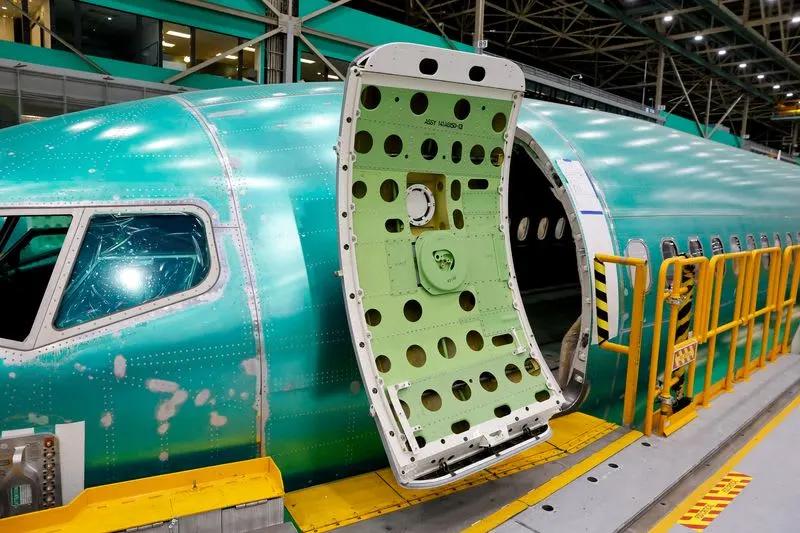
Boeing Faces Headwinds as Iran Conflict Spikes Fuel Costs and Supply Risks


Boeing confronts new geopolitical headwinds from the Iran conflict, which is causing jet fuel prices to surge and threatening aerospace supply chains.
Key Takeaways
- •Faces surging jet fuel costs with the Argus Index reaching $4.88 per gallon.
- •Secured FAA approval to increase 737 MAX production to 42 aircraft per month.
- •Manages supply chain disruptions from the Strait of Hormuz closure affecting composites.
- •Gained a major order for 103 aircraft from Korean Air amid rising operational pressures.
Recent positive momentum for Boeing, including improved regulatory relations and major new orders, is now being tested by significant geopolitical headwinds stemming from the conflict in Iran. The primary impacts are a dramatic surge in jet fuel prices and new uncertainty in the aerospace supply chain, creating a complex operating environment for the manufacturer and its airline customers. According to the Argus Media Jet Fuel Index, U.S. jet fuel prices reached $4.88 per gallon in early April 2026, a near 100% increase over the past six months.
This spike in airline operating costs directly threatens carrier profitability and could dampen demand for new aircraft if sustained. The conflict’s strategic location has also disrupted key shipping lanes, including the Strait of Hormuz, raising concerns about the logistics for critical aerospace components. These external pressures emerge just as Boeing was making progress on its internal recovery, creating a dual challenge for the company's leadership.
Regulatory and Commercial Progress
Prior to the escalation in the Middle East, Boeing had achieved several key milestones. The FAA (Federal Aviation Administration) granted approval for the company to increase its 737 MAX production rate from 38 to 42 aircraft per month. This decision, outlined in the FAA's October 2025 production directive, followed intensive safety reviews and signaled growing confidence in Boeing's manufacturing processes after a period of heightened scrutiny. The regulator also restored Boeing's limited ODA (Organization Designation Authorization), allowing it to issue airworthiness certificates for certain new aircraft under FAA oversight.
Relations with international regulators have also improved. EASA (European Union Aviation Safety Agency) Chief Florian Guillermet noted the positive trend, stating, "We are again trustful partners" with the FAA, a crucial development for smoothing aircraft certification and deliveries globally. This progress was underscored by a significant commercial win in late March 2026, when Korean Air placed a firm order for 103 Boeing aircraft, a deal valued at approximately $36.2 billion at list prices. More details on production can be found via Boeing's investor relations portal.
Geopolitical and Supply Chain Impacts
The conflict has introduced severe economic volatility. The margin between crude oil and jet fuel, known as the crack spread, has surged by 80%, squeezing airline finances. For global carriers, the impact is direct and severe. Korean Air warned in a corporate update that its fuel costs are projected to rise from an average of 220 cents per gallon to 450 cents per gallon. The IATA (International Air Transport Association) continues to track these figures on its Jet Fuel Price Monitor.
Beyond fuel, the Boeing supply chain disruptions are a primary concern. The closure of the Strait of Hormuz directly affects Middle Eastern suppliers, such as UAE-based Strata, which manufactures composite components for the 787 Dreamliner. Boeing has reportedly asked its suppliers to assess logistical impacts. Furthermore, the spike in petrochemical prices threatens the cost and availability of raw materials like epoxy resins, which are essential for composite airframes. This creates a challenging paradox: the high fuel prices increase demand for efficient composite aircraft like the 787, yet the underlying conflict makes them more expensive and difficult to produce.
Historical Context and Analysis
This situation mirrors previous geopolitical shocks that have reshaped aviation. In February 2022, the Russia-Ukraine war resulted in the severing of ties with Russian titanium suppliers and forced costly airspace rerouting for airlines—a pattern of supply chain and operational disruption now recurring. The current crisis also echoes the 1973 Oil Crisis, which accelerated the industry's shift away from fuel-guzzling jets toward more efficient twin-engine aircraft. That historical precedent suggests the current fuel shock could similarly hasten airline fleet renewal, favoring the most fuel-efficient models available.
Technical Analysis
The current crisis highlights a fundamental vulnerability in modern aircraft manufacturing. The industry's move toward lightweight, fuel-efficient composite aircraft like the Boeing 787 Dreamliner—which is composed of 50% carbon fiber composites—was a direct response to previous fuel cost pressures. However, this reliance on advanced materials exposes manufacturers to the volatility of the petrochemical supply chain. The data suggests that while Boeing's internal production quality is improving under regulatory oversight, its greatest vulnerability has shifted to external, macroeconomic forces. The conflict in Iran simultaneously boosts the long-term case for its most advanced products while threatening the very supply chain needed to build them, a core challenge for CEO Kelly Ortberg, who acknowledged in a recent memo that "important work ahead" remains.
What Comes Next
Boeing's ability to navigate these external shocks will be a key focus for investors. The company is expected to release its Q1 2026 earnings in April, which will provide the first official financial assessment of the conflict's impact. Looking further ahead, Boeing and the FAA are expected to approve a further increase in 737 MAX production to 47 aircraft per month by mid-2026, though this timeline could be reassessed based on supply chain stability. Airline executives have begun to warn of potential schedule consolidations and higher airfares if current fuel prices are sustained through the next quarter.
Why This Matters
This confluence of events tests Boeing's resilience at a critical juncture in its recovery. While the manufacturer has made demonstrable progress in addressing internal quality and production issues, its success is now inextricably linked to managing global geopolitical and economic risks. For the wider aviation industry, the crisis serves as a stark reminder of its sensitivity to fuel price volatility and the fragility of complex global supply chains.
Visit omniflights.com for the latest commercial aviation news and airline industry updates. Get the latest updates on major hubs, regional terminals, and airport operations via the Airports section at omniflights.com/airports.

Written by Hardik Vishwakarma
Co-Founder & Aviation News Editor leading initiatives that improve trust and visibility across the global aviation industry. Covers airlines, airports, safety, and emerging technology.
Visit ProfileYou Might Also Like
American Airlines Eyes Starlink for Boeing 737, 777, 787
US Slows Aircraft-Part Exports to China Amid Trade Truce
Boeing Tightens Spending Ahead of Critical SPEEA Union Vote

Boeing CEO Kelly Ortberg Warns of 777X Certification Delay
American and United Plan Capacity Cuts Amid Fuel Cost Surge