Binani Air Secures AOC for Scheduled Flight Operations in Nigeria

Co-Founder & CEOAviation News Editor delivering trusted coverage across the global aviation industry.

Binani Air has secured an Air Operator Certificate from Nigeria's NCAA to launch scheduled domestic flights, marking a milestone for female-led airlines.
Key Takeaways
- •Secures Air Operator Certificate (AOC) from Nigeria's NCAA for scheduled flights.
- •Will operate an initial fleet of two 18.8-year-old Embraer E170 regional jets.
- •Represents a milestone as a female-founded airline in Nigeria's aviation sector.
- •Expected to launch commercial services in April 2026, boosting domestic capacity.
The Nigeria Civil Aviation Authority (NCAA) has issued a scheduled Air Operator Certificate (AOC) to Binani Air Global Services, authorizing the carrier to commence commercial flight operations. The certification marks the entry of a new airline into the Nigerian domestic market and is a significant development for female leadership in the country's aviation sector.
The airline, founded by Senator Aishatu Binani Dahiru, successfully completed the rigorous five-phase certification process required by the NCAA. At a ceremony in Abuja, NCAA Director-General Capt. Chris Najomo highlighted the milestone, commending the founder's resilience. He emphasized that the approval is just the beginning and urged the new carrier to maintain strict adherence to safety and operational standards, stating there is "no room for compromise in aviation."
According to fleet data from ch-aviation, Binani Air will begin operations with a fleet that includes two 18.8-year-old Embraer E170 regional jets, previously operated by EgyptAir Express, and a 24-year-old Hawker 800XP. The issuance of the scheduled AOC in March 2026 is an upgrade from the non-scheduled (charter) certificate the airline has held since July 2024.
Industry Impact and Context
The launch of Binani Air introduces new competition into Nigeria's domestic aviation market, which is Africa's fifth-largest with 1.16 million scheduled passenger seats as of December 2025. The industry contributes an estimated $2.5 billion to the national GDP. The new airline is expected to increase pressure on incumbent carriers like Air Peace and Ibom Air, particularly on routes in the North-East region, such as Yola and Maiduguri, which have experienced capacity constraints.
Binani Air's entry reflects two key trends in Nigerian aviation. The first is the strategic use of regional jets by startups. By deploying 70-seat Embraer E170s, the airline can build its network efficiently without the higher capital costs associated with larger narrow-body aircraft. This approach mirrors the strategy used by ValueJet, which launched in October 2022 with a fleet of CRJ900 regional jets.
The second trend is the rise of female leadership in a traditionally male-dominated industry. The founding of Binani Air by Aishatu Binani Dahiru follows other notable milestones, including Air Peace's operation of Nigeria's first all-female crewed commercial flight in July 2018. It also aligns with the appointments of women to key executive roles, such as Toyin Olajide as Managing Director of Air Peace and Olubunmi Kuku as Managing Director of the Federal Airports Authority of Nigeria (FAAN).
Technical Analysis
Binani Air's strategy of entering the market with second-hand regional jets is a calculated move to manage risk and capital expenditure. The Embraer 170 (E170) offers operational flexibility on short- to medium-haul domestic routes, allowing the airline to test market demand and build frequency before potentially scaling up its fleet. This contrasts with launching operations with larger, more expensive aircraft that require higher load factors to achieve profitability. The model is well-suited for connecting secondary cities and feeding traffic into major hubs.
This development accelerates the precedent set by other recent entrants in the Nigerian market. It demonstrates that the regional jet model is becoming an established pathway for startups to gain a foothold in Africa's most populous nation. For the NCAA, the certification of another new airline increases its oversight responsibilities, requiring diligent monitoring to ensure continued compliance with Nigeria's stringent safety regulations.
What Comes Next
Following the receipt of its AOC, Binani Air is now positioned to finalize its operational launch plans. According to the airline's projected timeline, the commencement of scheduled commercial flights is expected in April 2026. The initial route network will likely focus on underserved markets in the North-East before expanding to major domestic trunk routes connecting Lagos, Abuja, and Port Harcourt.
In her remarks, founder Aishatu Binani Dahiru acknowledged the support of President Bola Ahmed Tinubu and Aviation Minister Festus Keyamo, crediting them with creating an environment conducive to the airline's launch. The carrier's next steps will involve route proving flights, final crew training, and establishing its commercial infrastructure, including ticketing and ground handling partnerships.
Why This Matters
Binani Air's launch is more than just the addition of a new airline. It signifies a maturation of the Nigerian domestic market, where new entrants are leveraging proven strategies with right-sized aircraft to compete. The airline's emergence provides much-needed capacity, particularly for Nigeria's North-East region, and its status as a prominent female-led enterprise marks a significant milestone for diversity and inclusion in African aviation.
From airline operations to fleet updates, commercial aviation news lives at omniflights.com. Discover how innovation is shaping aviation through aircraft systems, avionics, and digital tools at omniflights.com/technology.
Written by Hardik Vishwakarma
Co-Founder & Aviation News Editor leading initiatives that improve trust and visibility across the global aviation industry. Covers airlines, airports, safety, and emerging technology.
Visit ProfileYou Might Also Like
Discover more aviation news based on similar topics

Flydubai Upgrading 21 Boeing 737 MAX 8s to Flat Bed Seats
Flydubai is retrofitting 21 Boeing 737 MAX 8 aircraft with lie-flat business class seats to standardize its premium product by late 2027.
Emirates Winter Booking Momentum Grows Amid Fleet Expansion
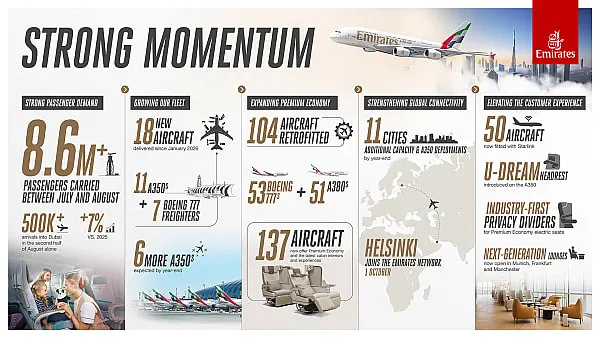
Emirates carried 8.6 million passengers this summer and enters winter with strong demand as it accelerates fleet retrofits and network growth.

Air Arabia Consortium Gains AOC for New Dammam Budget Airline
A Saudi GACA-led consortium including Air Arabia has secured an AOC to launch a new budget airline based at Dammam's King Fahd International Airport.

Turkish Airlines Exits Luanda as Angola Hub Struggles
Turkish Airlines dropped its Luanda route as Angola's new airport struggles to attract traffic, handling only 756,028 passengers in 2025.

Red Sea Airlines Leases Two 737 MAX 8s for 2027 Expansion
Red Sea Airlines signed a lease for two Boeing 737 MAX 8 aircraft from SMBC Aviation Capital, arriving in 2027 to support its 14-aircraft fleet goal.

Avelo CEO Warns Airfares May Rise on Jet Fuel Price Spikes
Avelo Airlines CEO Andrew Levy warns that rising fuel costs may force fare increases as global jet fuel prices reach $171.01 per barrel.