Bangladesh Reviews 8 STOL Ports for Domestic Expansion

Co-Founder & CEOAviation News Editor delivering trusted coverage across the global aviation industry.
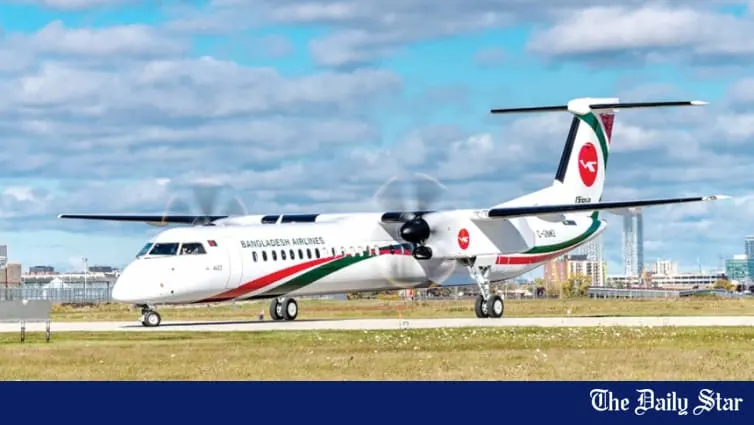
Civil Aviation Minister Afroza Khanam announced feasibility studies for eight STOL ports to boost domestic connectivity alongside Biman's fleet growth.
Key Takeaways
- •Bangladesh evaluates 8 STOL ports for new domestic airport operations.
- •Biman Bangladesh targets a 47-aircraft fleet by 2035.
- •Biman signed a $3.7 billion agreement for 14 new Boeing jets.
- •Feasibility studies focus on regional connectivity and economic growth.
Infrastructure Upgrades for Regional Connectivity
Civil Aviation and Tourism Minister Afroza Khanam confirmed this week that the government has launched formal feasibility studies to transform existing Short Take-Off and Landing (STOL) ports into functional domestic airports. This initiative, which centers on improving national air connectivity, is currently evaluating eight districts: Bogura, Lalmonirhat, Thakurgaon, Ishwardi in Pabna, Shamshernagar in Moulvizbazar, Khanjahan Ali in Bagerhat, Cumilla, and Patuakhali. The move is part of a broader government strategy to establish a tiered air network, initially connecting divisional cities before expanding to the district level.
According to the Ministry of Civil Aviation and Tourism, the Civil Aviation Authority of Bangladesh (CAAB) will oversee the technical requirements for these sites. This includes potential runway extensions and the implementation of modern navigation systems. The government intends to finalize operational plans once consulting firms submit detailed reports on the viability of each location. This strategy mirrors successful regional models like India's Regional Connectivity Scheme (UDAN), which has successfully reactivated dozens of previously underserved airstrips to stimulate local economic growth.
Biman Bangladesh Airlines Fleet Expansion
Beyond infrastructure, the government is focusing on the growth of the national carrier, Biman Bangladesh Airlines. Minister Khanam reported that the airline has added nine aircraft to its fleet over the past 15 years. This includes two Boeing 787-9 aircraft delivered in 2019, five Dash 8-400 turboprops between 2020 and 2021, and two Boeing 737-800 jets in 2021. These additions represent a steady, if incremental, modernization of the carrier's capabilities.
Looking forward, the airline has codified its requirements in the Biman Bangladesh Airlines Fleet Expansion Plan 2026-2035, which projects a need for 47 aircraft by 2035. To support this trajectory, Biman has signed a firm order with Boeing Commercial Airplanes for 14 new aircraft. This $3.7 billion order includes eight 787-10s, two 787-9s, and four 737 MAX 8s. This acquisition solidifies Biman’s reliance on the Boeing 787 Dreamliner family to drive international growth, particularly on high-demand routes to the Middle East.
Technical Comparison: 787-10 vs 787-9
| Metric | Boeing 787-10 | Boeing 787-9 |
|---|---|---|
| Typical 2-class Capacity | 336 passengers | 296 passengers |
| Range | 6,330 nmi | 7,565 nmi |
| Length | 68.27 m | 62.81 m |
Strategic Outlook and Fleet Dynamics
This development indicates a pivot toward a more aggressive modernization cycle for Biman Bangladesh Airlines. By standardizing its widebody operations around the Boeing 787 family, the carrier aims to improve fuel efficiency by 20% to 25% compared to older airframes. However, the decision to commit to an all-Boeing widebody fleet has faced scrutiny. Competitors, notably Airbus, have submitted proposals for a mixed-fleet strategy featuring the A350 and A321neo, arguing that such a configuration would provide Biman with greater operational flexibility and route adaptability. The final composition of the fleet remains a subject of active debate within the airline's techno-finance committee.
Delivery and Operational Milestones
The delivery of the 14 newly ordered Boeing aircraft is expected to occur between November 2031 and October 2035. During this period, the CAAB will be responsible for the certification and induction of these new airframes into the national carrier's Air Operator Certificate (AOC). For the regional STOL project, the primary milestone will be the completion of the feasibility reports, which will determine the funding and construction schedules for the eight identified districts.
Why This Matters for Regional Growth
The reactivation of these STOL ports is a critical signal for regional economic development in Bangladesh. For residents in districts like Bogura and Shamshernagar, the transition from defunct airstrips to operational domestic airports represents a significant shift in logistics and tourism potential. As the government moves to integrate these sites into a national grid, the success of the project will depend on the ability of the CAAB to balance infrastructure investment with the long-term sustainability of domestic air travel demand.
Frequently Asked Questions
- What is the goal of the Biman Bangladesh Airlines Fleet Expansion Plan 2026-2035?
- The plan aims to grow the national carrier's fleet to 47 aircraft by 2035 to support international network expansion and operational sustainability.
- Which districts are being studied for the conversion of STOL ports into domestic airports?
- The government is conducting feasibility studies for STOL ports in Bogura, Lalmonirhat, Thakurgaon, Ishwardi, Shamshernagar, Khanjahan Ali, Cumilla, and Patuakhali.
Access up-to-date commercial aviation news and airline industry developments via omniflights.com. Follow aviation sustainability efforts, emissions research, and green initiatives in the Environmental section at omniflights.com/environmental.
Written by Hardik Vishwakarma
Co-Founder & Aviation News Editor leading initiatives that improve trust and visibility across the global aviation industry. Covers airlines, airports, safety, and emerging technology.
Visit ProfileYou Might Also Like
Discover more aviation news based on similar topics

Flydubai Upgrading 21 Boeing 737 MAX 8s to Flat Bed Seats
Flydubai is retrofitting 21 Boeing 737 MAX 8 aircraft with lie-flat business class seats to standardize its premium product by late 2027.
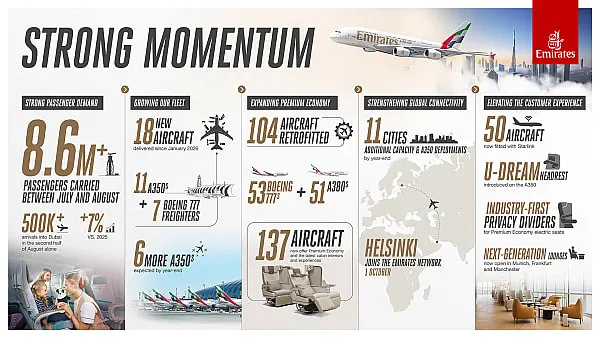
Emirates Winter Booking Momentum Grows Amid Fleet Expansion
Emirates carried 8.6 million passengers this summer and enters winter with strong demand as it accelerates fleet retrofits and network growth.
Air Arabia Consortium Gains AOC for New Dammam Budget Airline
A Saudi GACA-led consortium including Air Arabia has secured an AOC to launch a new budget airline based at Dammam's King Fahd International Airport.
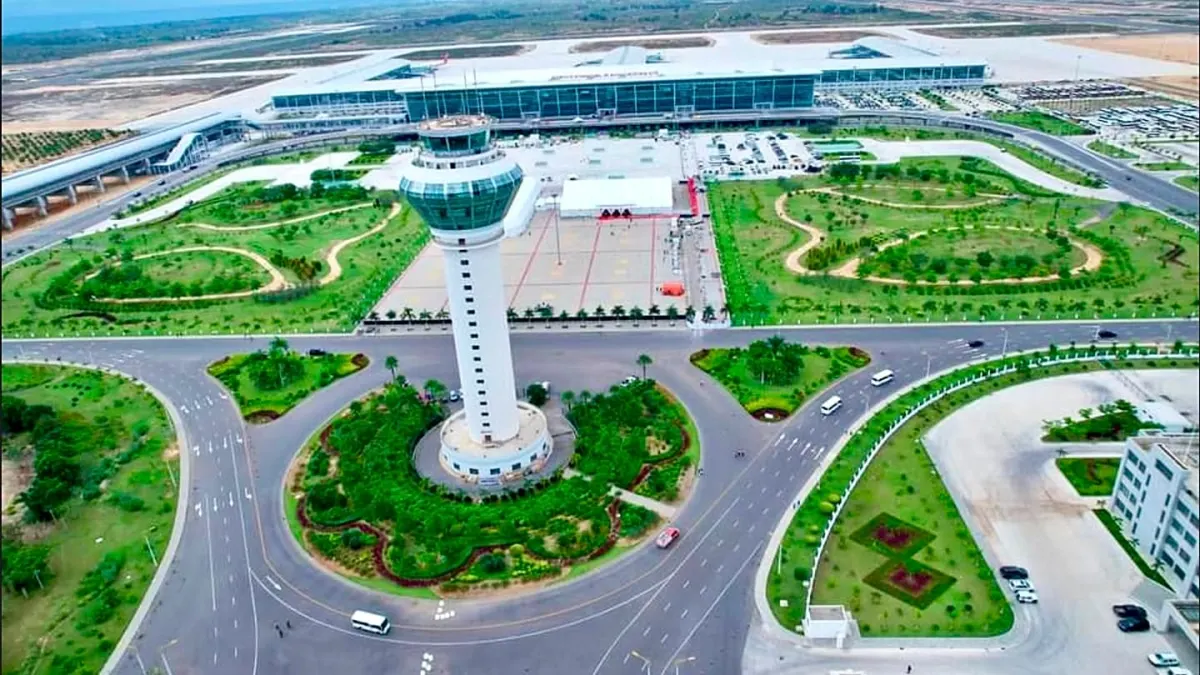
Turkish Airlines Exits Luanda as Angola Hub Struggles
Turkish Airlines dropped its Luanda route as Angola's new airport struggles to attract traffic, handling only 756,028 passengers in 2025.

Red Sea Airlines Leases Two 737 MAX 8s for 2027 Expansion
Red Sea Airlines signed a lease for two Boeing 737 MAX 8 aircraft from SMBC Aviation Capital, arriving in 2027 to support its 14-aircraft fleet goal.

Avelo CEO Warns Airfares May Rise on Jet Fuel Price Spikes
Avelo Airlines CEO Andrew Levy warns that rising fuel costs may force fare increases as global jet fuel prices reach $171.01 per barrel.