Aloha Airlines Flight 243: Fuselage Failure and NTSB Findings

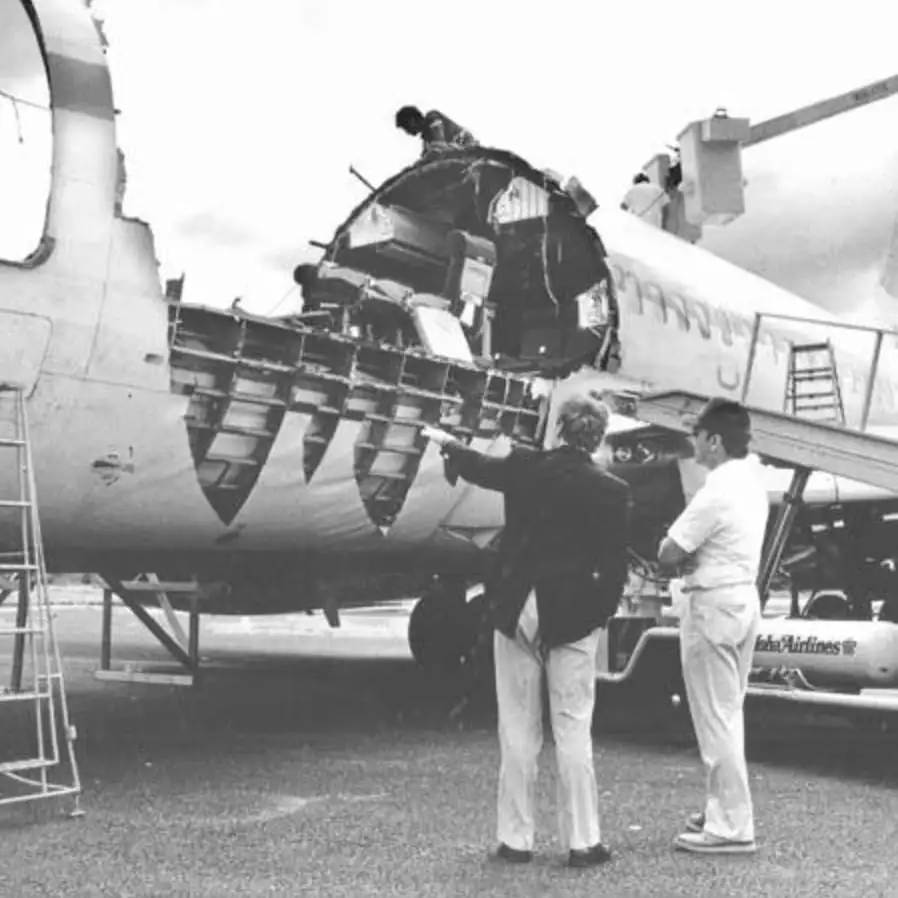
Aloha Airlines Flight 243 suffered explosive decompression in 1988, leading to a landmark shift in how the industry manages aging aircraft structural...
Key Takeaways
- •Aloha Airlines Flight 243 suffered explosive decompression at 24,000 feet in 1988.
- •NTSB identified S-10L lap joint fatigue as the cause of structural failure.
- •The incident forced a global shift to mandatory non-destructive testing for fleets.
- •The 19-year-old aircraft had accumulated 89,680 flight cycles.
The Aloha Airlines Flight 243 Incident
On April 28, 1988, Aloha Airlines Flight 243 departed Hilo Airport on a routine inter-island hop to Honolulu. Shortly after reaching a cruising altitude of 24,000 feet, the Boeing 737 suffered a catastrophic structural failure, leading to Boeing 737 explosive decompression. Approximately 18 feet of the upper fuselage tore away, exposing the cabin to the open sky. Despite the severe damage, the flight crew successfully performed an emergency descent and landed the aircraft at Kahului Airport in Maui approximately 13 minutes after the structural failure, saving 94 of the 95 people on board.
NTSB Investigation and Probable Cause
The National Transportation Safety Board (NTSB) launched an extensive investigation into the incident. The board found that the aircraft, which had accumulated 89,680 flight cycles over 19 years, had exceeded its original design lifespan. This extreme cycle count, combined with the island environment, accelerated aviation structural fatigue. The investigation revealed that epoxy used to bond the fuselage panels had degraded, and the aluminum skin had suffered significant corrosion.
The NTSB's official accident investigation docket states: “We determined that the probable cause of this accident was the failure of the Aloha Airlines maintenance program to detect the presence of significant disbonding and fatigue damage which ultimately led to the failure of the lap joint at S-10L and the separation of the fuselage upper lobe.” The failure initiated at the Stringer 10 Left (S-10L) lap joint, a critical longitudinal structural member.
Regulatory and Industry Impact
The accident served as a catalyst for a fundamental shift in aviation safety. The Federal Aviation Administration (FAA) faced scrutiny for its oversight of maintenance programs. Specifically, the NTSB cited the FAA's failure to mandate Airworthiness Directive 87-21-08, which proposed inspections by Boeing Alert Service Bulletin SB 737-53A1039, as a contributing factor. Following the accident, the industry moved away from reliance on visual-only inspections toward mandatory non-destructive testing and strict limits on pressurization cycles for aging fleets.
Aging Aircraft and Structural Integrity
Historically, the event mirrors other structural challenges in the industry. For example, the 2011 Southwest Airlines Flight 812 incident involved a similar structural failure due to metal fatigue, which subsequently triggered increased inspection rates for older 737 variants. While Aloha Airlines management argued that their maintenance program was compliant with FAA regulations at the time, the incident highlighted the limitations of existing maintenance protocols for high-cycle aircraft.
Boeing 737-200 vs. Boeing 737 MAX 8: Key Specifications
| Metric | Boeing 737-200 | Boeing 737 MAX 8 |
|---|---|---|
| Length | 100 ft (30.5 m) | 129 ft 8 in (39.5 m) |
| Typical Capacity | 115-130 passengers | 162-210 passengers |
| Range | ~1,900 nmi | 3,500 nmi |
Advancing Inspection Standards
The investigation into Aloha 243 forced the FAA to overhaul the National Aviation Safety Inspection Program (NASIP). This shift ensured that regulators evaluated the physical condition of airplanes rather than just relying on paperwork. For Boeing 737 Classic operators, the aftermath introduced rigorous inspection mandates that increased operational costs and accelerated the retirement of older airframes. Aviation Maintenance Providers (MROs) were also required to adopt advanced non-destructive inspection techniques to identify hidden corrosion that visual checks could not detect.
Future Safety and Maintenance Trajectory
The aviation industry continues to refine these standards, particularly as fleets age and operators push aircraft closer to their theoretical cycle limits. The lessons learned from the S-10L failure remain a cornerstone of modern aerospace engineering and maintenance management. By formalizing the relationship between flight cycles and structural degradation, the industry has significantly reduced the risk of similar decompression events in the modern era.
Frequently Asked Questions
- What caused the structural failure on Aloha Airlines Flight 243?
- The NTSB determined the failure was caused by the Aloha Airlines maintenance program's inability to detect significant disbonding and fatigue damage at the S-10L lap joint, which was exacerbated by corrosion and the aircraft's high number of flight cycles.
- How did the aviation industry change after the Aloha Airlines incident?
- The industry shifted from visual-only inspections to mandatory non-destructive testing and implemented stricter limits on pressurization cycles for aging aircraft fleets to better manage structural fatigue.
For global airline trends and commercial aviation news, turn to omniflights.com. For airline finances, mergers, and industry strategy, visit the Business category at omniflights.com/business.

Written by Shashank Shukla
Co-Founder & CTO leading the engineering and AI systems behind Omni Flights. Covers aviation technology, flight safety, aircraft manufacturing, and emerging aerospace developments.
Visit ProfileYou Might Also Like
FAA Grounds Elixir Aircraft After Fatal French Crash

Riyadh Airport Closure Extended Following Deadly Attacks
Riyadh Airport Closure Extended After Deadly Houthi Attack
Riyadh Airport Closed Until October 17 After Houthi Attacks
Delta Delays Atlanta-Riyadh Launch After Airport Attack