Airlines Cut Capacity, Hike Fares as Fuel Costs Threaten 2026 Profitability

Co-Founder & CEOAviation News Editor delivering trusted coverage across the global aviation industry.
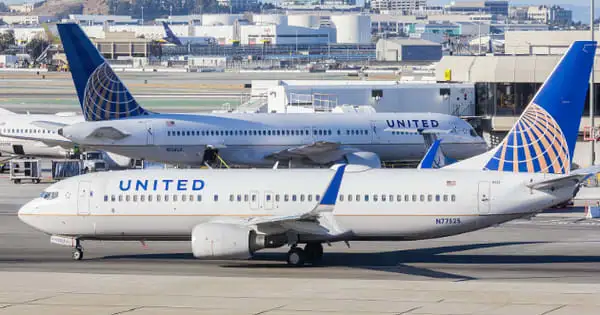
Global airlines are hiking fares and cutting capacity to cope with surging jet fuel costs, threatening a previously forecast $41 billion industry profit.
Key Takeaways
- •Hike fares and cut flight capacity to offset soaring jet fuel costs.
- •Forecast fare increases of up to 20% may be needed to cover rising operational expenses.
- •Jeopardize a projected $41 billion industry profit for 2026 amid weakening demand.
- •Face the fourth major oil shock since 2000, compounded by aircraft delivery delays.
Global airlines are implementing fare hikes and flight schedule reductions as a sharp increase in jet fuel costs threatens industry profitability. The surge in oil prices puts a previously forecast $41 billion global airline profit for 2026, projected by the International Air Transport Association (IATA), at significant risk.
This development creates a difficult operating environment for carriers. They face pressure to increase fares to cover higher fuel expenses while simultaneously confronting potentially weakening travel demand as consumers' budgets are strained by rising gasoline prices. Rigas Doganis, chairman of Airline Management Group, described the situation as a "perfect storm," where the need to stimulate demand with lower fares clashes with the necessity of raising them.
Airlines Respond with Fare Hikes and Surcharges
Carriers worldwide are taking action. United Airlines, Air New Zealand, and Scandinavian Airlines System (SAS) have announced capacity cuts and fare increases. United Airlines CEO Scott Kirby stated that fares would need to rise by 20 percent for the airline to cover the increased fuel expenditure.
Other airlines are using direct surcharges. Hong Kong’s Cathay Pacific Airways has increased its fuel surcharge twice in the last month. Effective April 1, a round-trip flight from Sydney to London will include an $800 surcharge, a substantial increase from the typical A$2,000 (US$1,369.60) fare for the route before the recent conflict.
Disproportionate Impact on Low-Cost Carriers
Analysts suggest that low-cost carriers (LCCs) could be the most affected by the fuel shock. Their business model relies on a price-sensitive customer base that may be quick to abandon air travel if fares rise significantly.
"I think for the more price-sensitive travellers, even the short-haul flying trip gets downgraded, potentially to rail or to bus or other alternatives," said Nathan Gee, Bank of America's head of Asia-Pacific transport research.
This dynamic could widen the financial gap between stronger and weaker airlines. According to Dan Taylor, head of consulting at the aviation advisory firm International Bureau of Aviation (IBA), "Carriers with robust balance sheets, strong pricing power, and reliable access to capital are better positioned to absorb ongoing pressures." In contrast, he noted that airlines with low profitability could face "increasing financial stress."
A Familiar Challenge: Historical Oil Shocks
The current situation marks the fourth major oil shock the airline industry has faced this century. However, it introduces a new concern: the potential for physical fuel supply disruptions due to the closure of the Strait of Hormuz.
Previous shocks have provided a playbook for airlines. The 2007-2008 crisis, which saw oil prices reach $147 per barrel, triggered a wave of mergers among major U.S. carriers, leading to tighter capacity control. The subsequent shocks following the Arab Spring in 2011 and the Russia-Ukraine war in 2022 also forced airlines to adjust networks and pricing.
Andrew Lobbenberg, head of European transport equity research at Barclays, noted that capacity reduction is the primary tool. "The only way to get prices up is to reduce capacity," he said. "That is what I would expect to see happen this time."
Compounding Supply Chain Issues
Airlines' ability to mitigate fuel costs is hampered by ongoing industrial challenges. The most effective long-term strategy for reducing fuel burn is fleet modernization—replacing older aircraft with more efficient new-generation models.
However, persistent supply-chain shortages and engine manufacturing issues have led to significant delays in aircraft deliveries from both Boeing and Airbus. This forces carriers to operate older, less fuel-efficient jets for longer than planned, compounding the financial impact of the fuel price spike.
Why This Matters
This fuel crisis serves as a critical stress test for the global airline industry's post-pandemic recovery. It directly challenges the pricing power that carriers have enjoyed due to constrained capacity and strong travel demand over the past two years. For travelers, the immediate future likely holds higher ticket prices and potentially fewer flight options. For the industry, the event will accelerate the divergence between financially resilient airlines and those with weaker balance sheets, potentially leading to further market consolidation.
From airline operations to fleet updates, commercial aviation news lives at omniflights.com. Get the latest updates on major hubs, regional terminals, and airport operations via the Airports section at omniflights.com/airports.

Written by Hardik Vishwakarma
Co-Founder & Aviation News Editor leading initiatives that improve trust and visibility across the global aviation industry. Covers airlines, airports, safety, and emerging technology.
Visit ProfileYou Might Also Like
Discover more aviation news based on similar topics
American Airlines Eyes Starlink for Boeing 737, 777, 787
American Airlines is reportedly exploring an expansion of its Starlink in-flight Wi-Fi service to its entire Boeing 737, 777, and 787 mainline fleets.
US Slows Aircraft-Part Exports to China Amid Trade Truce
The US is slowing export licenses for aircraft parts to China, using aviation dependencies as leverage in ongoing trade negotiations.
Boeing Tightens Spending Ahead of Critical SPEEA Union Vote
Boeing has implemented spending controls and a hiring freeze as it faces a critical contract ratification vote with its 17,000-member engineering union.
Boeing CEO Kelly Ortberg Warns of 777X Certification Delay
Boeing CEO Kelly Ortberg warned that a potential strike by 17,000 engineers would immediately halt the 777X certification and production programs.
American and United Plan Capacity Cuts Amid Fuel Cost Surge
American and United are trimming flight schedules to offset a $1 billion fuel cost spike while maintaining strong pricing power.
Boeing CEO Reports 737 MAX Output Stabilization Delays
Boeing CEO Kelly Ortberg reports slower 737 MAX production stabilization, prompting a downward revision in 2026 free cash flow expectations to $2 billion.