Airlines Add India-Europe Flights as Gulf Airspace Disrupts Travel

Co-Founder & CEOAviation News Editor delivering trusted coverage across the global aviation industry.
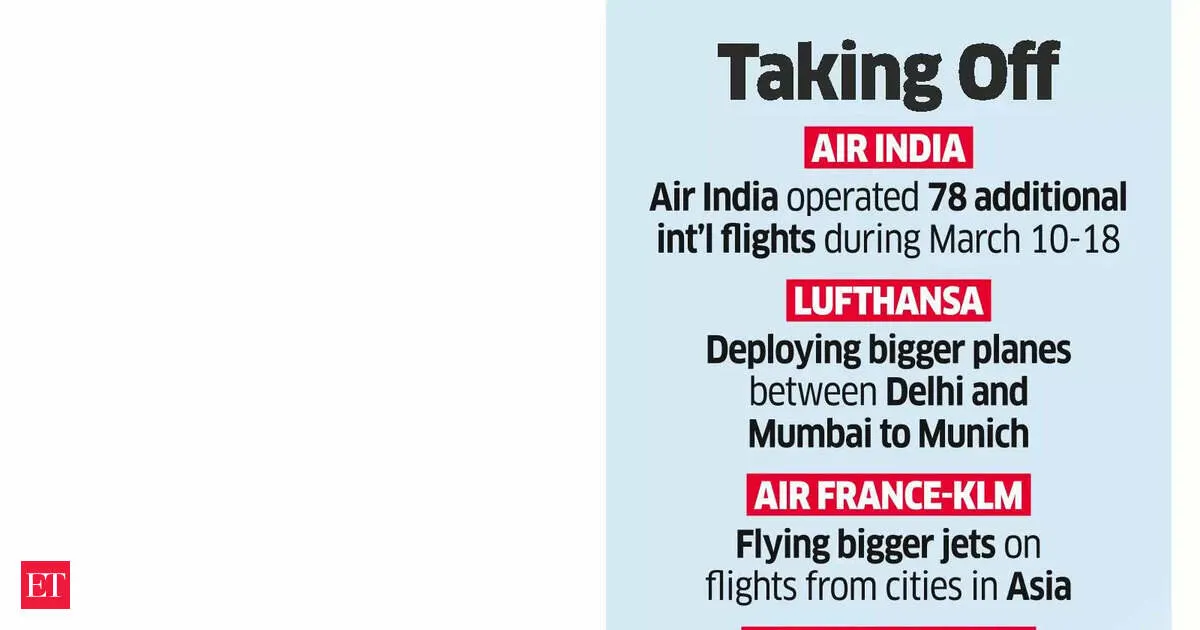
Airlines in India and Europe are adding direct flights and capacity as ongoing conflict disrupts traditional Gulf transit hubs, impacting global travel.
Key Takeaways
- •Adds 78 international flights and 17,660 seats in response to airspace closures.
- •Reroutes flights to Europe and North America, bypassing nine Middle Eastern airspaces per a DGCA advisory.
- •Shifts market dynamics away from Gulf hubs, which previously handled 40% of Indian long-haul traffic.
- •Faces surging airfares and exceptionally high load factors on newly established direct routes.
Indian and European airlines are significantly increasing direct flight capacity as ongoing geopolitical conflict has severely disrupted critical airspace over the Middle East. The move bypasses traditional Gulf transit hubs, fundamentally altering major international travel corridors. In a direct response, Air India operated 78 additional international flights between March 10 and 18, 2026, adding 17,660 seats across nine key routes to Europe and North America.
This strategic shift follows a critical advisory from India's Directorate General of Civil Aviation (DGCA), urging carriers to avoid the airspace of nine Middle Eastern countries, including Iran, Iraq, Israel, and the UAE. The advisory has forced airlines to reroute long-haul flights, leading to longer flight times and increased operational complexity. Flights bound for Europe are now taking alternative paths over Afghanistan, Central Asia, and the Caspian Sea. The situation has created a capacity crunch, with Anil Kalsi, a board member of the Federation of Associations in Indian Tourism and Hospitality (FAITH), noting that flights are operating at near or full capacity, causing airfares to multiply.
Air India Leads Capacity Expansion
Air India has been at the forefront of adding capacity to maintain connectivity. In addition to the flights added in mid-March, the airline is operating 36 additional flights from Delhi and Mumbai to European destinations like Paris (CDG) and Toronto between March 19 and 28, 2026. To service these routes, the airline is deploying its wide-body fleet, including the Boeing 787-8 Dreamliner (B787-8) for European sectors and the larger Boeing 777-300 Extended Range (B777-300ER) for high-demand North American routes. Nipun Aggarwal, Chief Commercial Officer at Air India, emphasized the airline's commitment to sustaining connectivity through safe, alternative routings.
The expansion is a significant move in a market where foreign carriers have historically held a dominant position. According to industry data, foreign airlines control more than an 80% share of the international long-haul market from India. In 2025, nearly 40% of Indian passengers traveling to Europe and North America flew via connecting hubs in the Gulf. With those hubs now largely inaccessible, direct carriers are poised to capture significant market share. European airlines, including Lufthansa and Air France-KLM, are also upgauging aircraft on Indian routes to absorb the displaced passenger demand.
Market Realignment and Historical Precedents
The current disruption echoes previous geopolitical events that have reshaped global aviation. In February 2022, the closure of Ukrainian airspace following Russia's invasion forced European and North American airlines to reroute flights to Asia, adding significant time and fuel costs. Similarly, the closure of Pakistani airspace in February 2019 severely impacted India-bound flights, which had to detour over the Arabian Sea. These precedents demonstrate a consistent pattern where geopolitical conflicts force costly operational adjustments and accelerate shifts in network strategy. The current situation appears to be reinforcing a trend away from reliance on geographically vulnerable transit hubs.
Industry experts view the shift towards direct flights as a logical response. Ravi Gosain, President of the Indian Association of Tour Operators (IATO), noted that airlines are proactively strengthening direct connectivity to reduce dependence on transit points. The impact on stakeholder groups is stark. Gulf hub airlines face a significant loss of transit revenue, while direct European and Indian carriers stand to gain market share and pricing power. For passengers, particularly the Indian diaspora, the disruption has led to stranded travelers and a reliance on limited, more expensive direct flight options.
Technical Analysis
This development represents a significant real-world stress test of the hub-and-spoke model versus the point-to-point model in long-haul international travel. The closure of Middle Eastern airspace effectively removes the primary value proposition of Gulf carriers: their geographically central hubs. The data suggests a rapid, forced migration of traffic to direct carriers, a shift that could have lasting implications. While Gulf carriers argue the situation is temporary, a prolonged disruption could permanently alter passenger booking habits and airline network planning. This event accelerates the trend of de-risking route networks from geopolitical volatility, a pattern seen after the Ukraine and Pakistan airspace closures. The increased deployment of efficient, long-range wide-body aircraft like the B787-8 on direct routes further solidifies the viability of bypassing traditional hubs.
What Comes Next
Air India's current phase of additional flights is scheduled to conclude on March 28, 2026. The next key milestone will be the review of the airspace advisory by the DGCA, which is expected in April 2026. The duration of the airspace closures remains uncertain and is directly tied to the de-escalation of the regional conflict. Until the situation stabilizes, airlines are expected to continue operating on the longer, alternative routes, and capacity on direct India-Europe and India-North America sectors will remain a key focus for the industry.
Why This Matters
This geopolitical event is actively reshaping one of the world's most significant and fastest-growing travel markets. It challenges the long-standing dominance of Gulf carriers in connecting India to the West, creating a strategic opening for Air India and its European counterparts to capture market share. For the broader aviation industry, it underscores the increasing vulnerability of global networks to regional conflicts and highlights the strategic importance of fleet and network flexibility.
omniflights.com provides comprehensive commercial aviation news covering airlines, aircraft, and airports. From aircraft production to supply chains, commercial aviation manufacturing news is covered at omniflights.com/manufacturing.
Written by Hardik Vishwakarma
Co-Founder & Aviation News Editor leading initiatives that improve trust and visibility across the global aviation industry. Covers airlines, airports, safety, and emerging technology.
Visit ProfileYou Might Also Like
Discover more aviation news based on similar topics
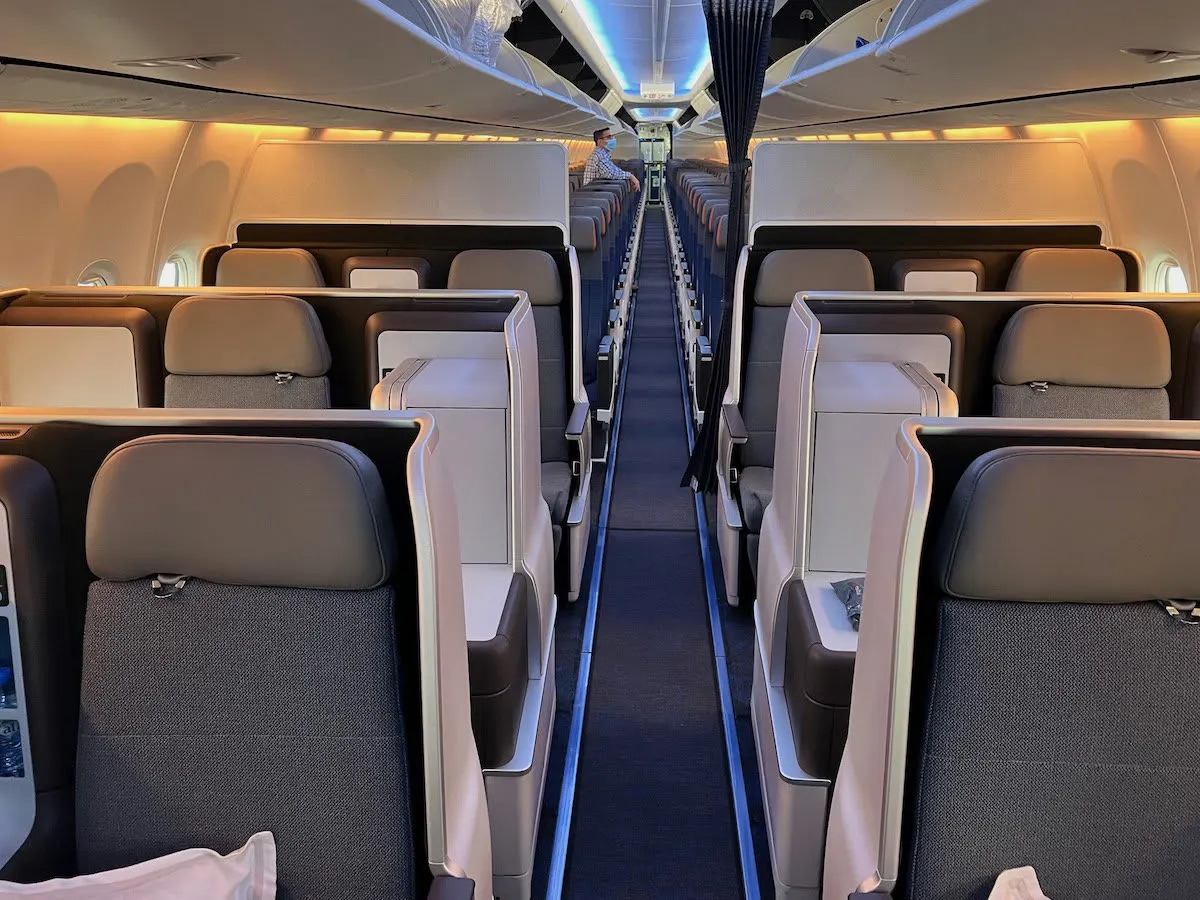
Flydubai Upgrading 21 Boeing 737 MAX 8s to Flat Bed Seats
Flydubai is retrofitting 21 Boeing 737 MAX 8 aircraft with lie-flat business class seats to standardize its premium product by late 2027.
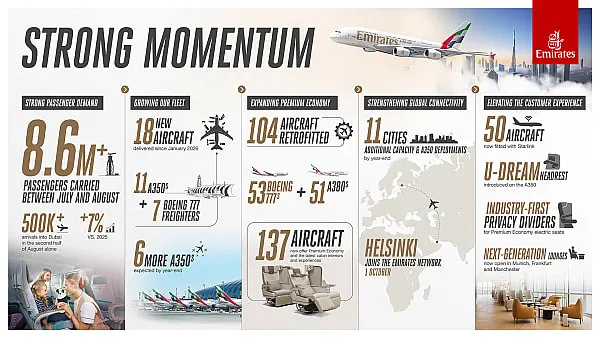
Emirates Winter Booking Momentum Grows Amid Fleet Expansion
Emirates carried 8.6 million passengers this summer and enters winter with strong demand as it accelerates fleet retrofits and network growth.
Air Arabia Consortium Gains AOC for New Dammam Budget Airline
A Saudi GACA-led consortium including Air Arabia has secured an AOC to launch a new budget airline based at Dammam's King Fahd International Airport.
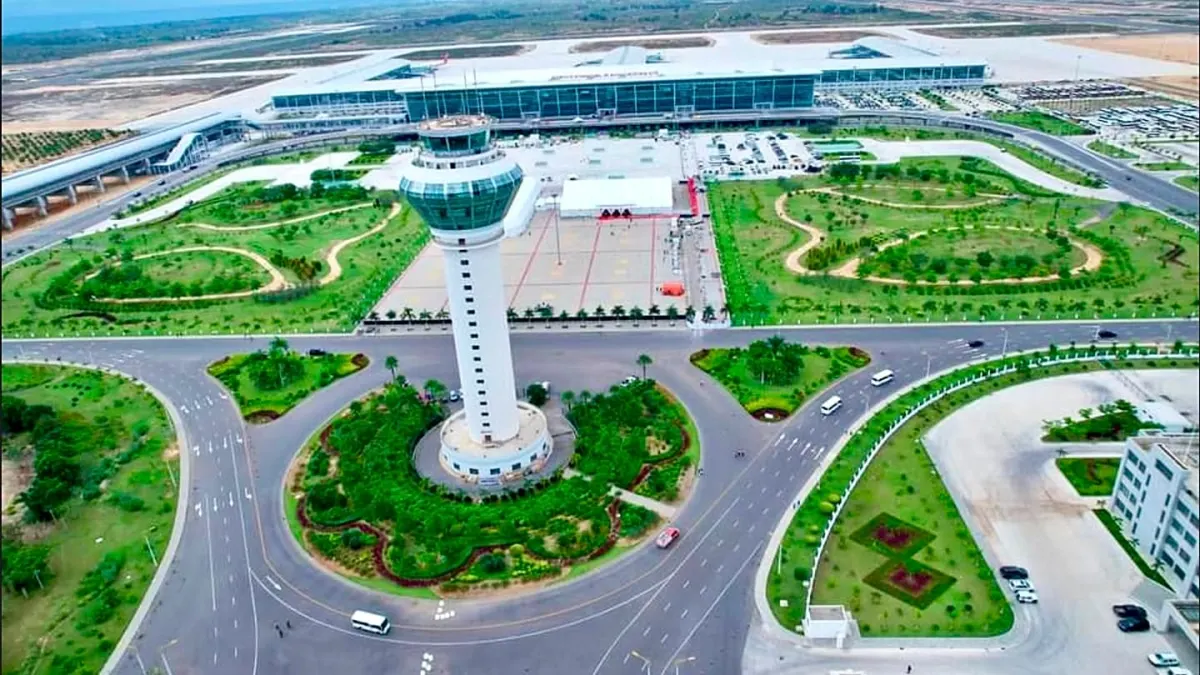
Turkish Airlines Exits Luanda as Angola Hub Struggles
Turkish Airlines dropped its Luanda route as Angola's new airport struggles to attract traffic, handling only 756,028 passengers in 2025.
Red Sea Airlines Leases Two 737 MAX 8s for 2027 Expansion
Red Sea Airlines signed a lease for two Boeing 737 MAX 8 aircraft from SMBC Aviation Capital, arriving in 2027 to support its 14-aircraft fleet goal.
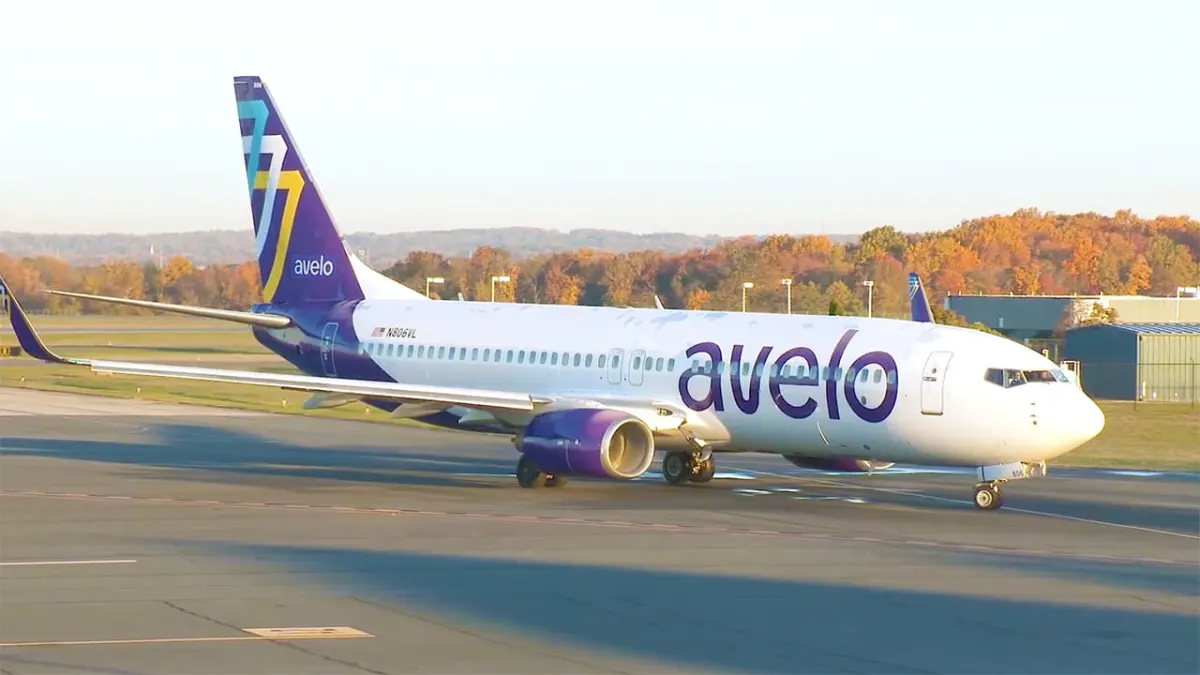
Avelo CEO Warns Airfares May Rise on Jet Fuel Price Spikes
Avelo Airlines CEO Andrew Levy warns that rising fuel costs may force fare increases as global jet fuel prices reach $171.01 per barrel.