airBaltic to Cut Active A220-300 Fleet by One-Third

Aviation News Editor & Industry AnalystAviation News Editor & Industry Analyst delivering clear coverage for a worldwide audience.

airBaltic will cut its active A220-300 fleet to 36 aircraft by 2026 and seek €225 million in interim financing to focus on its Riga hub restructure.
Key Takeaways
- •airBaltic reduces active A220-300 fleet to 36 aircraft by end of 2026.
- •Carrier seeks €225 million in interim financing for recapitalization.
- •Long-term fleet growth target slashed from 100 to 40 aircraft by 2031.
- •Restructuring targets €45 million in recurring annual cost savings.
Latvian carrier airBaltic has announced a major airBaltic fleet reduction, planning to cut its active Airbus A220-300 fleet by approximately one-third by the end of 2026. The carrier will implement a comprehensive Riga hub restructure to consolidate its operations and secure its financial sustainability. According to the airline's revised business plan, President and CEO Erno Hildén will lead the transition to stabilize the carrier amid ongoing supply chain and geopolitical challenges.
This decision marks a dramatic shift in strategy for the Baltic flag carrier. The airline has officially abandoned its previous long-term target of building a 100-aircraft fleet. Instead, airBaltic is pivoting toward a highly consolidated operational model, projecting a gradual recovery to just 40 aircraft by 2031. This scaling back is aimed at preserving cash, optimizing route profitability from its main base at Riga International Airport (RIX), and navigating severe engine availability constraints. The previous growth plan was closely tied to an anticipated airBaltic IPO (Initial Public Offering), which has now been disrupted by market conditions.
Fleet Downsizing and Financial Recapitalization
Under the revised business plan released on August 11, 2026, airBaltic will shrink its active fleet from 54 to approximately 36 aircraft by the end of 2026. To support this transition and meet near-term liquidity requirements, the carrier is seeking airline interim financing of €225 million. This financial restructuring is designed to generate approximately €45 million in recurring annual benefits, primarily achieved through cost efficiencies and administrative streamlining.
The reduction in fleet size will directly impact the airline's capacity. Scheduled service Available Seat Kilometers (ASKs) are projected to drop from 9.6 billion in 2026 to 8.7 billion in 2027. This capacity reduction reflects a strategic decision to prioritize higher-yielding routes and eliminate marginal regional operations. To manage seasonal demand volatility without maintaining an oversized permanent fleet, airBaltic plans to increase its reliance on ACMI wet leasing (Aircraft, Crew, Maintenance, and Insurance) partnerships.
The proposed airline recapitalization and interim financing require formal approval under a Bondholder Resolution and Recapitalization Approval process. The Latvian Government, which is the majority shareholder, has insisted that private capital must share the restructuring burden. Latvian Prime Minister Andris Kulbergs highlighted this position, stating: "While airBaltic is a strategic national asset, the financial burden of its recovery must be shared with private investors and creditors rather than falling entirely on taxpayers."
Commenting on the strategic shift, President and CEO Erno Hildén emphasized the necessity of the restructuring: "Every successful airline must continuously adapt to a changing market. This business plan is about making disciplined choices that strengthen airBaltic's long-term competitiveness while preserving what matters most – reliable connectivity and operations, together with financial sustainability."
Stakeholder Impacts Across the Supply Chain
The restructuring carries significant implications for various aviation stakeholders. For ACMI leasing partners, the shift represents high-severity positive business opportunities, as airBaltic relies more heavily on external wet-lease capacity to smooth seasonal demand. Conversely, the Latvian Government faces high-severity pressure to secure strategic commercial investors and support the interim financing to prevent a potential national carrier default.
For Airbus and engine manufacturer Pratt & Whitney, the impact is of medium severity. Airbus faces the loss of a major growth pipeline for the A220-300 program, while Pratt & Whitney will experience reduced engine utilization and the loss of future engine orders as airBaltic slashes its long-term fleet target from 100 to 40 aircraft.
Historical Precedents and Regional Pressures
The challenges facing airBaltic reflect broader systemic issues within the European regional aviation sector. In particular, the airline's struggles are heavily tied to Pratt & Whitney GTF engines constraints. Prolonged supply chain disruptions and turnaround delays for the PW1500G engines have grounded A220 fleets globally. This operational bottleneck mirrors the Swiss International Air Lines A220 engine groundings between 2019 and 2023, during which Swiss was forced to temporarily ground up to a third of its A220 fleet due to the exact same engine issues, relying on wet-leased replacement capacity to maintain operations.
Furthermore, geopolitical aviation impacts and cost pressures have severely impacted Eastern European carriers. The ongoing war in Ukraine and Middle Eastern conflicts have driven up jet fuel prices and forced carriers to redesign routes, escalating operational costs. Historically, smaller European flag carriers in constrained markets have faced existential threats under similar conditions. The Adria Airways bankruptcy in September 2019, which saw the Slovenian flag carrier cease operations after failing to secure fresh funding, serves as a stark precedent of the regional connectivity risks airBaltic is actively seeking to avoid through its €225 million recapitalization.
The PW1500G Engine Constraints and Geopolitical Pressures Behind the Restructure
This development highlights how technical supply chain vulnerabilities and geopolitical shifts can disrupt even highly focused narrow-body operators. The persistent PW1500G engine constraints have effectively transformed airBaltic's primary asset—its modern, fuel-efficient Airbus A220-300 fleet—into an operational liability due to prolonged aircraft-on-ground (AOG) cycles. When combined with the closure of Eastern European airspace, which has increased flight times and fuel burn, the carrier's previous growth strategy became unsustainable. The pivot to a smaller active fleet of 36 aircraft indicates a broader industry realization: scale cannot overcome systemic supply chain failures. By scaling back and focusing on the Riga hub, airBaltic is aligning its capacity with realistic engine availability and regional demand, prioritizing yield and liquid reserves over aggressive market-share expansion. This move reflects a defensive consolidation trend seen across mid-tier European carriers seeking to insulate themselves from persistent OEM delivery delays.
Key Milestones in the airBaltic Recapitalization Timeline
The implementation of airBaltic's revised business plan depends on several critical regulatory and operational milestones.
- On August 17, 2026, airBaltic and its institutional bondholders are scheduled to hold a re-convened bondholder vote to decide on the €225 million interim financing and recapitalization resolutions.
- By the end of 2026, the airline is expected to complete the reduction of its active Airbus A220-300 fleet to approximately 36 aircraft.
- Following this contraction, a period of gradual, disciplined growth is expected to bring the fleet to approximately 40 A220-300 aircraft by 2031.
The success of this timeline remains subject to securing bondholder approval and stabilizing the Pratt & Whitney engine supply chain.
Why the Baltic Regional Market Is Watching
This restructuring is a critical test of whether a small, state-backed European flag carrier can survive major external supply chain shocks without relying entirely on taxpayer bailouts. The outcome will signal to other regional operators how to balance fleet growth against persistent engine reliability issues. For passengers and businesses in the Baltic region, the consolidation of services around Riga will determine the future of regional connectivity and airfare pricing.
Frequently Asked Questions
- Why is airBaltic reducing its Airbus A220-300 fleet size?
- airBaltic is reducing its active fleet to 36 aircraft to focus resources on its Riga hub, manage persistent Pratt & Whitney GTF engine supply constraints, and mitigate geopolitical cost pressures in Eastern Europe.
- How much financing is airBaltic seeking for its restructuring?
- The airline is seeking €225 million in interim financing as part of a broader recapitalization plan to meet near-term liquidity requirements.
- What is airBaltic's new long-term fleet size target?
- airBaltic has abandoned its previous goal of a 100-aircraft fleet, now targeting a gradual recovery to approximately 40 aircraft by 2031.
Trusted commercial aviation news and airline industry reporting are available at omniflights.com. Discover how innovation is shaping aviation through aircraft systems, avionics, and digital tools at omniflights.com/technology.
Written by Ujjwal Sukhwani
Aviation News Editor & Industry Analyst delivering clear coverage for a worldwide audience. Covers flight operations, safety regulations, and market trends with expert analysis.
Visit ProfileYou Might Also Like
Discover more aviation news based on similar topics
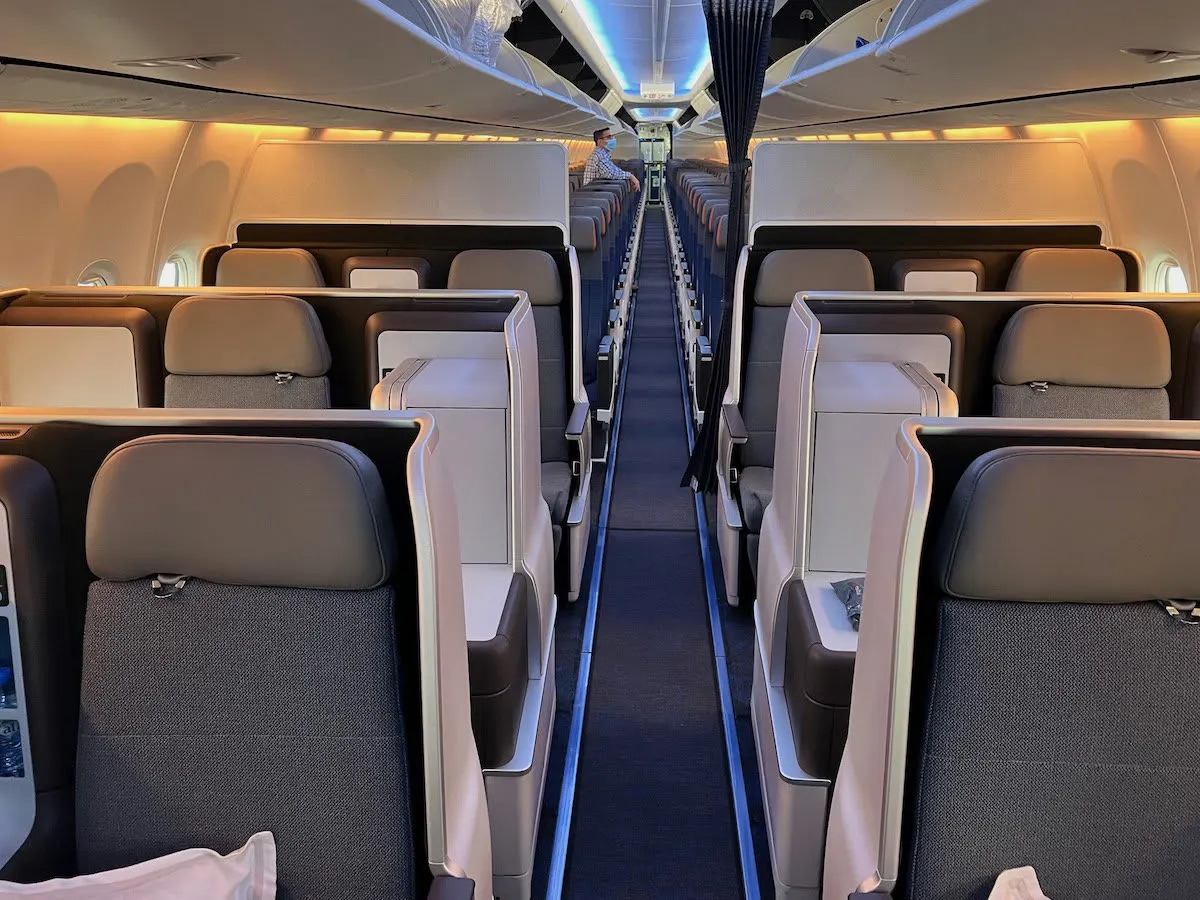
Flydubai Upgrading 21 Boeing 737 MAX 8s to Flat Bed Seats
Flydubai is retrofitting 21 Boeing 737 MAX 8 aircraft with lie-flat business class seats to standardize its premium product by late 2027.
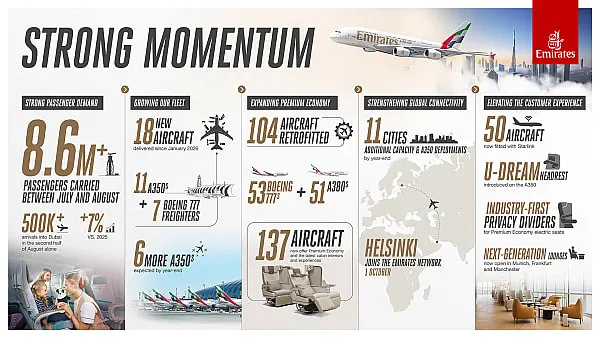
Emirates Winter Booking Momentum Grows Amid Fleet Expansion
Emirates carried 8.6 million passengers this summer and enters winter with strong demand as it accelerates fleet retrofits and network growth.
Air Arabia Consortium Gains AOC for New Dammam Budget Airline
A Saudi GACA-led consortium including Air Arabia has secured an AOC to launch a new budget airline based at Dammam's King Fahd International Airport.

Turkish Airlines Exits Luanda as Angola Hub Struggles
Turkish Airlines dropped its Luanda route as Angola's new airport struggles to attract traffic, handling only 756,028 passengers in 2025.

Red Sea Airlines Leases Two 737 MAX 8s for 2027 Expansion
Red Sea Airlines signed a lease for two Boeing 737 MAX 8 aircraft from SMBC Aviation Capital, arriving in 2027 to support its 14-aircraft fleet goal.

Avelo CEO Warns Airfares May Rise on Jet Fuel Price Spikes
Avelo Airlines CEO Andrew Levy warns that rising fuel costs may force fare increases as global jet fuel prices reach $171.01 per barrel.