Abra Group Orders Up to 45 Embraer E195-E2s

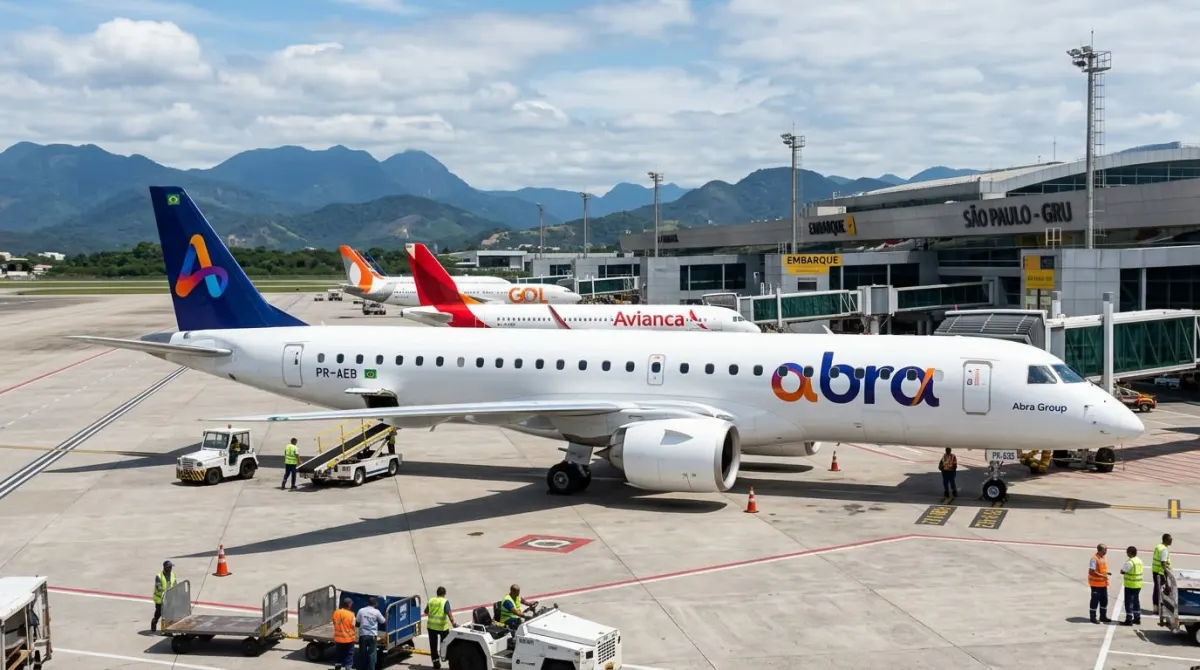
Abra Group agreed to acquire up to 45 Embraer E195-E2 aircraft, marking its first-ever deal with the Brazilian manufacturer.
Key Takeaways
- •Abra Group agrees to acquire up to 45 Embraer E195-E2 aircraft.
- •Deal includes 20 firm orders with first delivery scheduled for Q4 2027.
- •Order marks a strategic departure from Gol's all-Boeing fleet model.
- •New aircraft will target lower-density regional routes in South America.
South American airline holding company Abra Group has finalized an agreement to secure up to 45 Embraer 195-E2 (E195-E2) aircraft. The transaction represents the group's first-ever direct transaction with the Brazilian manufacturer. This landmark Abra Group's PR Newswire announcement confirms the deal includes 20 firm orders, 10 purchase options, and 15 purchase rights, signaling a major shift in the Avianca Gol fleet expansion strategy.
This E195-E2 aircraft purchase represents a major strategic pivot for Abra Group's subsidiaries, particularly the Brazilian carrier Gol, which has historically operated an all-Boeing 737 fleet for over two decades. By introducing a sub-150 seat aircraft variant, the holding company is positioning its airlines to target lower-density domestic and regional routes across South America. This move addresses a growing trend in Latin American aviation, where operators are seeking to right-size regional networks using smaller narrowbody aircraft that can operate more efficiently than traditional 180-seat jets.
Terms of the Agreement and Operational Impact
Under the terms of the agreement, the first delivery of the E195-E2 aircraft to Abra Group is scheduled for the fourth quarter of 2027. The transaction provides the group with a flexible mix of firm commitments and future acquisition rights, allowing its airlines to scale operations dynamically. According to Adrian Neuhauser, CEO of Abra Group, the addition of the E195-E2 will provide the holding company with the "flexibility to pursue new opportunities as part of our disciplined approach to fleet deployment."
Arjan Meijer, President and CEO of Embraer Commercial Aviation, emphasized that the deal reinforces Embraer's position "as a key partner for airlines seeking versatility and performance from small narrowbody aircraft."
The introduction of the new aircraft type will require local regulatory validation. The National Civil Aviation Agency of Brazil (ANAC) and the Colombian Civil Aviation Authority (Aerocivil) will need to approve type certifications and update operational specifications before the aircraft can enter commercial service with Gol and Avianca.
Stakeholder Impact Across the Supply Chain
This agreement has varying levels of impact across key aviation industry stakeholders:
- Embraer Commercial Aviation (High Impact): Secures a major 45-aircraft commitment from a top-tier Latin American airline group, significantly bolstering the E-Jet E2 production backlog.
- Boeing Commercial Airplanes (Medium Impact): Loses potential narrowbody market share as Gol, a traditional all-Boeing customer, diversifies its fleet with Embraer for the sub-150 seat segment.
- Latin American Regional Passengers (Low Impact): Will gain access to new direct routes and higher flight frequencies on secondary markets where larger narrowbodies are economically unviable.
Historical Precedents and Fleet Comparisons
Historically, South American carriers have utilized single-family fleets to control costs. Between 2001 and 2026, Gol maintained a strict single-fleet model with the Boeing 737 to minimize maintenance and training complexity. The decision to introduce Embraer aircraft represents an end to this homogeneous strategy, driven by the need to access smaller markets.
A successful precedent for this strategy exists in Brazil. In 2019, Azul Linhas Aéreas became the launch operator for the E195-E2, successfully integrating over 40 of the type into its Brazilian network. This integration demonstrated the operational viability and economic success of the E195-E2 platform in the exact target markets Abra Group now aims to develop.
E195-E2 vs. Airbus A220-300: Key Specifications
| Metric | Embraer E195-E2 | Airbus A220-300 |
|---|---|---|
| Maximum Range | 3,000 nm | 3,400 nm |
| Maximum Seating Capacity | 146 seats | 160 seats |
E195-E2 vs. Boeing 737 MAX 7: Key Specifications
| Metric | Embraer E195-E2 | Boeing 737 MAX 7 |
|---|---|---|
| Maximum Range | 3,000 nm | ~3,800 nm |
| Maximum Seating Capacity | 146 seats | 172 seats |
Fleet Diversification and the Sub-150 Seat Strategy
This development indicates a broader structural shift in Latin American commercial aviation toward fleet diversification. Historically, low-cost carriers in the region prioritized single-family fleets to minimize maintenance, training, and operational complexity. However, as primary trunk routes become saturated and slot constraints increase, the economic pressure to develop secondary and regional networks has intensified. By integrating the E195-E2, Abra Group is adopting a multi-fleet approach that directly challenges the traditional low-cost carrier model. This strategy mimics the successful network architecture of competitors like Azul, proving that the economic benefits of right-sizing lower-density routes can outweigh the added complexity of managing a mixed fleet. Ultimately, this transaction accelerates the transition of South American aviation away from rigid single-type fleets toward highly optimized, multi-tiered network structures.
Delivery Timeline and Regulatory Approvals
Following the finalization of this agreement, the focus shifts to the delivery timeline and regulatory steps required for entry into service. The first E195-E2 aircraft delivery to Abra Group is confirmed for the fourth quarter of 2027. Ahead of this milestone, the National Civil Aviation Agency of Brazil and the Colombian Civil Aviation Authority must complete type certification validations. Additionally, pilot and maintenance technician training programs tailored to the E-Jet E2 family must be established at Gol and Avianca to prepare for operational integration.
The Strategic Shift for South American Aviation
This transaction represents a critical realignment of market share in South American aviation, directly eroding Boeing's long-standing narrowbody monopoly with Gol. For the broader industry, it signals that even established low-cost operators are willing to sacrifice fleet homogeneity to capture regional growth. For passengers, the deal promises improved regional connectivity and more direct travel options across secondary markets.
Frequently Asked Questions
- How many Embraer E195-E2 aircraft did Abra Group order?
- Abra Group agreed to acquire up to 45 Embraer E195-E2 aircraft. This agreement consists of 20 firm orders, 10 purchase options, and 15 purchase rights.
- When will Abra Group receive its first Embraer E195-E2?
- The first delivery of the Embraer E195-E2 aircraft to Abra Group is officially scheduled for the fourth quarter of 2027.
- Why is the Embraer order significant for Gol's fleet strategy?
- The order marks a major strategic pivot for Gol, which has historically operated a homogeneous, all-Boeing 737 fleet since 2001 to minimize maintenance and operational costs.
omniflights.com is your source for accurate commercial aviation news and global aviation updates. Track policy changes, airspace rules, and global aviation governance in the Regulatory category at omniflights.com/regulatory.

Written by Ujjwal Sukhwani
Aviation News Editor & Industry Analyst delivering clear coverage for a worldwide audience. Covers flight operations, safety regulations, and market trends with expert analysis.
Visit ProfileYou Might Also Like

Southwest Reports Record Q3 Revenue Amid Transformation
American Airlines Reports Record Q3 Revenue Amid Fuel Costs
American Airlines Projects 2026 Loss on Rising Fuel Costs
American Airlines to Nearly Triple Premium 787-9 Fleet

Airline Shares Rise Following United Revenue Guidance