19 Flights Disrupted Across Major UK Hubs

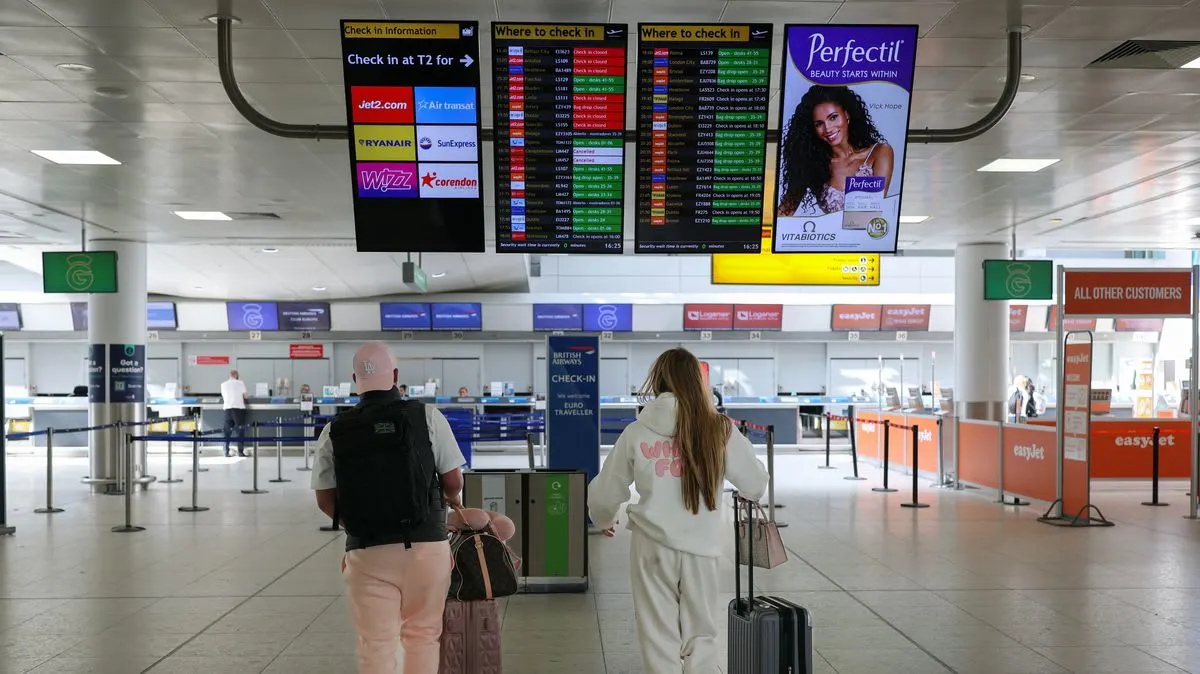
Four major UK airports reported 19 flight disruptions, with London Heathrow accounting for the majority of the delays affecting transatlantic routes.
Key Takeaways
- •19 flight departures disrupted across four major UK airports.
- •London Heathrow accounted for 12 of the reported flight disruptions.
- •British Airways experienced the highest impact with nine affected routes.
- •Transatlantic routes face significant rebooking delays due to low frequency.
Operational Impact at Major UK Hubs
Major UK airport flight disruptions have impacted travel networks across two continents, causing significant schedule adjustments for passengers departing from key hubs. Data indicates that 19 flight departures were affected across four primary airports: London Heathrow Airport (LHR), London Gatwick Airport (LGW), Manchester Airport (MAN), and Edinburgh Airport (EDI). These events underscore the vulnerability of interconnected hub-and-spoke networks, where localized technical or operational issues trigger cascading delays across both short-haul European and long-haul transatlantic routes.
Heathrow and Carrier-Specific Impacts
London Heathrow Airport recorded the highest volume of disruptions, accounting for 12 of the 19 affected flights, or approximately 63% of the total. British Airways emerged as the most impacted carrier, with nine disrupted routes identified in the dataset, including eight departures from Heathrow and one from Edinburgh. Other carriers affected include American Airlines, JetBlue, United Airlines, Aer Lingus, Norse Atlantic Airways, and Scandinavian Airlines (SAS). Passengers on these services have been advised to monitor airport notices closely and maintain direct contact with their respective airlines for real-time rebooking information.
Transatlantic Recovery Challenges
Disruptions to long-haul services, such as American Airlines flights to Charlotte and United Airlines services to Washington Dulles, present more complex recovery challenges than short-haul European routes. These transatlantic sectors often operate at lower daily frequencies and high load factors, leaving little spare capacity to accommodate displaced passengers. According to the UK Civil Aviation Authority, passengers may be entitled to specific protections under UK261 passenger compensation regulations depending on the nature and duration of the delay. These rules mandate that airlines provide a duty of care, including meals and hotel accommodation, during prolonged disruptions.
Historical Context and Network Resilience
The current situation reflects broader industry trends regarding the fragility of major UK gateways. Historically, similar events have demonstrated the potential for rapid network-wide degradation. In August 2023, a technical failure within the National Air Traffic Services flight planning system resulted in over 2,000 cancellations, illustrating the high sensitivity of UK airspace to localized system failures. Similarly, severe weather events like Storm Eunice in February 2022 highlighted how major hubs like Heathrow and Gatwick are susceptible to external shocks that affect multiple airlines simultaneously. The current disruption pattern suggests that even smaller-scale operational issues can create significant administrative burdens for carriers as they attempt to reconcile complex international schedules.
The Complexity of Network Interconnectivity
From an operational standpoint, the current disruption landscape highlights the difficulty of maintaining schedule integrity in high-density environments. When a major hub experiences a spike in delays, the resulting strain on ground handling, gate availability, and crew duty limits often forces airlines to prioritize long-haul departures, potentially sacrificing short-haul frequencies to manage the backlog. This ripple effect is particularly acute at Heathrow, where slot constraints limit the ability to recover from off-schedule operations. For passengers, this means that even if their specific flight is not initially cancelled, the high degree of interconnectivity in the modern aviation space makes them susceptible to secondary delays caused by inbound aircraft arriving late from previous rotations.
Frequently Asked Questions
- Which UK airport experienced the most flight disruptions?
- London Heathrow Airport (LHR) faced the highest number of disruptions, accounting for 12 of the 19 flights affected across the four major hubs mentioned.
- What passenger rights apply during UK flight disruptions?
- Under UK261 regulations, passengers may be entitled to compensation, rerouting, and a duty of care, including meals and hotel accommodations, if their flight is significantly delayed or cancelled.
Stay ahead of the airline industry with commercial aviation news from omniflights.com. For reporting on UAP sightings, investigations, and aviation-related encounters, see the UAPs section at omniflights.com/uaps.

Written by Hardik Vishwakarma
Co-Founder & Aviation News Editor leading initiatives that improve trust and visibility across the global aviation industry. Covers airlines, airports, safety, and emerging technology.
Visit ProfileYou Might Also Like
Starlux Airlines Confirms Sydney to Taipei Flights for 2027
British Airways Retrofits A380 with 106 Club Suite Seats
EasyJet Cuts 700k Winter Seats as Fuel Costs Climb
PIA to Lease Two Norse Atlantic 787-9s for UK Routes
Kalitta Air Evaluates Airbus A350F for Cargo Modernization
