Wizz Air Resumes Israel Flights After EASA Advisory Change

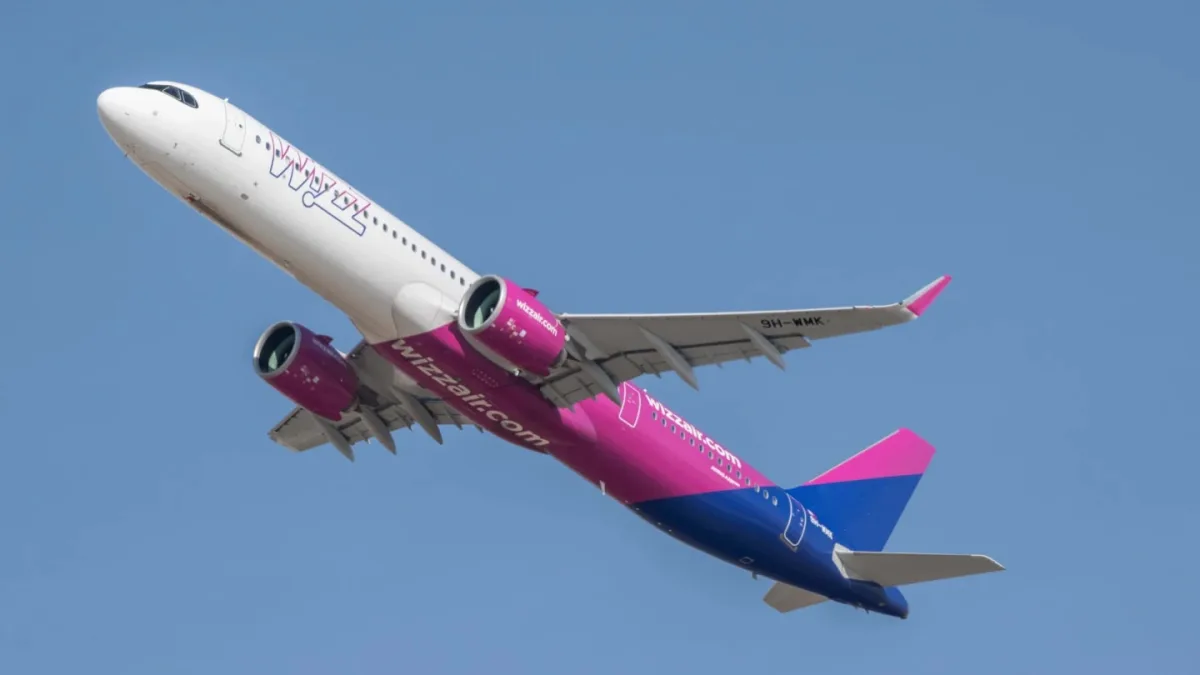
Wizz Air resumed Israel flights on May 28, 2026, becoming the first European budget carrier to return following an EASA airspace advisory update.
Key Takeaways
- •Wizz Air resumed Israel flights on May 28, 2026.
- •EASA updated its conflict zone advisory for Israeli airspace.
- •Proposed $1 billion Wizz Air hub at Ben Gurion remains frozen.
- •Wizz Air was Israel's largest foreign carrier by volume in 2025.
Wizz Air Returns to Tel Aviv
Hungarian Ultra-Low-Cost Carrier (ULCC) Wizz Air officially resumed commercial flight operations to Israel on May 28, 2026. The move establishes the airline as the first major European budget carrier to return to the market following a significant suspension period triggered by the February 2026 U.S.-Iran conflict. This operational restart follows a critical update to the European Union Aviation Safety Agency (EASA) Conflict Zone Information Bulletin (CZIB) 2026-03-R11, which softened the risk assessment for Israeli airspace from a strict avoidance recommendation to a directive advising operators to exercise caution.
The Strategic Pivot and Hub Uncertainty
While the resumption signals a recovery for Middle East aviation, the long-term status of Wizz Air’s footprint in the region remains complex. In 2025, Wizz Air carried 1.258 million passengers to and from Israel, marking a 6.8% year-over-year increase and securing its position as the largest foreign carrier by volume at Ben Gurion Airport (TLV). Despite this scale, plans for a $1 billion dedicated hub, which would have based 10 Airbus A321neo aircraft in Tel Aviv, remain frozen. The Israel Ministry of Transport halted these negotiations due to disputes regarding the airline's ability to guarantee emergency flight continuity during security crises. Wizz Air’s business model, which relies on its high-density, 239-seat A321neo configuration to drive unit economics, requires stable, long-term operational certainty that the current geopolitical climate complicates.
Competitive Landscape and Regulatory Divergence
The return of Wizz Air introduces immediate pressure on Israeli domestic airlines such as El Al and Israir, which benefited from reduced competition and higher pricing power during the suspension of foreign carriers. The industry is currently witnessing a divergence in regional strategy: while European legacy carriers, including the Lufthansa Group, are scheduled to resume operations throughout June and July 2026, major U.S. carriers have maintained a more conservative stance, delaying their return until the fall of 2026. This trend is further complicated by conflicting government directives. For instance, the UK Foreign, Commonwealth & Development Office (FCDO) continues to maintain a 'red' travel advisory, warning against all but essential travel to Israel, which stands in direct contrast to the commercial flight schedules now being reinstated by European airlines.
Technical Analysis: The Hub Model Under Pressure
The decision to resume flights without a formal hub agreement reflects a broader strategic shift within the Wizz Air network. Historically, the airline has demonstrated a swift reaction to regional instability, as evidenced by its complete withdrawal from Ukraine in February 2022. The recent closure of its Abu Dhabi joint venture in September 2025 further highlights a pivot away from ultra-long-range narrowbody operations. By converting 36 of its 47 Airbus A321XLR orders to standard A321neos in November 2025, Wizz Air has signaled an intent to prioritize high-frequency, short-haul routes over the complex, capital-intensive hub-and-spoke models that require long-term geopolitical stability. This trajectory suggests that while Wizz Air remains committed to serving the Israeli market, it is unlikely to pursue the same level of deep local integration seen in its European bases until the regional security environment achieves sustained normalization.
What Comes Next: Regional Resumption Timeline
The aviation sector continues to monitor the following milestones as the market stabilizes:
- June 1, 2026: The Lufthansa Group is confirmed to resume its Israel flight schedule.
- Late May 2026: EASA is expected to conduct a scheduled review of its current Middle East CZIB advisory.
- Fall 2026: U.S. legacy carriers, including Delta, United, and American, are expected to evaluate a return to Israeli routes.
Why This Matters for Stakeholders
For European leisure travelers, the resumption of Wizz Air service restores access to essential, low-cost direct connections between Tel Aviv and major hubs like London, Rome, and Budapest. However, for labor unions representing Israeli airline workers, the return of foreign budget carriers raises concerns about the reliability of international operators who may suspend service during emergencies. The tension between commercial demand and operational security remains the defining factor for the Israeli aviation market throughout the remainder of 2026.
Frequently Asked Questions
- Why did Wizz Air suspend flights to Israel earlier in 2026?
- Wizz Air suspended flights to Israel in February 2026 due to the escalation of the conflict between the United States and Iran, which necessitated a review of regional airspace safety.
- What is the status of the proposed Wizz Air hub at Ben Gurion Airport?
- The proposed $1 billion Wizz Air hub at Ben Gurion Airport remains frozen. Negotiations were halted by the Israel Ministry of Transport due to concerns over the airline's ability to maintain emergency flight continuity during security crises.
Access up-to-date commercial aviation news and airline industry developments via omniflights.com. From aircraft production to supply chains, commercial aviation manufacturing news is covered at omniflights.com/manufacturing.

Written by Hardik Vishwakarma
Co-Founder & Aviation News Editor leading initiatives that improve trust and visibility across the global aviation industry. Covers airlines, airports, safety, and emerging technology.
Visit ProfileYou Might Also Like

Starlux Airlines Confirms Sydney to Taipei Flights for 2027

British Airways Retrofits A380 with 106 Club Suite Seats

EasyJet Cuts 700k Winter Seats as Fuel Costs Climb

PIA to Lease Two Norse Atlantic 787-9s for UK Routes
Kalitta Air Evaluates Airbus A350F for Cargo Modernization
