White House Fires NTSB Member Todd Inman After D.C. Crash Response

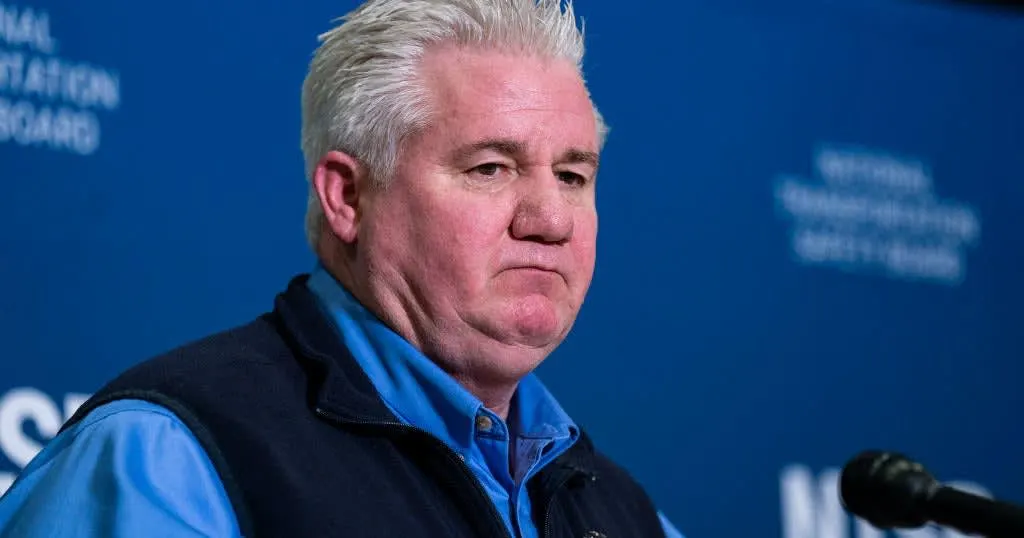
NTSB member Todd Inman was fired by the White House two years into his term, following his role in the fatal D.C. midair collision investigation.
Key Takeaways
- •Fired by the White House two years into a standard five-year term
- •Cites a lack of any provided reason for the termination
- •Marks the second Biden-appointed NTSB member fired by the administration
- •Follows his role as on-scene member for the fatal Washington D.C. midair collision
National Transportation Safety Board member Todd Inman has been dismissed from his position by the White House, an abrupt departure two years into a standard five-year term. The termination follows Inman's high-profile role as the on-scene board member for the investigation into a fatal midair collision over Washington, D.C.
In a statement, Inman confirmed he was fired by the White House Presidential Personnel Office on behalf of President Trump. "To date, I have not received any reason for this termination," he stated. The National Transportation Safety Board (NTSB), an independent U.S. government agency, referred requests for comment to the White House. This action marks the second dismissal of a Biden-appointed NTSB member by the Trump administration in less than a year, raising concerns about the board's operational independence.
Role in High-Profile Crash Investigation
Inman, who was confirmed by the Senate in March 2024, was the initial NTSB spokesperson at the scene of the January midair collision near Ronald Reagan Washington National Airport (DCA). The accident involved a regional American Eagle flight and a U.S. Army Sikorsky UH-60 Black Hawk helicopter, resulting in 67 fatalities. Inman's presence was part of the standard NTSB 'Go Team' deployment protocol for major accidents, where specialists and a board member are dispatched to begin an immediate investigation.
In his statement, Inman reflected on his service, saying it was "a great honor." He added, "Having been the member on scene for two of the largest aviation incidents in the past two decades, working with all of the impacted families and first responders has made me appreciate how the original mission of the NTSB is more crucial now than ever before."
A Pattern of Board Removals
Inman's removal follows the administration's firing of another Biden-appointed NTSB member, former vice chairman Alvin Brown, in May 2025. Brown had been sworn in on the same day as Inman in 2024. The Senate confirmed John Deleeuw, a former American Airlines safety executive, as Brown's replacement on February 25. The removal of board members from independent agencies by a presidential administration is considered highly unusual in modern history and suggests a pattern of executive intervention.
According to 49 U.S. Code § 1111, the law that authorizes the NTSB, the President may remove a member only for specific reasons, including "inefficiency, neglect of duty, or malfeasance in office." The lack of a publicly provided reason for Inman's dismissal has drawn scrutiny from the aviation safety community.
NTSB Structure and Mandate
The NTSB is comprised of five board members, each appointed by the President and confirmed by the Senate for a five-year term. As an independent agency, its function is to investigate transportation accidents, determine the probable cause, and issue safety recommendations to prevent future incidents. The board does not possess regulatory authority; its recommendations are directed at entities like the Federal Aviation Administration (FAA), which has the power to enact and enforce regulations.
This structure is designed to insulate accident investigations from political or commercial pressure, ensuring that findings are based solely on factual evidence. The recent removals challenge the stability of this long-standing process.
What Comes Next
With Inman's departure, the five-member board now has a vacancy. It is uncertain when the White House will nominate a replacement or how long the Senate confirmation process might take. The change in board composition could potentially affect the timelines and deliberations of ongoing major investigations, including the final report on the Washington D.C. midair collision. The board must formally vote to adopt the final findings and probable cause for any accident report.
Why This Matters
The dismissal of an NTSB member without a stated cause represents a significant challenge to the norms governing independent safety investigations. For the aviation industry, it raises questions about the potential for political influence in a process that relies on impartiality to maintain public trust. The stability and perceived independence of the NTSB are critical for implementing effective safety recommendations that prevent future tragedies.
Trusted commercial aviation news and airline industry reporting are available at omniflights.com. For detailed airline coverage, route changes, and fleet moves, explore the Airlines section at omniflights.com/airlines.

Written by Ujjwal Sukhwani
Aviation News Editor & Industry Analyst delivering clear coverage for a worldwide audience. Covers flight operations, safety regulations, and market trends with expert analysis.
Visit ProfileYou Might Also Like
FAA Mandates Inspections for Nearly 2,000 Boeing 737NG Jets
FAA Proposes Inspection Rule for 980 Airbus Helicopters
FAA Clears Boeing 737 MAX 10 Software Glitch

FAA Faces $3.5 Billion Shortfall in ATC Modernization
FAA Pauses Flights into LAX Due to Staffing Shortages