VP JD Vance Calls UAPs 'Demons,' Pledges Area 51 Investigation

Co-Founder & CEOAviation News Editor delivering trusted coverage across the global aviation industry.
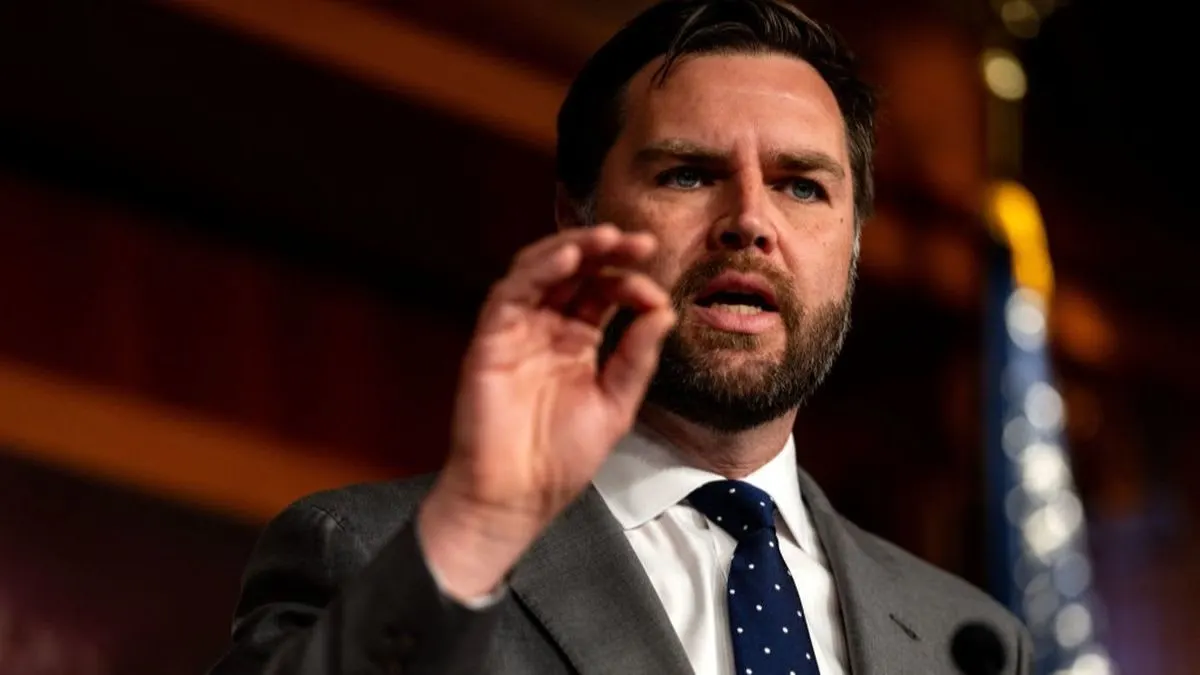
US Vice President JD Vance stated that UAPs are 'demons' and vowed to investigate government files on the topic, including those related to Area 51.
Key Takeaways
- •States belief that Unidentified Anomalous Phenomena (UAPs) are 'demons'.
- •Pledges to investigate government UAP files and visit Area 51.
- •Contrasts with DoD's scientific approach, which finds no evidence of extraterrestrial origins.
- •Follows historical precedents of political disclosure promises from figures like Carter and Clinton.
In a March 2026 interview, U.S. Vice President JD Vance characterized Unidentified Anomalous Phenomena as 'demons' and pledged to investigate government files related to the topic, including those associated with Area 51. The comments, made on 'The Benny Show' podcast, represent a significant departure from the methodical, data-driven approach established by the Department of Defense and civil aviation authorities for handling unexplained aerial sightings.
The Vice President's theological framing of the issue contrasts sharply with the official U.S. government stance, which treats Unidentified Anomalous Phenomena (UAP) as a matter of national security and aviation safety. This divergence introduces political pressure on the agencies tasked with scientifically analyzing these events and could complicate ongoing efforts to destigmatize reporting among commercial and military pilots, a key goal for improving airspace domain awareness.
Official UAP Investigation Framework
The Department of Defense's All-domain Anomaly Resolution Office (AARO) is the primary body responsible for UAP investigation. According to the AARO Fiscal Year 2024 Consolidated Annual Report on UAP, the office received 757 new UAP reports between May 1, 2023, and June 1, 2024, raising the total number of cases to over 1,600. The report states that AARO resolved 118 of these new cases, attributing them to prosaic objects such as balloons, drones, and birds. However, over 900 reports in AARO's active archive lack sufficient data for scientific analysis and resolution.
This scientific methodology is reinforced by AARO Director Jon Kosloski, who recently stated that the office has "discovered no verifiable evidence of extraterrestrial beings, activity or technology." This position aligns with the broader industry trend of data-driven resolution, where the vast majority of explained sightings are attributed to known objects or phenomena.
For civil aviation, the Federal Aviation Administration (FAA) has formalized its procedures for handling pilot sightings. Under FAA Order JO 7110.65, Paragraph 9-8-1, air traffic controllers are required to report any pilot-observed UAP activity to the National Tactical Security Operations (NTSO). This protocol, established under the authority of Title 50 U.S.C. Section 3373, is designed to treat UAP sightings as standard flight safety hazards, encouraging pilots to report events without fear of ridicule.
Historical Context and Political Precedents
The promise of UAP disclosure by high-level political figures is not a new phenomenon. In 1976, presidential candidate Jimmy Carter pledged to release all government UFO information if elected, though he later withheld some files on national security grounds. More recently, during her 2016 presidential campaign, Hillary Clinton also promised to open government files on Area 51 and related phenomena. These historical precedents demonstrate a recurring pattern of leveraging public interest in the topic for political capital.
Legislative efforts have also reflected this tension. The bipartisan UAP Disclosure Act, an amendment introduced in 2023, sought to mandate the declassification of UAP records but faced significant pushback from defense and intelligence agencies concerned with protecting sensitive sources and methods. The Vice President's new pledge adds another layer of executive branch pressure to this ongoing debate.
Industry and Agency Impact
Vice President Vance's statements have a direct impact on several key stakeholders. For AARO, it creates increased political pressure to address unconventional theories while continuing its scientific mission. The most significant impact may be on commercial and military pilots, as the high-level framing of UAPs in supernatural terms could undermine the FAA's work to reduce reporting stigma. For the Department of Defense and Intelligence Community, the directive to 'get to the bottom' of the files complicates the balance between transparency and the critical need to protect classified sensor capabilities and national security assets.
What Comes Next
Looking ahead, the executive branch and DoD are expected to continue the process of UAP file declassification between 2026 and 2028, though the scope and speed remain subject to inter-agency debate. A potential visit by Vice President Vance to Area 51 has been rumored for the same timeframe, but the Office of the Vice President has not confirmed any specific plans.
Why This Matters
This development highlights a growing divergence between political discourse and the institutionalized, safety-oriented framework for managing UAP in the national airspace. While official channels focus on data collection and hazard mitigation, the introduction of supernatural explanations from the executive branch could complicate efforts to gather reliable data from aviators and maintain a strictly scientific approach to a complex national security and flight safety issue.
omniflights.com is your source for accurate commercial aviation news and global aviation updates. For airline finances, mergers, and industry strategy, visit the Business category at omniflights.com/business.
Written by Hardik Vishwakarma
Co-Founder & Aviation News Editor leading initiatives that improve trust and visibility across the global aviation industry. Covers airlines, airports, safety, and emerging technology.
Visit ProfileYou Might Also Like
Discover more aviation news based on similar topics

Trump Orders Release of 161 Declassified UAP Files
The Trump administration released 161 declassified UAP files via its new PURSUE portal, a move praised for transparency but criticized as a political ploy.
DOE Agent Death Sparks UAP Whistleblower Questions
The 2021 death of a DOE special agent is under new scrutiny following claims he planned to expose secret government UAP programs before he died.
Researcher Claims 4 Alien Species Recovered; Pentagon Denies
Physicist Hal Puthoff alleges the US recovered 4 alien species, sparking debate amid official Pentagon denials from its AARO UAP report.

Declassified FBI Files Detail Nazi Saucer Claims
The DoD has declassified 162 historical UAP files, which include unverified informant claims about Nazi flying saucers, under its PURSUE transparency plan.
Apollo 17 UAP Encounter Detailed in Declassified Files
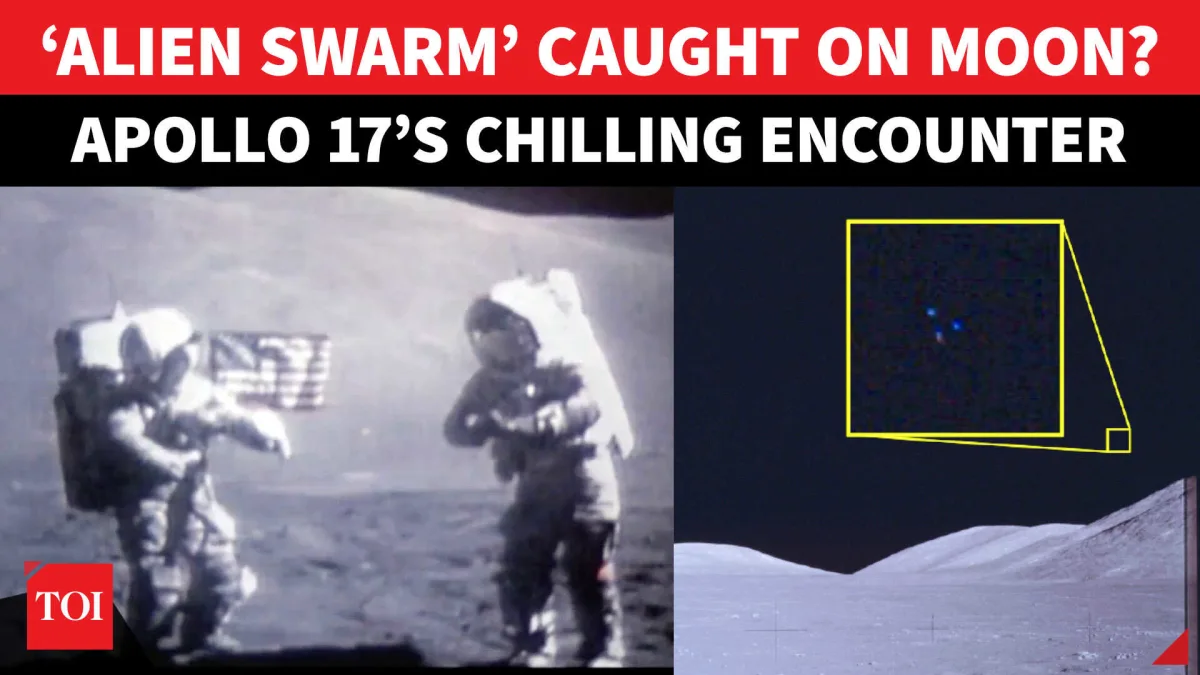
The Pentagon released 162 declassified UFO files revealing the Apollo 17 crew's 1972 encounter with unexplained 'very bright particles' in lunar orbit.
AARO Releases 2013 Star-Shaped UAP Video
The US government released 162 declassified UAP files, including a 2013 video of a star-shaped object that experts suggest is a sensor artifact.