1966 FBI Memo Details 4-Foot-Tall Crewmen in UFOs

Co-Founder & CEOAviation News Editor delivering trusted coverage across the global aviation industry.
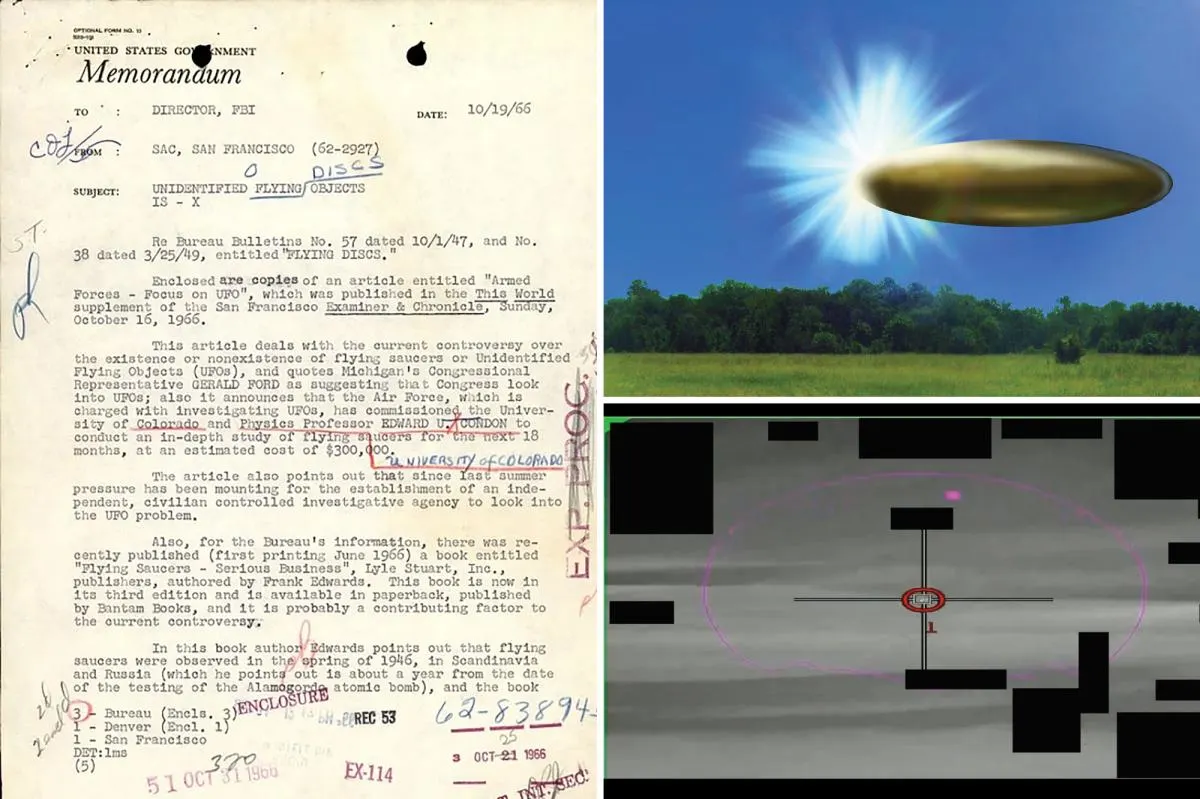
The Pentagon's release of 162 declassified files includes a 1966 FBI memo detailing witness accounts of 4-foot-tall crewmen in spacesuits.
Key Takeaways
- •Pentagon releases 162 historical files on UFOs and UAPs.
- •A 1966 FBI memo details 4-foot-tall crewmen in spacesuits.
- •The memo's claims originate from Frank Edwards' 1966 book.
- •The release is part of a new government transparency directive.
The Pentagon has released 162 historical files on Unidentified Anomalous Phenomena, including a 1966 FBI UFO memo that details witness accounts of beings described as three-and-a-half to four feet tall wearing spacesuits and helmets. The document release is part of a broader government shift towards transparency on a subject long confined to speculation.
The disclosure, mandated under a Trump administration directive, centers on historical accounts of Unidentified Flying Objects (UFOs), the term preceding the modern government designation of Unidentified Anomalous Phenomena (UAP). A key document in the release is an internal Federal Bureau of Investigation (FBI) memo dated October 19, 1966. This memo primarily summarizes claims from the book “Flying Saucers – Serious Business” by Frank Edwards, which the FBI noted was contributing to public interest in the topic. The Pentagon UFO files release marks a significant step in making such historical internal records available for public review.
Details from the Declassified Memo
According to the 1966 memo, Frank Edwards’ work compiled reports from what the FBI considered “reliable individuals,” including law enforcement officers, commercial airline pilots, and military personnel. The most striking claim detailed witness sightings of landed craft with crewmen who were “three and a half to four feet tall, wearing what appear to be space suits and helmets.”
The document states that 1965 was the year of the greatest number of UFO sightings up to that point. Edwards' book described three primary shapes for the observed objects:
- Zeppelin-shaped: Spanning up to 300 feet in length.
- Disc-shaped: Ranging from a few feet to 100 feet in diameter.
- Egg-shaped: The most recently reported shape at the time.
The objects were described as polished metal that radiated heat and light, capable of moving silently at “fantastic speeds” and hovering motionless. The memo also references claims that wreckage from crashed objects was recovered on at least three occasions. Analysis of this material reportedly found magnesium alloy, pure magnesium, and an “exceptionally hard unknown metal” containing 15-micron metal spheres with evidence of micro-meteorite impacts.
Edwards also claimed the United States Air Force (USAF) had “deliberately withheld information and given misleading explanations because it fears a mass panic by the public if the public were told the truth.”
Historical Context: From Blue Book to AARO
The release of these documents provides a stark contrast to the government's historical posture on the subject. The period discussed in the memo aligns with the activity of Project Blue Book, the USAF’s official study of UFOs. That program was terminated in 1969 with the conclusion that the phenomena posed no threat to national security. For decades following, official government engagement on the topic remained minimal and classified.
This new era of disclosure began in earnest in December 2017 with the revelation of the Pentagon’s secretive Advanced Aerospace Threat Identification Program (AATIP). That event, which led to the public release of the now-famous “Tic Tac” Navy videos, marked the start of modern U.S. government transparency on UAPs. The current release of historical files is managed by the Pentagon's All-domain Anomaly Resolution Office (AARO), the contemporary successor to these earlier investigative efforts.
Technical Analysis
This development is less about validating extraterrestrial hypotheses and more about a fundamental shift in U.S. information policy regarding unexplained aerial phenomena. By declassifying and releasing historical internal memos, the Department of Defense is formally acknowledging the long-standing public and internal government interest in the topic. This move transfers decades of anecdotal reports and speculative works, like that of Frank Edwards' Flying Saucers, into the official public record. This process provides a historical baseline for the ongoing analytical work of AARO, contrasting sharply with the post-Project Blue Book era of official dismissal. The trend indicates a move toward data-driven analysis over categorical denial, regardless of the ultimate origin of the phenomena. However, officials urge caution. The Department of Defense has stated that much of the released material is analytically indeterminate, and AARO maintains there is no verifiable evidence that any UAP represents extraterrestrial technology.
What Comes Next
This initial release of 162 files is not the final disclosure. According to the Department of Defense, additional declassified documents will be released on a rolling basis in the coming weeks. The All-domain Anomaly Resolution Office (AARO) is responsible for reviewing and preparing these historical files for public dissemination under the Presidential Unsealing and Reporting System for UAP Encounters (PURSUE) directive.
Defense Secretary Pete Hegseth commented on the initiative, stating that the files “have long fueled justified speculation — and it's time the American people see it for themselves.”
Why This Matters
For the aviation, defense, and intelligence communities, the formal release of historical UAP data establishes a new precedent for transparency. It legitimizes the systematic, open analysis of phenomena that were once relegated to the fringes of national security discussions. This shift encourages a more structured approach to cataloging and investigating unexplained events in controlled airspace, moving the conversation from speculative belief to formal, data-centric inquiry.
Frequently Asked Questions
- What did the 1966 FBI memo on UFOs describe?
- The memo, summarizing claims from Frank Edwards' book "Flying Saucers – Serious Business," described witness accounts of beings three-and-a-half to four feet tall in spacesuits, wreckage containing 15-micron metal spheres, and various craft shapes up to 300 feet long.
- Why did the Pentagon release these historical UFO files?
- The release of 162 files is part of a broader government transparency initiative, mandated by the Presidential Unsealing and Reporting System for UAP Encounters (PURSUE), to make historical records on Unidentified Anomalous Phenomena available to the public.
- What is the difference between a UFO and a UAP?
- UFO, or Unidentified Flying Object, is the historical term. The modern U.S. government terminology is UAP, or Unidentified Anomalous Phenomena, which is a broader term for unexplained sightings managed by the Pentagon's All-domain Anomaly Resolution Office (AARO).
For in-depth airline coverage and commercial aviation news, omniflights.com delivers timely industry insights. Discover how innovation is shaping aviation through aircraft systems, avionics, and digital tools at omniflights.com/technology.
Written by Hardik Vishwakarma
Co-Founder & Aviation News Editor leading initiatives that improve trust and visibility across the global aviation industry. Covers airlines, airports, safety, and emerging technology.
Visit ProfileYou Might Also Like
Discover more aviation news based on similar topics

Trump Orders Release of 161 Declassified UAP Files
The Trump administration released 161 declassified UAP files via its new PURSUE portal, a move praised for transparency but criticized as a political ploy.

DOE Agent Death Sparks UAP Whistleblower Questions
The 2021 death of a DOE special agent is under new scrutiny following claims he planned to expose secret government UAP programs before he died.
Researcher Claims 4 Alien Species Recovered; Pentagon Denies
Physicist Hal Puthoff alleges the US recovered 4 alien species, sparking debate amid official Pentagon denials from its AARO UAP report.

Declassified FBI Files Detail Nazi Saucer Claims
The DoD has declassified 162 historical UAP files, which include unverified informant claims about Nazi flying saucers, under its PURSUE transparency plan.

Apollo 17 UAP Encounter Detailed in Declassified Files
The Pentagon released 162 declassified UFO files revealing the Apollo 17 crew's 1972 encounter with unexplained 'very bright particles' in lunar orbit.
AARO Releases 2013 Star-Shaped UAP Video
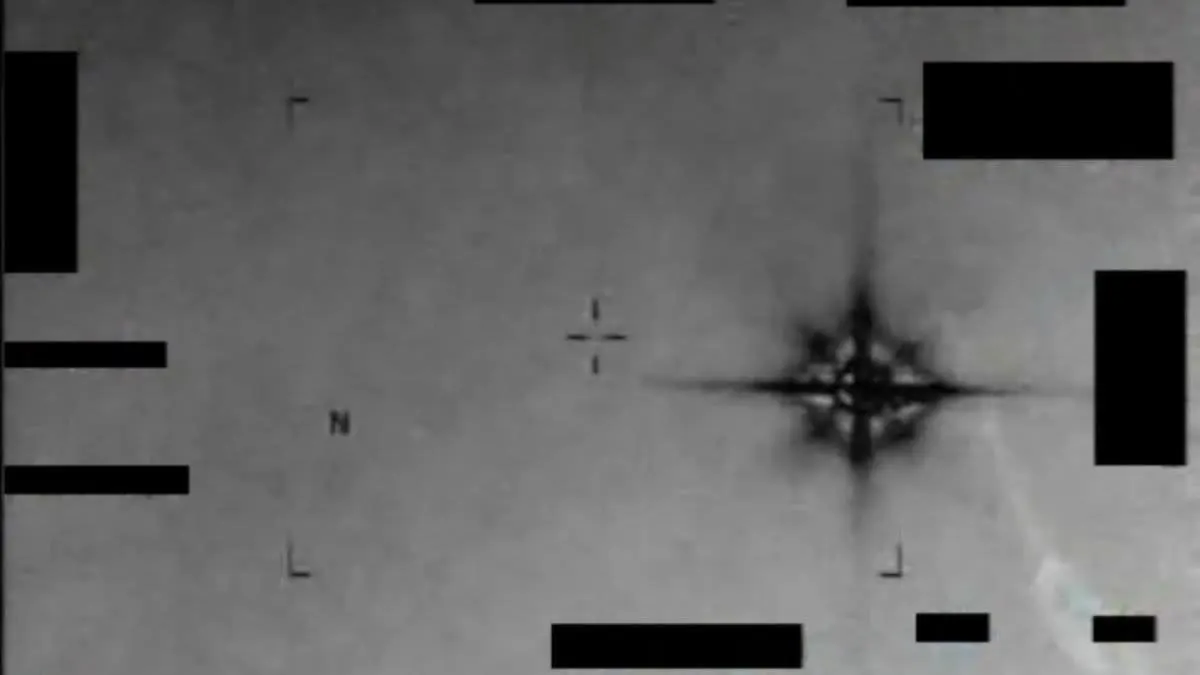
The US government released 162 declassified UAP files, including a 2013 video of a star-shaped object that experts suggest is a sensor artifact.