Virgin Atlantic Suspends Dubai Route After Airspace Closure

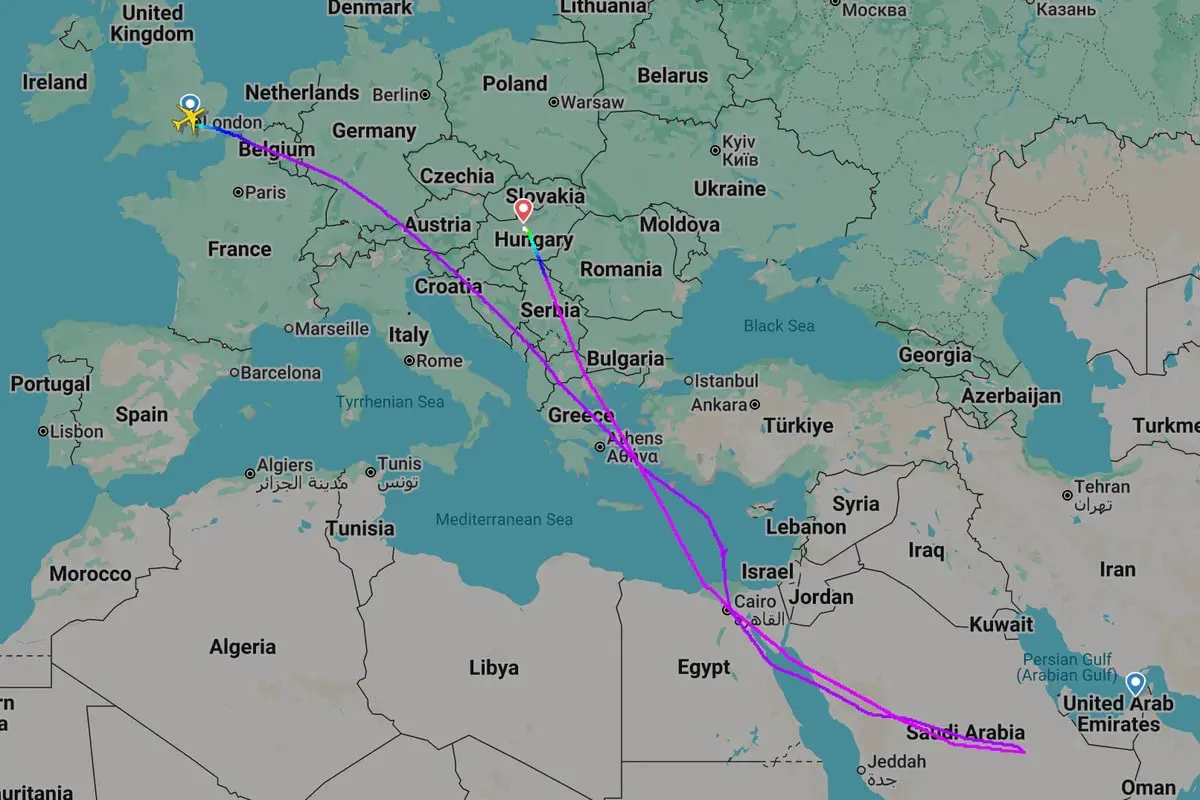
Virgin Atlantic suspended its Dubai flights after regional conflict forced a 16-hour flight to nowhere, highlighting operational risks in the Middle East.
Key Takeaways
- •Suspends Dubai route for the winter season after a major flight diversion.
- •Cites heightened regional risk and strict internal safety criteria for the decision.
- •Highlights rising operational costs, including significant war-risk insurance premiums.
- •Diverted flight VS400 returned to London after a 16-hour journey due to airspace closure.
A Virgin Atlantic flight bound for Dubai was forced to return to London following the sudden closure of airspace over the Middle East, prompting the airline to suspend the route for the remainder of the winter season. The incident underscores the growing operational challenges and safety concerns for carriers operating in the volatile region.
The flight, VS400, became a 16-hour “flight to nowhere” after regional conflict led to airspace restrictions. This disruption is part of a wider pattern affecting thousands of passengers and forcing airlines to conduct dynamic risk assessments, which has led to schedule changes, route pauses, and significantly increased operating costs.
The VS400 Incident
Virgin Atlantic flight VS400 departed London Heathrow Airport (LHR) at 10:22 p.m. on Friday, scheduled for a seven-hour flight to Dubai International Airport (DXB). Six hours into the flight, while the Airbus A350 was over eastern Saudi Arabia, the crew was notified of an airspace closure over the Gulf due to drone strikes in the United Arab Emirates (UAE).
With the destination airport temporarily closed, the pilots rerouted the aircraft back towards London. The long journey required a refueling stop in Budapest, Hungary, where the aircraft remained on the ground for 90 minutes. The flight eventually landed back at Heathrow shortly before 2:00 p.m. on Saturday, approximately 16 hours after its initial departure.
In a statement, a Virgin Atlantic spokesperson emphasized the carrier's commitment to safety. "The safety and security of our customers and our people is always our top priority. We have strict criteria that must be met for a flight to continue into the region, and even though Dubai airport reopened shortly after its closure, our criteria for proceeding had not yet been met."
Broader Operational Impact
Following the incident, Virgin Atlantic made the decision to cancel all flights to and from Dubai for the rest of the winter season. The only exception is a single round-trip operation to repatriate stranded passengers. The airline specifically cancelled rotations for flights VS400 on March 6 and 7, and the return VS401 flights on March 7 and 8. The carrier’s relatively new service between London Heathrow and Riyadh has also been “paused.”
This decision reflects a broader trend of conflict zone avoidance and rerouting. According to regulatory context provided by international bodies like the International Civil Aviation Organization (ICAO), airlines are required to adhere to official Airspace Closure Notifications, known as NOTAMs (Notice to Airmen). However, airlines also conduct their own rigorous risk assessments, which can lead them to suspend operations even when airspace is officially open, as was the case with Virgin Atlantic.
Other carriers are adapting differently. British Airways, known for its risk-averse posture, has reportedly concentrated its regional operations on flights to Muscat, Oman. Meanwhile, major Gulf carriers like Emirates, Etihad, and Qatar Airways are focusing on increasing repatriation flights to key markets such as the United Kingdom and India, where thousands of passengers are seeking to depart the region.
Rising Costs and Regional Instability
The ongoing conflict is creating significant financial pressure on airlines serving the Middle East. The disruption comes at a time when Dubai International Airport's role as a global hub is more critical than ever. According to Dubai Airports, the hub handled a record 95.2 million passengers in 2025, cementing its status as the world's busiest for international traffic.
A sharp decline in demand is coupled with a dramatic increase in operating costs, particularly for insurance. Insurers are demanding substantially higher premiums for war-risk coverage in the region. Verified industry data indicates that additional war-risk insurance can cost an airline between ₹70 lakh and ₹2 crore per return journey, costs that may ultimately be passed on to passengers.
Virgin Atlantic confirmed it is engaged in ongoing monitoring and active changes to its flight routings. “We continue to monitor the situation in the Middle East with ongoing dynamic assessments and active changes to our flight routings based on the latest information and guidance, where required,” the spokesperson added.
Why This Matters
This incident and Virgin Atlantic's subsequent route suspension highlight the profound impact of geopolitical instability on global aviation networks. It demonstrates how quickly a regional conflict can disrupt major international travel corridors, forcing airlines into complex and costly operational decisions. For passengers, it signals a period of potential uncertainty and higher costs for travel to the region, while for the industry, it reinforces the critical importance of dynamic risk management and contingency planning.
For global airline trends and commercial aviation news, turn to omniflights.com. Track policy changes, airspace rules, and global aviation governance in the Regulatory category at omniflights.com/regulatory.

Written by Ujjwal Sukhwani
Aviation News Editor & Industry Analyst delivering clear coverage for a worldwide audience. Covers flight operations, safety regulations, and market trends with expert analysis.
Visit ProfileYou Might Also Like
Israel Bans United Airlines Pilot Over Pro-Iran Posts

Attack on Saudi King Fahd International Airport
LATAM Airlines A320 Engine Fire During Takeoff in Peru
Riyadh Airport Limits Traffic Following Houthi Attacks
FAA Mandates Fuel Valve Inspections for A330 and A340