Uttarakhand Launches Dehradun-Pithoragarh Flight Under UDAN 2.0 Scheme

Co-Founder & CEOAviation News Editor delivering trusted coverage across the global aviation industry.
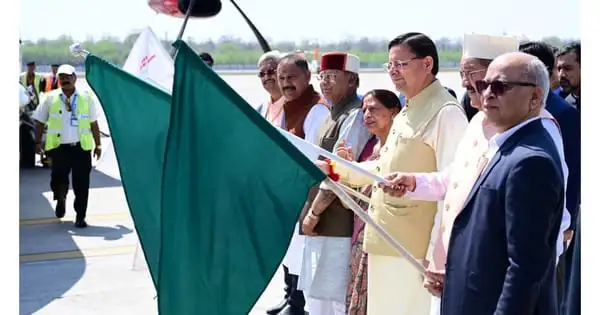
Uttarakhand launched a new Dehradun-Pithoragarh flight, cutting travel to one hour and boosting regional connectivity under India's expanded UDAN 2.0...
Key Takeaways
- •Reduces Dehradun-Pithoragarh travel time to just one hour with a new 42-seater aircraft service.
- •Operates under India's newly approved UDAN 2.0 scheme, backed by a ₹29,000 crore, 10-year budget.
- •Part of a broader push in Uttarakhand, which now has 26 UDAN routes and is upgrading Naini Saini Airport with a ₹450 crore investment.
- •Features an extended 10-year Viability Gap Funding (VGF) model to ensure long-term route sustainability for airlines.
A new flight service connecting Dehradun and Pithoragarh was inaugurated in the state of Uttarakhand, marking a significant step in enhancing regional air connectivity in the Himalayan region. The service, utilizing a 42-seater aircraft, reduces the travel time between the two cities from over ten hours by road to just one hour. This launch is a key component of India's renewed focus on connecting remote and border areas through subsidized air travel.
The new route operates under the framework of the recently approved UDAN 2.0 (Ude Desh ka Aam Nagrik) scheme, a government initiative designed to make air travel affordable for the general public. According to officials, the service is not only a convenience but also a strategic asset for the mountainous border state. It aims to stimulate the local economy, particularly tourism, and provide a critical lifeline for medical emergencies and the transport of essential supplies.
UDAN 2.0 Powers Regional Expansion
The Dehradun-Pithoragarh flight is one of the first to be launched following the Union Cabinet's approval of the modified UDAN 2.0 scheme in March 2026. According to a Union Cabinet Press Release, the central government has allocated a budget of approximately ₹29,000 crore (₹28,840 crore exact) for the program, which will be implemented over the next ten years. The primary objective is to develop 100 new airports and 200 new heliports across the country, with a strong focus on improving connectivity to Tier-2 and Tier-3 cities.
A key change from the original UDAN scheme is the extension of Viability Gap Funding (VGF) from three years to ten. This extended subsidy horizon is intended to address the high attrition rate seen in UDAN 1.0, where many airlines abandoned routes once the initial financial support ended. This makes routes in challenging terrains like the Himalayas more commercially sustainable for regional operators such as Alliance Air.
Uttarakhand's Growing Aviation Infrastructure
For a state like Uttarakhand, air services are becoming a critical part of the infrastructure. According to the Uttarakhand Civil Aviation Development Authority (UCADA), there are currently 26 air routes operational in the state under the UDAN scheme. The state government has also launched its own 'Uttarakhand Air Connectivity Scheme' in 2023 to supplement these efforts, with six routes currently active.
Investment in infrastructure has been substantial. Over the past four years, the number of heliports in the state has increased from 2 to 12, while the number of helipads has grown from 60 to 118. These efforts led to Uttarakhand receiving national recognition as the 'Best State for Promotion of Aviation Ecosystem' at Wings India 2026.
The government is also investing ₹450 crore in the development of Pithoragarh's Naini Saini Airport. In November 2025, a Memorandum of Understanding (MoU) was signed for the Airports Authority of India (AAI) to acquire the airport. This transfer will allow AAI to upgrade the facility, establish modern Air Traffic Control (ATC), and ensure it meets national aviation standards, paving the way for more reliable and frequent services.
Learning from UDAN 1.0
The structure of UDAN 2.0 reflects lessons learned from its predecessor. The original UDAN scheme, launched in October 2016, successfully operationalized 663 routes and 95 airports. However, aviation industry analysts noted that over 50% of these routes were discontinued by airlines after the three-year VGF period expired. The high operating costs in regional markets often made the routes commercially unviable without sustained government support.
UDAN 2.0's 10-year VGF is a direct response to this challenge, aiming to provide the long-term stability needed for airlines to invest in regional networks. The scheme also prioritizes the development of existing unserved or underserved airstrips (brownfield development) over constructing entirely new (greenfield) airports, which is a more cost-effective and faster approach to expanding the air network.
Aircraft Selection for Himalayan Operations
The choice of a 42-seater turboprop, likely an ATR 42, is well-suited for the operational challenges of the region, which include short runways and high-altitude airports.
| Metric | ATR 42-600 | ATR 72-600 |
|---|---|---|
| Maximum Capacity | 50 seats | 78 seats |
| Maximum Take-off Weight (MTOW) | 18,600 kg | 22,800 kg |
| Minimum Runway Length | ~1,000m | ~1,300m |
What Comes Next
The launch of the Dehradun-Pithoragarh route is an early milestone in a much larger national plan. The full rollout of UDAN 2.0 is expected to occur between 2026 and 2036, gradually bringing 100 more locations onto India's aviation map. For Pithoragarh, the formal takeover of Naini Saini Airport by the AAI and the subsequent installation of modern ATC and infrastructure upgrades are expected to be completed between 2026 and 2027. This will likely enable more consistent flight schedules and potentially attract other regional carriers.
Why This Matters
This development is more than a single new flight route; it serves as a blueprint for using aviation as a tool for economic development and strategic integration in India's remote regions. By creating a more sustainable subsidy model and investing in ground infrastructure, the government aims to build a lasting regional air network that can support tourism, commerce, and provide critical emergency services. For passengers and businesses in Uttarakhand, it signals a significant improvement in accessibility, transforming regional travel and economic prospects.
Visit omniflights.com for the latest commercial aviation news and airline industry updates. From aircraft production to supply chains, commercial aviation manufacturing news is covered at omniflights.com/manufacturing.
Written by Hardik Vishwakarma
Co-Founder & Aviation News Editor leading initiatives that improve trust and visibility across the global aviation industry. Covers airlines, airports, safety, and emerging technology.
Visit ProfileYou Might Also Like
Discover more aviation news based on similar topics

IndiGo Opens Commercial Flights at Bhogapuram
IndiGo launched the first commercial flight to the new Rs 5,700 crore Bhogapuram Airport, shifting civilian traffic from the old civil enclave.

Sydney Airport Master Plan 2045 Approved
The Australian government approved Sydney Airport's Master Plan 2045, enabling terminal integration to handle 72.6 million passengers by 2045.
Visakhapatnam Airport Ends Commercial Flights for 30 Years
Visakhapatnam Airport ended scheduled commercial flights ahead of Bhogapuram's opening, triggering a 30-year moratorium on civil operations.
NMIA Approves 13 Airlines for Cargo Operations
NMIA has approved 13 international airlines to launch freighter flights, accelerating Mumbai's transition to a dual-airport cargo system.

Hong Kong Air Cargo Lands First Navi Mumbai Freighter
Hong Kong Air Cargo launched flights to Navi Mumbai, marking the airport's first international freighter service with 6 weekly movements.

ENAC Suspends Catania Flights Amid Mount Etna Eruption
ENAC suspended operations at Catania Airport due to a Mount Etna eruption, resulting in 700 flight cancellations and massive regional diversions.