United Nigeria Airlines Rules Out Fare Hike Amid N1,852/Litre Fuel Price

Aviation News Editor & Industry AnalystAviation News Editor & Industry Analyst delivering clear coverage for a worldwide audience.
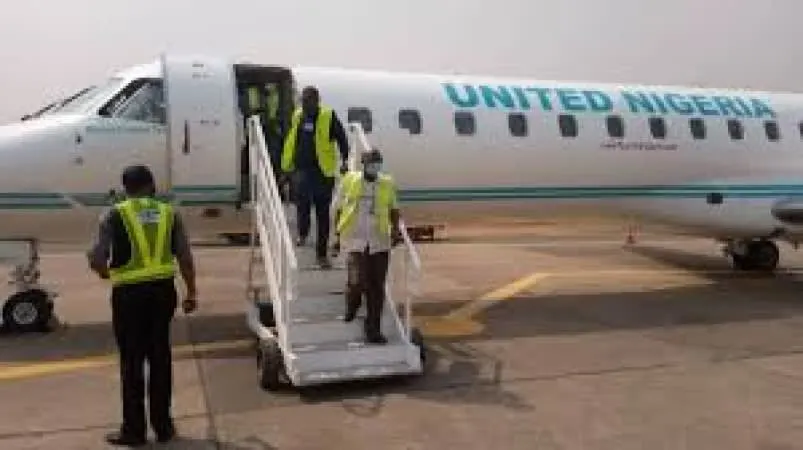
United Nigeria Airlines has ruled out immediate fare hikes despite Jet A1 fuel prices surging over 100% to N1,852/litre, citing passenger demand fears.
Key Takeaways
- •Resists fare hikes despite Jet A1 fuel prices surging over 100% to N1,852/litre.
- •Warns that increasing ticket prices could destroy demand in a market with under 16 million annual passengers.
- •Faces severe margin compression as fuel now accounts for up to 45% of total operating costs.
A major Nigerian domestic carrier, United Nigeria Airlines (UNA), has ruled out an immediate increase in airfares despite a sudden and dramatic surge in the price of aviation fuel. The cost of Aviation Turbine Fuel (Jet A1) has more than doubled, reaching as high as N1,852.19 per litre at key airports, placing significant financial pressure on all domestic operators.
The decision to absorb the increased costs stems from concerns over passenger demand elasticity in a market with fewer than 16 million annual domestic passengers. According to Mazi Osita Okonkwo, Chief Operating Officer of United Nigeria Airlines, passing the full cost increase to consumers at this time could trigger severe demand destruction, further weakening the fragile domestic air travel market. The airline is currently prioritizing passenger retention over immediate cost recovery, a strategy that highlights the precarious balance Nigerian carriers must maintain between operational viability and market stability.
Soaring Operational Costs
The price of Jet A1 escalated by over 100% in a single week in March 2026, rising from approximately N900 per litre. This volatility, driven primarily by geopolitical tensions in the Middle East and their impact on global crude oil prices, has direct and severe consequences for Nigerian airlines. According to industry estimates from the Airline Operators of Nigeria (AON), the umbrella body for domestic carriers, aviation fuel now accounts for 40% to 45% of an airline's total operational costs. This sudden doubling of their largest expense item severely compresses profit margins and strains liquidity.
"The sudden hike in aviation fuel prices is placing significant pressure on operators' finances," stated Mazi Osita Okonkwo. He warned that increasing ticket prices could negatively impact Nigeria's already limited passenger traffic. The situation is being closely monitored by regulatory bodies, including the Nigeria Civil Aviation Authority (NCAA), which oversees the economic regulation of airfares to ensure fair competition. Additionally, the Federal Competition and Consumer Protection Commission (FCCPC) is tasked with preventing any potential price-fixing or anti-competitive behavior among carriers during the crisis.
Industry Context and Historical Precedent
This is not the first time Nigerian carriers have faced such a crisis. The current situation echoes the 2022 Nigerian Aviation Fuel Crisis, when Jet A1 prices reached N700 per litre. At that time, the AON threatened a complete shutdown of domestic flight operations, prompting an emergency government intervention. That historical precedent demonstrates the industry's extreme vulnerability to fuel price shocks and a pattern of attempting to absorb initial cost impacts before seeking fare adjustments or government relief. The 2022 event suggests that while airlines may hold off on fare hikes initially, the strategy is unsustainable if high fuel costs persist, making service disruptions a potential outcome.
The impact of the current price surge extends across the aviation ecosystem. For airlines, it means severe margin compression. For passengers, it creates uncertainty and the potential for future fare hikes that could push the average ticket price from N150,000 toward N200,000. Fuel marketers also face challenges, including increased working capital requirements to manage the importation and supply of Jet A1 at the new, higher cost.
Technical Analysis
This development underscores the structural vulnerabilities of the Nigerian aviation sector, particularly its high dependence on imported Jet A1 and exposure to global oil market volatility and currency fluctuations. The decision by United Nigeria Airlines to absorb the cost shock, while necessary for short-term market stability, is a financially draining tactic. It reflects a deep understanding of the market's price sensitivity, where significant fare increases risk pushing potential travelers to alternative modes of transport or canceling travel altogether. This event accelerates the trend of margin compression for domestic carriers, a pattern previously established during the 2022 crisis. Unlike in more mature markets where hedging strategies can mitigate some fuel price risk, many Nigerian carriers have limited access to such financial instruments, leaving them fully exposed to spot market prices. The current situation is likely to renew calls from the AON for government intervention, potentially including subsidies or tax waivers on aviation fuel, to ensure the industry's survival.
What Comes Next
While UNA has held firm for now, the AON is expected to conduct a comprehensive review of domestic fares in the second quarter of 2026. This review will assess the sustained impact of fuel costs and determine if a coordinated, industry-wide fare adjustment is necessary to ensure operational sustainability. Furthermore, there are rumors that the Federal Government of Nigeria may review potential interventions or subsidies for aviation fuel by mid-2026, though no official confirmation has been provided. The NCAA continues to monitor the situation from a regulatory standpoint, ensuring any future pricing changes adhere to national guidelines. The official policies and regulations can be found on the Nigeria Civil Aviation Authority (NCAA) website.
Why This Matters
This situation highlights the critical challenge facing Nigeria's domestic aviation industry: balancing soaring, externally-driven operational costs against a price-sensitive consumer base. The decision by United Nigeria Airlines to temporarily absorb a 100% fuel cost increase is a significant gamble on passenger loyalty. For the broader industry, it signals a period of intense financial strain that could lead to consolidated calls for government support or, if unresolved, potential reductions in flight frequencies and network capacity.
Get breaking commercial aviation news and expert airline analysis at omniflights.com. Discover how innovation is shaping aviation through aircraft systems, avionics, and digital tools at omniflights.com/technology.
Written by Ujjwal Sukhwani
Aviation News Editor & Industry Analyst delivering clear coverage for a worldwide audience. Covers flight operations, safety regulations, and market trends with expert analysis.
Visit ProfileYou Might Also Like
Discover more aviation news based on similar topics
IATA Pushes for Open Used Serviceable Material Market
IATA is urging engine OEMs to expand the Used Serviceable Material market following a landmark EU antitrust settlement with Pratt & Whitney Canada.
Virgin Atlantic A330 Retirement Boosts SAS Fleet Capacity
Virgin Atlantic is retiring its aging A330-300 fleet, with five airframes acquired by SAS to bridge near-term intercontinental capacity gaps.
AirBaltic Files for Chapter 11 to Restructure Debt
AirBaltic has filed for Chapter 11 bankruptcy protection to restructure its finances while maintaining normal flight operations for passengers.
Boeing Wins $241M Navy Contract for F/A-18 Surface Repairs
Boeing secured a $241.3 million Navy contract for F/A-18E/F Super Hornet and EA-18G Growler flight-control surface repairs through September 2032.
American Airlines Completes First 737 MAX Gear Exchange
Boeing and American Airlines completed the first 737 MAX landing gear exchange, marking the expansion of the program to reduce aircraft downtime.

Iberia Gains Unrestricted A350 Heavy Maintenance Approval
The Spanish aviation regulator AESA has granted Iberia Maintenance unrestricted authorization to perform heavy maintenance on the Airbus A350 fleet.