United Airlines Updates Contract to Enforce Headphone Use Onboard

Aviation News Editor & Industry AnalystAviation News Editor & Industry Analyst delivering clear coverage for a worldwide audience.
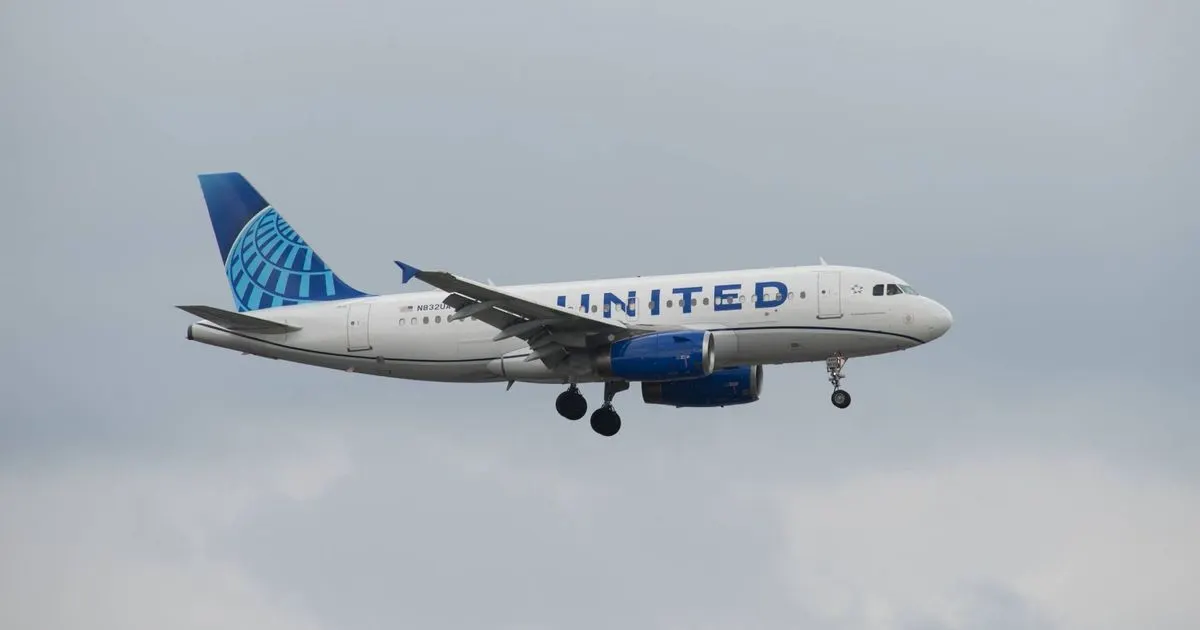
United Airlines has updated its Contract of Carriage, allowing crew to remove passengers who refuse to use headphones for personal audio or video streaming.
Key Takeaways
- •Codifies headphone use for personal devices under Rule 21 'Refusal of Transport'.
- •Links policy update to the expansion of Starlink Wi-Fi, targeting 500 aircraft by late 2026.
- •Empowers cabin crew to remove or permanently ban non-compliant passengers.
- •Contrasts with Canadian carriers like WestJet, which have less formal, non-binding policies.
In a move to codify passenger etiquette, United Airlines (UA) has formally updated its policies to mandate the use of headphones for any audio or video consumed on personal devices. The change, which took effect on February 27, 2026, is detailed within the airline's Contract of Carriage (COC), the legally binding document governing passenger transport. This update gives cabin crew the explicit authority to remove or even permanently ban travelers who fail to comply, a significant shift from informal requests to contractual enforcement.
The new requirement is specifically listed under Rule 21 'Refusal of Transport'. This clause now empowers the airline to deny boarding or deplane a passenger for playing audio from a personal device that is audible to other passengers. The policy clarification comes as United aggressively expands its high-speed, in-flight connectivity. The carrier expects to have 500 aircraft outfitted with Starlink Wi-Fi by the end of 2026, a technology that enables seamless video and audio streaming, thereby increasing the potential for in-flight noise pollution.
Background on the Policy Change
United Airlines stated the rule was added to its COC to make headphone requirements clearer for both passengers and crew. The proliferation of high-speed internet in the cabin has transformed personal devices into primary sources of in-flight entertainment, creating new challenges for maintaining a quiet environment. By embedding the headphone rule in the Contract of Carriage, UA provides its flight attendants with unambiguous contractual backing to address noise disturbances. This move is intended to de-escalate potential conflicts by removing ambiguity about the rules.
The impact on passengers is direct and significant. Travelers, including those from Canada flying on the U.S.-based carrier, who refuse a crew member's instruction to use headphones risk immediate consequences. These can range from being denied boarding on a connecting flight to removal from the aircraft and a potential ban from all future United flights. This formal policy underscores a broader industry trend where airlines are moving to codify passenger behavior expectations to give crews more authority in managing the cabin environment.
Industry Context and Passenger Impact
The decision by United Airlines contrasts with the current policies of major Canadian carriers. WestJet, for example, stated that while it encourages guests to use headphones as a courtesy, it has not yet codified this as a strict policy leading to removal. The Canadian Transportation Agency (CTA) oversees passenger rights in Canada, but an airline's Contract of Carriage dictates the specific terms of travel once a ticket is purchased. As such, Canadian passengers on United flights are subject to UA's rules.
Travel expert Scott Keyes commented that the rule is a 'graceful way' for the airline to manage the small number of passengers who create noise disturbances for others. The policy directly impacts flight attendants, who are on the front lines of enforcement. While it provides them with clear authority, it also places the burden of enforcement on them, which can lead to confrontations. For competing airlines, United's move may create pressure to adopt similar legally binding rules as high-speed Wi-Fi becomes a standard offering across the industry.
This policy change also brings up historical context regarding passenger removals. The April 2017 incident involving the removal of Dr. David Dao from a United Express flight resulted in widespread public backlash and forced changes to policies on involuntary denied boarding. That event highlighted the legal and public relations risks associated with enforcing a Contract of Carriage. The new, explicit headphone rule appears designed to prevent similar situations by making the grounds for removal clear and non-discretionary, reducing the potential for disputes over subjective crew instructions.
Technical Analysis
United's decision to update Rule 21 is a direct response to a technological shift—the introduction of gate-to-gate, high-speed internet. The expansion of Starlink Wi-Fi represents a step-change in in-flight connectivity, moving beyond basic email and messaging to support high-bandwidth activities like movie streaming and video calls. This development indicates a proactive strategy by the airline to mitigate the negative externalities of this new technology before they become widespread problems. By formalizing the headphone rule, United is attempting to preserve the traditional cabin ambiance against the disruptive potential of ubiquitous personal entertainment.
Historically, similar situations where new technology is introduced have often led to reactive policy changes after passenger complaints or conflicts escalate. United's move, however, follows a more pre-emptive model. It codifies a social norm into a contractual obligation, providing a clear framework for enforcement that protects the experience of the majority of passengers. This contrasts with the aftermath of the Dr. David Dao incident, which was a reactive change to an existing, poorly managed policy. The current update is an attempt to get ahead of a predictable issue, suggesting a lesson learned in passenger management and risk mitigation.
What Comes Next
The primary milestone related to this policy is the continued rollout of the technology that prompted it. United Airlines' installation of Starlink Wi-Fi is expected to reach 500 aircraft by the end of 2026. As more of the fleet becomes equipped with high-speed internet, the enforcement of the headphone rule will likely become more prevalent and visible to travelers. It remains to be seen whether other major North American carriers will follow suit by amending their own Contracts of Carriage to include similarly explicit language, particularly if they also invest in enhanced connectivity solutions.
Consumer advocates and travel commentators have raised questions about accessibility, suggesting that if airlines mandate headphone use under threat of removal, they might consider providing complimentary or low-cost headphones to passengers who do not have them, though United has not announced such a policy.
Why This Matters
This policy update is more than a minor rule change; it signals a strategic shift in how airlines manage the passenger experience in an increasingly connected cabin. By embedding a simple matter of etiquette into its primary legal contract with passengers, United is setting a new precedent for managing on-board behavior. For aviation professionals, it highlights the operational ripple effects of new technology, while for travelers, it serves as a stark reminder that the terms and conditions in a Contract of Carriage have tangible, real-world consequences.
Stay ahead of the airline industry with commercial aviation news from omniflights.com. Discover how innovation is shaping aviation through aircraft systems, avionics, and digital tools at omniflights.com/technology.
Written by Ujjwal Sukhwani
Aviation News Editor & Industry Analyst delivering clear coverage for a worldwide audience. Covers flight operations, safety regulations, and market trends with expert analysis.
Visit ProfileYou Might Also Like
Discover more aviation news based on similar topics
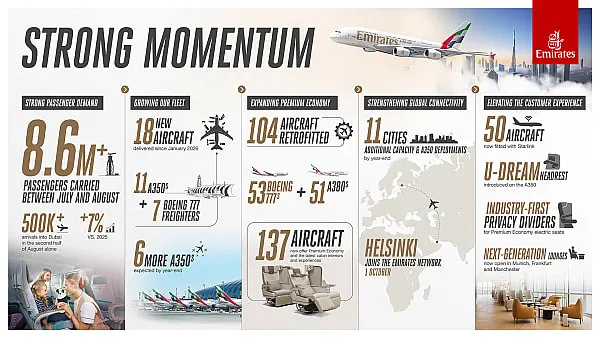
Emirates Winter Booking Momentum Grows Amid Fleet Expansion
Emirates carried 8.6 million passengers this summer and enters winter with strong demand as it accelerates fleet retrofits and network growth.
Air Arabia Consortium Gains AOC for New Dammam Budget Airline
A Saudi GACA-led consortium including Air Arabia has secured an AOC to launch a new budget airline based at Dammam's King Fahd International Airport.

Turkish Airlines Exits Luanda as Angola Hub Struggles
Turkish Airlines dropped its Luanda route as Angola's new airport struggles to attract traffic, handling only 756,028 passengers in 2025.

Red Sea Airlines Leases Two 737 MAX 8s for 2027 Expansion
Red Sea Airlines signed a lease for two Boeing 737 MAX 8 aircraft from SMBC Aviation Capital, arriving in 2027 to support its 14-aircraft fleet goal.
Avelo CEO Warns Airfares May Rise on Jet Fuel Price Spikes
Avelo Airlines CEO Andrew Levy warns that rising fuel costs may force fare increases as global jet fuel prices reach $171.01 per barrel.
IndiGo, Air India Battle for Mumbai-Delhi Route Dominance
IndiGo and the Air India group are competing for dominance on the Mumbai-Delhi air route, which saw 13.9 percent capacity growth this September.