United Airlines Formalizes Headphone Policy in Contract of Carriage

Co-Founder & CEOAviation News Editor delivering trusted coverage across the global aviation industry.
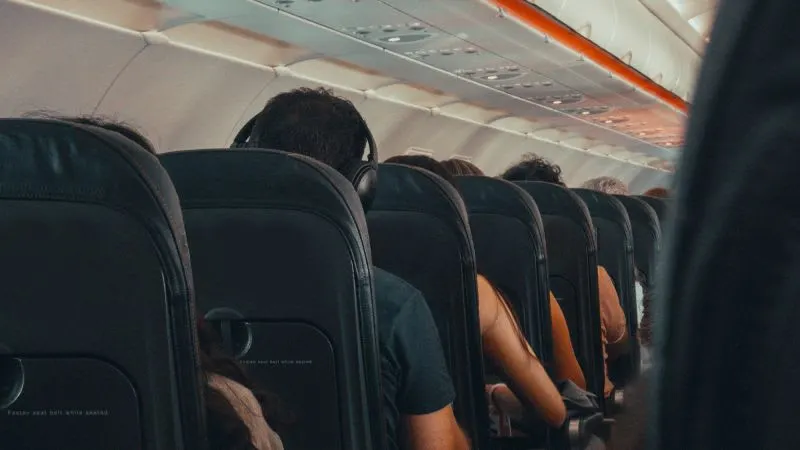
United Airlines has updated its Contract of Carriage, allowing for the removal of passengers who listen to audio content without using headphones.
Key Takeaways
- •Codifies mandatory headphone use in its Contract of Carriage (Rule 21, Amendment 22).
- •Grants flight crews explicit legal authority to remove non-compliant passengers.
- •Follows a trend of managing unruly behavior, with over 1,600 FAA-reported incidents in 2025.
- •Coincides with the expansion of Starlink Wi-Fi, expected on 500 aircraft by end-of-2026.
In a move to formalize cabin etiquette, United Airlines has updated its Contract of Carriage (COC) to explicitly allow for the removal of passengers who play audio or video content without the use of headphones. The change, detailed in Amendment 22 to Rule 21 (Refusal of Transport), provides flight crews with clear contractual authority to address a common source of in-flight disturbances.
The policy codifies what was previously an encouraged behavior into a binding rule for all passengers. This development comes as the airline expands its high-speed internet offerings and the industry continues to manage the fallout from a multi-year spike in unruly passenger behavior. According to the Federal Aviation Administration (FAA), while incidents are down from their peak of 5,973 in 2021, over 1,600 unruly passenger incidents were still reported on U.S. flights in 2025, underscoring the ongoing need for clear enforcement mechanisms.
United Airlines framed the update as a proactive measure. "We've always encouraged customers to use headphones when listening to audio content," the airline stated. "With the expansion of Starlink, it seemed like a good time to make that even clearer by adding it to the contract of carriage." This sentiment was echoed by industry observers. Scott Keyes, founder of Going, noted, "This is in line with how the vast majority of travellers comport themselves... it's a graceful way to handle those folks."
Stakeholder and Passenger Impact
The primary impact of this policy change is on United Airlines Flight Attendants, who now have explicit contractual backing to enforce cabin noise rules. This shifts the dynamic from a polite request to a condition of travel, potentially reducing the need for crew members to de-escalate disputes. For non-compliant passengers, the consequences are significant, ranging from denial of boarding to removal from the aircraft and potential bans from future travel with the airline.
The policy also sets a new benchmark for other U.S. carriers, who may face pressure from their own crews and customers to adopt similarly explicit rules. While some consumer advocates express concern that strict enforcement could lead to more confrontations and potential flight delays if law enforcement is required, the airline industry has trended toward formalizing such rules to prevent ambiguity.
Regulatory and Historical Context
This policy change exists within a broader framework of aviation regulations. The ultimate authority for passenger removal rests with the pilot in command under 14 CFR 91.3, which grants them final say on any issue deemed a disturbance or safety concern. United's updated COC provides a specific, non-safety-related justification for the captain to exercise that authority.
The airline industry has become increasingly assertive in managing passenger behavior since the FAA instituted its Zero Tolerance Policy in January 2021. That policy, initially a response to mask-mandate violations, established a precedent for strict enforcement against any form of in-flight disruption. United's own history with passenger removal, most notably the April 2017 Dr. David Dao incident, highlighted the intense public and legal scrutiny applied to an airline's enforcement of its Contract of Carriage, particularly Rule 21. This new amendment appears designed to be a clear and defensible basis for action.
Technology and Future Outlook
The timing of the policy update is directly linked to technological advancements. United Airlines expects to have 500 aircraft equipped with high-speed Starlink internet by the end of 2026. This expansion of connectivity increases the likelihood that passengers will stream audio and video content on personal devices, making a clear headphone policy more critical for maintaining a quiet cabin environment. As airlines continue to enhance in-flight entertainment and connectivity, policies governing device use are expected to become more widespread and standardized across the industry.
Why This Matters
United's decision to amend its Contract of Carriage transforms a common courtesy into a contractual obligation, reflecting a broader industry trend of codifying passenger behavior rules to empower crews and minimize conflict. For travelers, it serves as a clear notice that in-flight etiquette is no longer just a suggestion but a condition of travel. The move signals that as technology makes the aircraft cabin a more connected space, airlines are prepared to enforce rules that preserve it as a shared one.
Stay ahead of the airline industry with commercial aviation news from omniflights.com. Stay informed on aviation incidents, investigations, and best practices in the Safety category at omniflights.com/safety.
Written by Hardik Vishwakarma
Co-Founder & Aviation News Editor leading initiatives that improve trust and visibility across the global aviation industry. Covers airlines, airports, safety, and emerging technology.
Visit ProfileYou Might Also Like
Discover more aviation news based on similar topics
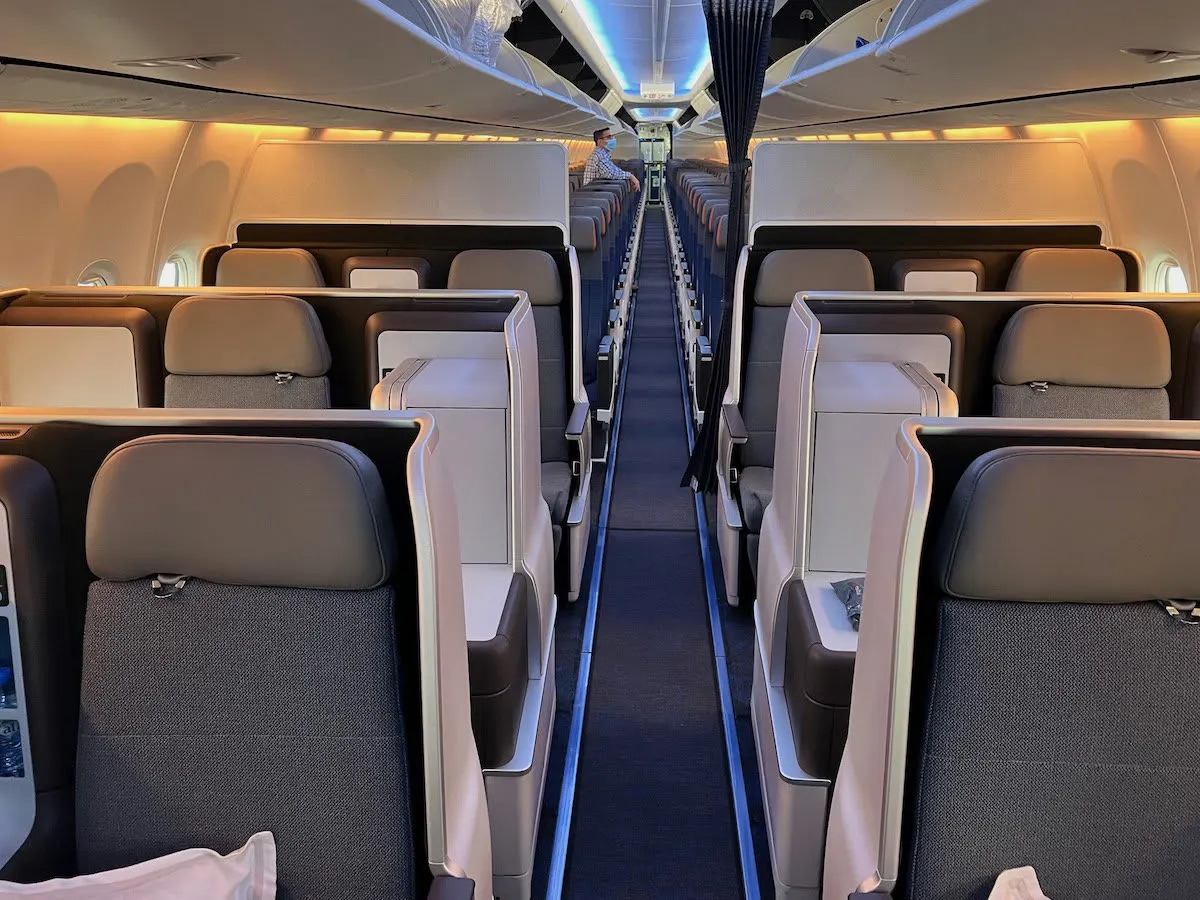
Flydubai Upgrading 21 Boeing 737 MAX 8s to Flat Bed Seats
Flydubai is retrofitting 21 Boeing 737 MAX 8 aircraft with lie-flat business class seats to standardize its premium product by late 2027.
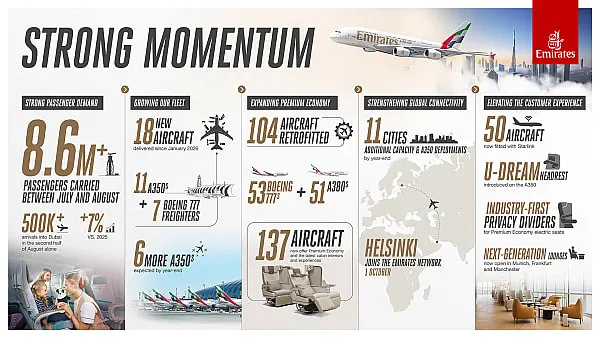
Emirates Winter Booking Momentum Grows Amid Fleet Expansion
Emirates carried 8.6 million passengers this summer and enters winter with strong demand as it accelerates fleet retrofits and network growth.
Air Arabia Consortium Gains AOC for New Dammam Budget Airline
A Saudi GACA-led consortium including Air Arabia has secured an AOC to launch a new budget airline based at Dammam's King Fahd International Airport.

Turkish Airlines Exits Luanda as Angola Hub Struggles
Turkish Airlines dropped its Luanda route as Angola's new airport struggles to attract traffic, handling only 756,028 passengers in 2025.

Red Sea Airlines Leases Two 737 MAX 8s for 2027 Expansion
Red Sea Airlines signed a lease for two Boeing 737 MAX 8 aircraft from SMBC Aviation Capital, arriving in 2027 to support its 14-aircraft fleet goal.
Avelo CEO Warns Airfares May Rise on Jet Fuel Price Spikes
Avelo Airlines CEO Andrew Levy warns that rising fuel costs may force fare increases as global jet fuel prices reach $171.01 per barrel.