UAE Airlines Resume Overflights of Iranian Airspace

Aviation News Editor & Industry AnalystAviation News Editor & Industry Analyst delivering clear coverage for a worldwide audience.

UAE airlines resumed flights through Iranian airspace in August 2026, reducing travel times by 40 minutes on key routes like Dubai to Baku.
Key Takeaways
- •UAE airlines resumed flights through Iranian airspace in mid-August 2026.
- •Rerouting saves approximately 40 minutes on flights between Dubai and Baku.
- •EASA maintains active conflict zone bulletins despite the route resumption.
The return of UAE airlines Iranian airspace routing has successfully optimized several critical Middle East aviation routes across the region. Flight tracking data indicates that flydubai overflights Iran resumed in mid-August 2026, allowing carriers from the United Arab Emirates (UAE) to bypass lengthy detours. By returning to the Tehran Flight Information Region (FIR), regional airlines are bypassing lengthy detours over neighboring countries. This routing change reduces flight times and cuts fuel consumption significantly.
The operational shift directly addresses the challenges of airspace congestion in the Middle East. For months, airlines had been forced to route flights through narrow corridors over Iraq and Saudi Arabia, causing delays and increasing carbon emissions. By restoring access to the Iranian FIR, carriers can now distribute traffic more evenly, easing pressure on alternative corridors and improving overall schedule reliability.
Operational Benefits and Flight Tracking Data
According to flight tracking data, the routing adjustment has yielded immediate efficiency gains. For example, flights operating between Dubai (DXB) and Baku (GYD) have saved approximately 40 minutes of flight time per leg compared to the previous detours through the Iraqi corridor. This reduction in flight duration translates directly into lower fuel burn and reduced crew duty hours, lowering the overall operating costs for the airlines.
The financial and operational implications of this decision are substantial. Saj Ahmad, Chief Analyst at StrategicAero Research, highlighted the mutually beneficial nature of the agreement. "Iranian airspace is key for shorter flight times and distances to Europe and the Americas — and Iran benefits from navigation fees, so it's a win-win for both sides," Ahmad stated. The collection of overflight navigation fees provides a vital revenue stream for the Iranian Civil Aviation Organization, which had seen its income dwindle during the period of airspace avoidance.
However, the resumption of flights has not been met with universal consensus. While Gulf-based carriers have moved quickly to optimize their networks, Western regulators remain cautious. The European Union Aviation Safety Agency (EASA) continues to maintain active Conflict Zone Information Bulletins (CZIB) for the region. These bulletins warn of residual safety risks due to the presence of advanced air-defense systems and unpredictable military activities in the area. EASA and other Western aviation authorities have advised their own domestic carriers to exercise extreme caution or avoid the airspace entirely, reflecting a clear divergence in risk tolerance between Gulf and European operators.
Geopolitical Volatility and Historical Precedents
The decision to return to Iranian airspace occurs against a backdrop of historical volatility in regional skies. In January 2020, the United States Federal Aviation Administration (FAA) issued an emergency order banning US civil aviation operators from flying over Iran. This regulatory action followed the tragic shootdown of Ukraine International Airlines Flight 752 near Tehran. The incident forced global carriers to implement massive rerouting strategies that lasted for years, demonstrating how quickly geopolitical events can disrupt global airline networks.
This historical precedent contrasts with the current trend of airspace normalization and route optimization. As regional geopolitical tensions stabilize, airlines are increasingly returning to established, shorter flight corridors. The return to the Iranian FIR represents a calculated decision by UAE authorities to prioritize operational efficiency and cost reduction, provided that local security assessments indicate the risk is manageable.
The Economics of Airspace Normalization
This development highlights a broader structural trend within the aviation industry: the critical balance between geopolitical risk management and cost-efficiency. In an era of tight airline margins and intense pressure to reduce carbon emissions, carrying excess fuel for lengthy detours is highly disadvantageous. The data suggests that when local security conditions permit even a marginal stabilization, commercial pressures rapidly drive airlines back to optimal flight paths. This pattern of rapid route restoration accelerates the recovery of regional hub efficiency, particularly for mega-hubs like Dubai International Airport, which rely on tight connecting windows for global passenger flows.
The Regional Airspace Restoration Timeline
Looking ahead, the General Civil Aviation Authority (GCAA) of the UAE expects a full restoration of pre-conflict flight frequencies through the Iranian FIR by all Gulf Cooperation Council (GCC) carriers by Late 2026. This milestone remains subject to ongoing safety monitoring and the absence of renewed geopolitical escalations. Airlines will continue to coordinate with regional civil aviation authorities to ensure that safety remains the primary consideration as flight volumes increase.
Why Airspace Access Matters to Global Networks
For the global aviation industry, the return of UAE carriers to Iranian airspace signals a pragmatic shift toward restoring traditional, high-efficiency flight corridors. This change not only lowers operating costs and emissions for major airlines but also reduces travel times for international passengers. Ultimately, it underscores how critical stable airspace access remains to the economic viability of global airline networks.
Frequently Asked Questions
- Why are UAE airlines resuming flights through Iranian airspace?
- UAE carriers are resuming these routes to optimize flight times and reduce fuel consumption. Bypassing lengthy detours saves approximately 40 minutes on routes such as Dubai to Baku.
- What safety warnings exist for flights over Iranian airspace?
- The European Union Aviation Safety Agency maintains active Conflict Zone Information Bulletins warning of residual risks due to military activity and air-defense systems in the region.
- How does the resumption of overflights benefit Iran?
- The resumption allows the Iranian Civil Aviation Organization to recover vital overflight navigation fees from international carriers utilizing its Flight Information Region.
From airline operations to fleet updates, commercial aviation news lives at omniflights.com. Stay informed on aviation incidents, investigations, and best practices in the Safety category at omniflights.com/safety.
Written by Ujjwal Sukhwani
Aviation News Editor & Industry Analyst delivering clear coverage for a worldwide audience. Covers flight operations, safety regulations, and market trends with expert analysis.
Visit ProfileYou Might Also Like
Discover more aviation news based on similar topics

Flydubai Upgrading 21 Boeing 737 MAX 8s to Flat Bed Seats
Flydubai is retrofitting 21 Boeing 737 MAX 8 aircraft with lie-flat business class seats to standardize its premium product by late 2027.
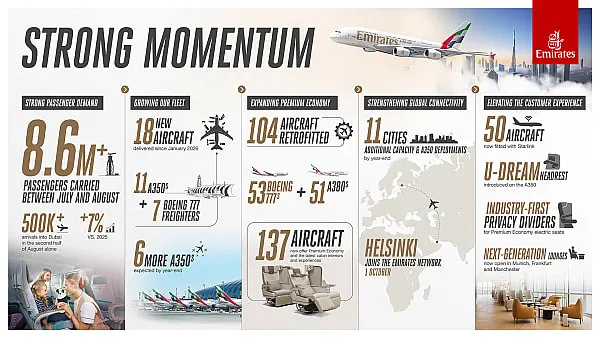
Emirates Winter Booking Momentum Grows Amid Fleet Expansion
Emirates carried 8.6 million passengers this summer and enters winter with strong demand as it accelerates fleet retrofits and network growth.
Air Arabia Consortium Gains AOC for New Dammam Budget Airline
A Saudi GACA-led consortium including Air Arabia has secured an AOC to launch a new budget airline based at Dammam's King Fahd International Airport.
Turkish Airlines Exits Luanda as Angola Hub Struggles
Turkish Airlines dropped its Luanda route as Angola's new airport struggles to attract traffic, handling only 756,028 passengers in 2025.
Red Sea Airlines Leases Two 737 MAX 8s for 2027 Expansion
Red Sea Airlines signed a lease for two Boeing 737 MAX 8 aircraft from SMBC Aviation Capital, arriving in 2027 to support its 14-aircraft fleet goal.
Avelo CEO Warns Airfares May Rise on Jet Fuel Price Spikes
Avelo Airlines CEO Andrew Levy warns that rising fuel costs may force fare increases as global jet fuel prices reach $171.01 per barrel.