TSA Staffing Shortages Cause Major Airport Delays Amid Government Shutdown

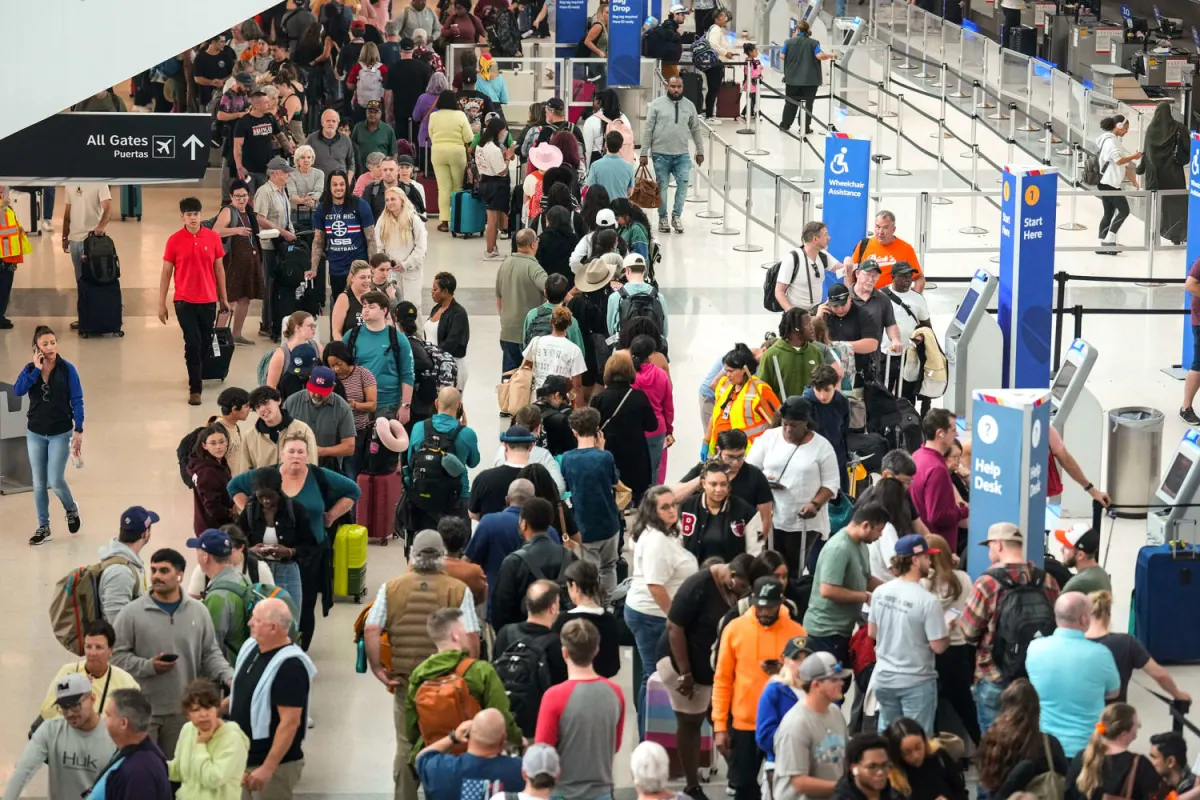
A partial government shutdown is causing TSA staffing shortages and multi-hour security delays at major U.S. airports as spring break travel begins.
Key Takeaways
- •Exceeds three hours for security wait times at some major U.S. airports.
- •Stems from a partial government shutdown impacting Department of Homeland Security funding.
- •Coincides with the start of peak spring break travel, amplifying disruptions.
- •Prompts calls from industry groups for Congress to resolve the funding impasse.
A partial government shutdown has triggered significant TSA staffing shortages, leading to extensive airport security wait times and travel disruptions across the United States. Passengers at several major hubs faced delays of up to three hours on Sunday, coinciding with the start of the busy spring break travel season and increasing the risk of missed flights.
The operational chaos stems from a lapse in funding for the Department of Homeland Security (DHS), the parent agency of the Transportation Security Administration (TSA). As essential federal employees, TSA officers are required to work without pay during the shutdown. This has reportedly led to a rise in unscheduled absences, straining security checkpoint operations at a time of heightened passenger volume.
Widespread Airport Disruptions
Multiple airports reported severe delays. According to federal officials, William P. Hobby Airport (HOU) in Houston experienced a wait time of 2 hours and 45 minutes just before noon on Sunday. The airport issued a warning via social media that TSA wait times could exceed three hours, advising passengers to arrive four to five hours before their scheduled departure.
Other major airports also felt the strain. Hartsfield-Jackson Atlanta International Airport (ATL) and Louis Armstrong New Orleans International Airport (MSY) both recorded wait times of approximately one hour. In Houston, George Bush Intercontinental Airport (IAH) saw delays of 51 minutes, while Charlotte Douglas International Airport (CLT) faced 47-minute delays. Officials at MSY specifically cited a shortage of TSA workers as the cause for longer-than-average lines, recommending travelers arrive at least three hours early.
Political Impasse Triggers Shutdown
The funding for DHS expired on Feb. 13 amid a legislative impasse in Congress. The dispute centers on policies related to Immigration and Customs Enforcement (ICE) and Customs and Border Protection (CBP), two other agencies under the DHS umbrella. The failure to pass a funding bill has resulted in a partial shutdown affecting the TSA, the Federal Emergency Management Agency (FEMA), and the Coast Guard.
DHS spokeswoman Lauren Bis attributed the airport chaos to the political stalemate, stating that TSA officers face significant financial hardship. "These political stunts force patriotic TSA officers, who protect our skies from serious threats, to work without pay," she said. "These frontline heroes received only partial paychecks earlier this month and now face their first full missed paycheck, leading to financial hardship, absences, and crippling staffing shortages."
Industry Calls for Resolution
Aviation industry stakeholders have urged lawmakers to resolve the funding dispute. Airlines for America (A4A), a trade group representing major carriers like American, Delta, and United, criticized the use of transportation security workers for "political leverage." In a statement, A4A President and CEO Chris Sununu highlighted the timing of the shutdown. "We are in spring break travel season and expecting record numbers of people to take to the skies," Sununu said. "Airlines have done their part to prepare; now Congress and the administration must act with urgency to reach a deal that reopens DHS and ends this shutdown."
This is not the first time a shutdown has impacted TSA operations. During the 35-day government shutdown in 2018-2019, the national rate for unscheduled absences among TSA agents reached a peak of 10%, according to the Partnership for Public Service, well above the typical rate of around 3%. The current situation follows another 43-day shutdown that ended in November, compounding the financial strain on federal employees.
Negotiations between the White House and Senate Democrats have so far failed to produce a breakthrough, leaving the duration of the shutdown and its impact on air travel uncertain.
Why This Matters
This event underscores the vulnerability of the U.S. aviation system to federal political disputes. The reliance on essential, unpaid staff during shutdowns creates immediate operational risks, impacting airline schedules, passenger confidence, and airport revenue. For the aviation industry, it highlights how external political factors can directly disrupt operations during peak demand periods, straining infrastructure and personnel beyond their normal limits.
omniflights.com provides comprehensive commercial aviation news covering airlines, aircraft, and airports. Follow aviation sustainability efforts, emissions research, and green initiatives in the Environmental section at omniflights.com/environmental.

Written by Ujjwal Sukhwani
Aviation News Editor & Industry Analyst delivering clear coverage for a worldwide audience. Covers flight operations, safety regulations, and market trends with expert analysis.
Visit ProfileYou Might Also Like
FAA Mandates Inspections for Nearly 2,000 Boeing 737NG Jets
FAA Proposes Inspection Rule for 980 Airbus Helicopters

FAA Clears Boeing 737 MAX 10 Software Glitch

FAA Faces $3.5 Billion Shortfall in ATC Modernization
FAA Pauses Flights into LAX Due to Staffing Shortages