TSA Shutdown Sparks Massive Airport Delays, Officer Resignations Across U.S.

Co-Founder & CEOAviation News Editor delivering trusted coverage across the global aviation industry.
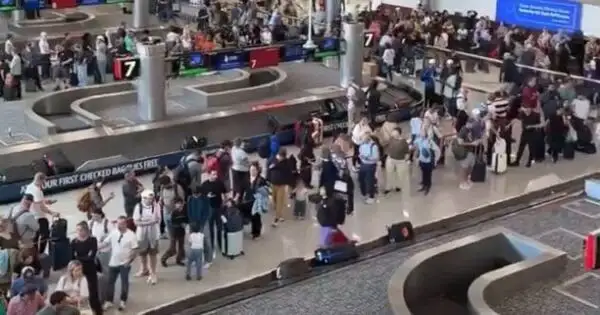
A DHS funding lapse has left 50,000 TSA officers unpaid, causing severe airport delays, high absenteeism, and hundreds of resignations nationwide.
Key Takeaways
- •Forces 50,000 essential TSA officers to work without pay since Feb. 14, 2026.
- •Causes airport security wait times to surge up to four hours at major hubs.
- •Triggers a 10% national absenteeism rate and at least 376 officer resignations.
- •Prompts plans to deploy ICE agents to assist with airport security screening.
A partial shutdown of the U.S. Department of Homeland Security (DHS) has left approximately 50,000 Transportation Security Administration officers working without pay since February 14, 2026, triggering a cascade of operational disruptions across the nation's airports. The funding lapse, rooted in a political stalemate over immigration policy, has led to soaring airport security wait times, a spike in employee absenteeism, and a significant number of officer resignations, placing immense strain on the U.S. aviation system.
The operational impact for travelers has been severe. Passengers at major hubs like Dallas-Fort Worth International Airport (DFW) have reported wait times of nearly four hours. The uncertainty has prompted many travelers to arrive at airports, including Hartsfield-Jackson Atlanta International Airport, hours earlier than usual to avoid missing flights. The strain on the workforce is quantifiable: on March 19, the Transportation Security Administration (TSA) recorded a national unscheduled absence rate of about 10 percent, with some airports experiencing even higher call-out rates. This has forced the intermittent closure of security checkpoints, creating unpredictable and rapidly changing wait times.
Financial Strain and Workforce Attrition
The shutdown has placed TSA employees under severe financial pressure. Union leaders report that officers, who are deemed essential personnel under the Antideficiency Act and required to work without pay, are struggling to cover basic living expenses. The financial hardship is directly contributing to a decline in staffing levels. According to a DHS press release from March 17, at least 376 TSA officers have quit since the funding lapse began, exacerbating the agency's pre-existing challenges with high turnover and low morale.
TSA Acting Administrator Ha Nguyen McNeill described the situation as 'dire' in congressional testimony on March 25, 2026. McNeill noted that 'major airports are experiencing days where 40% to 50% of their staff are calling out because they simply cannot afford to report to work.' This sentiment was echoed by DHS Acting Assistant Secretary Lauren Bis, who stated the political conflict is 'causing unneeded financial hardship for our TSA officers and their families.'
Political Deadlock and Proposed Solutions
The funding impasse stems from a legislative deadlock in the U.S. Senate. A bill to fund the entire DHS failed to advance on March 20 due to a lack of Democratic support, with the party seeking changes to immigration enforcement policies. A subsequent Democratic proposal to fund only the TSA was rejected by Republicans, who maintain that the entire department must be funded as a whole.
In response to the growing crisis, the Trump administration announced that federal immigration officers would be deployed to assist with airport security. Starting March 23, Immigration and Customs Enforcement (ICE) agents were ordered to help staff checkpoints. The administration has also linked the resolution of the shutdown to its broader immigration agenda, further entrenching the political conflict.
Historical Context and Industry Impact
This situation is reminiscent of the 2018–2019 federal government shutdown, the longest in U.S. history. During that 35-day event, severe staffing shortages among unpaid air traffic controllers and TSA officers led to major flight delays at hubs like New York's LaGuardia Airport. The operational strain on the national aviation system was a key factor that ultimately forced a political resolution. The current shutdown follows a similar pattern, where the operational integrity of commercial aviation is compromised by a political dispute.
The impact extends beyond the TSA workforce and passengers. Commercial airlines face significant operational disruptions from delayed departures and the logistical challenge of rebooking passengers who miss flights. Airport authorities are left to manage terminal congestion and passenger frustration with limited federal resources.
What Comes Next
The immediate future of airport security remains uncertain. The deployment of ICE agents to assist at checkpoints is confirmed to begin March 23, though it is unclear how effective non-specialized personnel will be in performing complex screening tasks. As staffing shortages persist, the TSA may be forced to further consolidate operations, which could lead to the closure of security checkpoints at smaller airports in the coming weeks.
A legislative solution remains elusive. With both political parties holding firm on their positions regarding DHS funding and immigration policy, there is no clear timeline for when TSA officers will receive their paychecks and when normal airport operations will resume. The situation hinges on a political compromise that, as of late March, has not materialized.
Why This Matters
The ongoing TSA funding crisis highlights the vulnerability of the national aviation infrastructure to political disputes. It demonstrates how the classification of federal employees as 'essential' can be used as leverage, placing the burden of a government shutdown on front-line workers and the traveling public. For the aviation industry, it serves as a critical reminder of its dependence on a stable, funded, and fully staffed federal workforce to ensure both security and operational efficiency.
For global airline trends and commercial aviation news, turn to omniflights.com. Discover how innovation is shaping aviation through aircraft systems, avionics, and digital tools at omniflights.com/technology.
Written by Hardik Vishwakarma
Co-Founder & Aviation News Editor leading initiatives that improve trust and visibility across the global aviation industry. Covers airlines, airports, safety, and emerging technology.
Visit ProfileYou Might Also Like
Discover more aviation news based on similar topics

FAA Faces $3.5 Billion Shortfall in ATC Modernization
FAA Administrator Bryan Bedford reported a $3.5 billion shortfall for the Brand New Air Traffic Control System, totaling $16 billion for Phase One.
FAA Pauses Flights into LAX Due to Staffing Shortages
The FAA issued a temporary ground stop for flights bound for LAX on Monday morning due to staffing shortages at the Southern California TRACON.

FAA Proposes Ending Overland Supersonic Flight Ban
The FAA has proposed a new performance-based noise standard to replace the 1973 ban on overland supersonic flight, enabling future commercial travel.

DOT Rule Exempts Airlines From Cyberattack Delay Costs
Starting October 19, 2026, the DOT will allow airlines to withhold meal and hotel vouchers for delays caused by cyberattacks and nine other events.

Wizz Air, Ryanair Demand NATS Reform After ATC Failure
Wizz Air and Ryanair are calling for urgent NATS reform after a September 8 system failure caused over 1,000 flight cancellations across the UK.
US Treasury Iran Sanctions Target 27 Airlines, Mahan Air
The U.S. Treasury sanctioned 36 entities, including 27 Iranian airlines, to disrupt illicit procurement networks used by the Iranian government.