Noida Airport Fees Face Review After High Fare Concerns

Co-Founder & CEOAviation News Editor delivering trusted coverage across the global aviation industry.
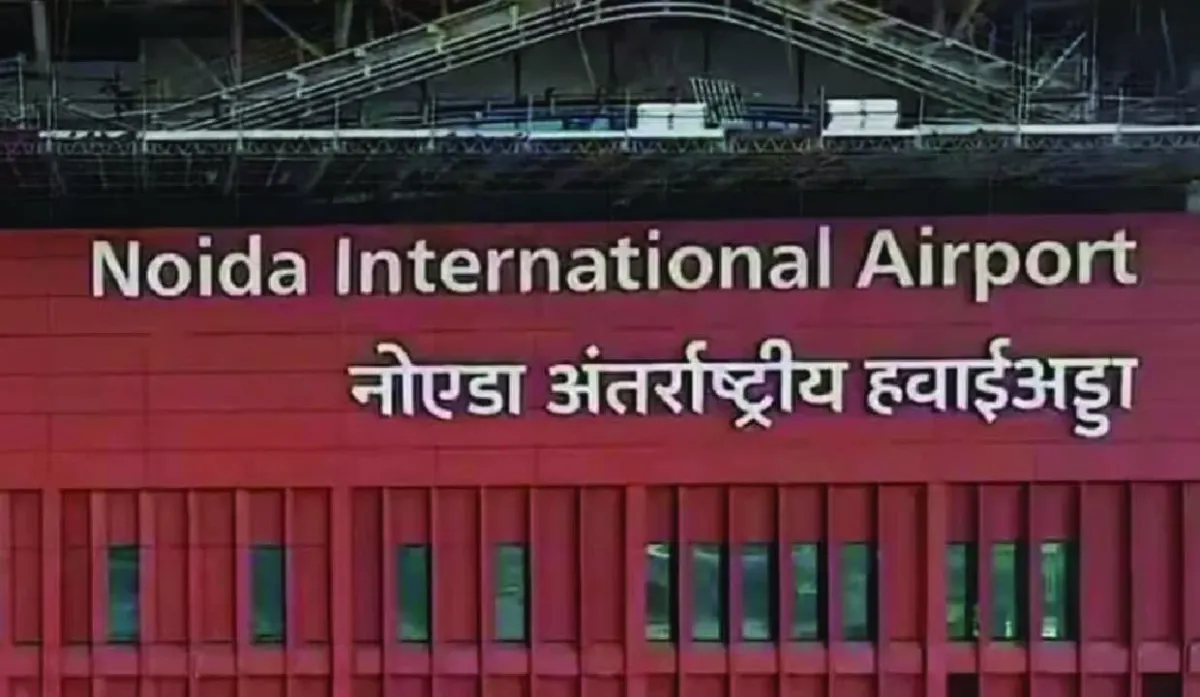
A BJP MLA has urged India's PM to review Noida Airport's high User Development Fee, warning it could make fares costlier than at nearby Delhi Airport.
Key Takeaways
- •Noida Airport's domestic departure fee is Rs 490, nearly four times Delhi's Rs 129.
- •A local MLA has formally requested a Prime Ministerial review of the high charges.
- •IndiGo projects Rs 103 crore in extra annual costs for 15 daily flights from Noida.
- •High airport tariffs are offsetting the benefit of Uttar Pradesh's low 1% fuel tax.
A local political leader has formally requested that India's Prime Minister review the proposed passenger charges at the new Noida International Airport (DXN), citing concerns that high fees could make air travel from the facility more expensive than from Delhi's established Indira Gandhi International Airport (DEL). The appeal highlights a growing conflict between the airport operator's need to recover capital costs and the goal of providing an affordable travel alternative for India's National Capital Region (NCR).
In a letter dated May 8, Jewar's Member of the Legislative Assembly (MLA), Dhirendra Singh, argued that the proposed User Development Fee (UDF) and other aeronautical charges at Noida are contrary to the public interest. The airport was developed to enhance regional connectivity and serve as a cost-effective option. However, preliminary data suggests this goal is at risk. Singh pointed to initial IndiGo flight schedules, effective June 15, 2026, where a fare from Lucknow to Noida was listed at approximately Rs 5,072, while the same route to Delhi was available for between Rs 3,600 and Rs 4,300. This price disparity, driven by higher airport charges, could undermine the new airport's competitiveness from its inception.
The Financial Disparity
The core of the issue lies in the fee structure approved on an ad-hoc basis by the Airports Economic Regulatory Authority (AERA), the statutory body governing tariffs at major Indian airports. According to AERA's tariff order, the UDF at Noida Airport is set at Rs 490 for each departing domestic passenger and Rs 210 for each arrival. In stark contrast, the UDF at the mature Delhi IGI Airport is significantly lower, at Rs 129 for departures and Rs 56 for arrivals.
This discrepancy extends to airline operational costs. In a formal submission to AERA, launch customer IndiGo stated that landing charges for common narrow-body aircraft like the Airbus A320 are 119% higher for domestic flights at Noida compared to Delhi. The airline calculated that operating just 15 daily round-trip flights from Noida would cost approximately Rs 103 crore more annually than from Delhi. This financial burden is likely to be passed on to passengers through higher ticket prices, negating any potential savings.
Stakeholder and Industry Impact
The high tariffs create significant challenges for key stakeholders. For prospective passengers in western Uttar Pradesh and the NCR, the airport's primary catchment area, higher total travel costs threaten its appeal. The MLA's letter noted that with limited multimodal transport infrastructure currently in place, passengers already face additional time and expense to reach the airport, making higher airfares even less justifiable.
For airlines, the high-cost environment complicates route planning and profitability. The operator of Noida Airport, Yamuna International Airport Private Limited (YIAPL), is a subsidiary of Zurich Airport International AG. YIAPL faces pressure to reduce tariffs, which could delay the recovery of its substantial capital investment. From an airline perspective, as articulated by IndiGo, the high charges “will make overall fares paid by passengers travelling to and from NIA higher than IGIA.”
This situation reflects a broader industry trend where new greenfield airports levy substantial initial fees to service the debt from their construction. A similar conflict is unfolding at the upcoming Navi Mumbai International Airport, which has also proposed high UDFs that have drawn criticism from airlines.
Conflicting Government Policies
The high airport charges also clash with a key incentive offered by the Uttar Pradesh government to attract airlines. The state levies a Value Added Tax (VAT) of only 1% on Aviation Turbine Fuel (ATF), a major operational cost for carriers. This is substantially lower than the approximately 25% tax rate in Delhi. However, airlines and industry experts argue that the savings from cheaper fuel are being completely offset by the high aeronautical tariffs at Noida, neutralizing the state's pro-aviation policy.
In its defense, the airport operator has stated that its tariff model is designed to spread cost recovery over a longer period, aligning with practices at other new airports. However, the immediate impact on market competitiveness remains a primary concern for both airlines and government representatives.
A320 Landing Charges: Noida (DXN) vs. Delhi (DEL)
| Metric | Noida International Airport (DXN) | Delhi IGI Airport (DEL) |
|---|---|---|
| Domestic Departure UDF | Rs 490 | Rs 129 |
| Domestic Arrival UDF | Rs 210 | Rs 56 |
| ATF State Tax | 1% | ~25% |
What Comes Next
The immediate focus is on the commencement of commercial flight operations, which are confirmed to begin on June 15, 2026. Following the initial operational phase under the ad-hoc tariff, AERA is expected to issue a regular, long-term tariff order for Noida International Airport in late 2026. The appeal from MLA Dhirendra Singh to the Prime Minister's office aims to influence this upcoming comprehensive review, with a request to keep passenger charges at or below Delhi's levels during the airport's initial years.
The outcome of this review will be critical in determining the airport's growth trajectory and its ability to compete effectively within the crowded NCR aviation market.
Why This Matters
The debate over Noida Airport's user fees is a crucial test case for India's strategy of developing multi-airport systems in major metropolitan areas. If new airports are unable to offer competitive pricing from the start, they risk becoming underutilized assets, failing to alleviate congestion at primary hubs. This situation highlights the fundamental tension between financing new, capital-intensive infrastructure and ensuring its services remain affordable and accessible to foster regional economic growth.
Frequently Asked Questions
- Why are fares at Noida Airport expected to be higher than at Delhi's airport?
- Fares at Noida International Airport are expected to be higher primarily due to a significantly larger User Development Fee (UDF) and other aeronautical charges. The domestic departure UDF at Noida is Rs 490, compared to just Rs 129 at Delhi's IGI Airport, a cost often passed to passengers.
- What is a User Development Fee (UDF) at an airport?
- A User Development Fee is a charge levied on passengers by an airport operator. The revenue is used to recover the high capital expenditure required to build, develop, or upgrade airport infrastructure.
- How do Noida Airport's high charges affect airlines like IndiGo?
- Airlines face substantially higher operating costs at Noida compared to Delhi. For instance, landing charges for an A320 are 119% higher. IndiGo has estimated that operating just 15 daily flights from Noida would incur an additional Rs 103 crore in costs annually.
Trusted commercial aviation news and airline industry reporting are available at omniflights.com. Follow aviation sustainability efforts, emissions research, and green initiatives in the Environmental section at omniflights.com/environmental.
Written by Hardik Vishwakarma
Co-Founder & Aviation News Editor leading initiatives that improve trust and visibility across the global aviation industry. Covers airlines, airports, safety, and emerging technology.
Visit ProfileYou Might Also Like
Discover more aviation news based on similar topics

FAA Faces $3.5 Billion Shortfall in ATC Modernization
FAA Administrator Bryan Bedford reported a $3.5 billion shortfall for the Brand New Air Traffic Control System, totaling $16 billion for Phase One.

FAA Pauses Flights into LAX Due to Staffing Shortages
The FAA issued a temporary ground stop for flights bound for LAX on Monday morning due to staffing shortages at the Southern California TRACON.

FAA Proposes Ending Overland Supersonic Flight Ban
The FAA has proposed a new performance-based noise standard to replace the 1973 ban on overland supersonic flight, enabling future commercial travel.

DOT Rule Exempts Airlines From Cyberattack Delay Costs
Starting October 19, 2026, the DOT will allow airlines to withhold meal and hotel vouchers for delays caused by cyberattacks and nine other events.

Wizz Air, Ryanair Demand NATS Reform After ATC Failure
Wizz Air and Ryanair are calling for urgent NATS reform after a September 8 system failure caused over 1,000 flight cancellations across the UK.

US Treasury Iran Sanctions Target 27 Airlines, Mahan Air
The U.S. Treasury sanctioned 36 entities, including 27 Iranian airlines, to disrupt illicit procurement networks used by the Iranian government.