Southwest Airlines Continues Fee Expansion, Ends Open Seating Policy

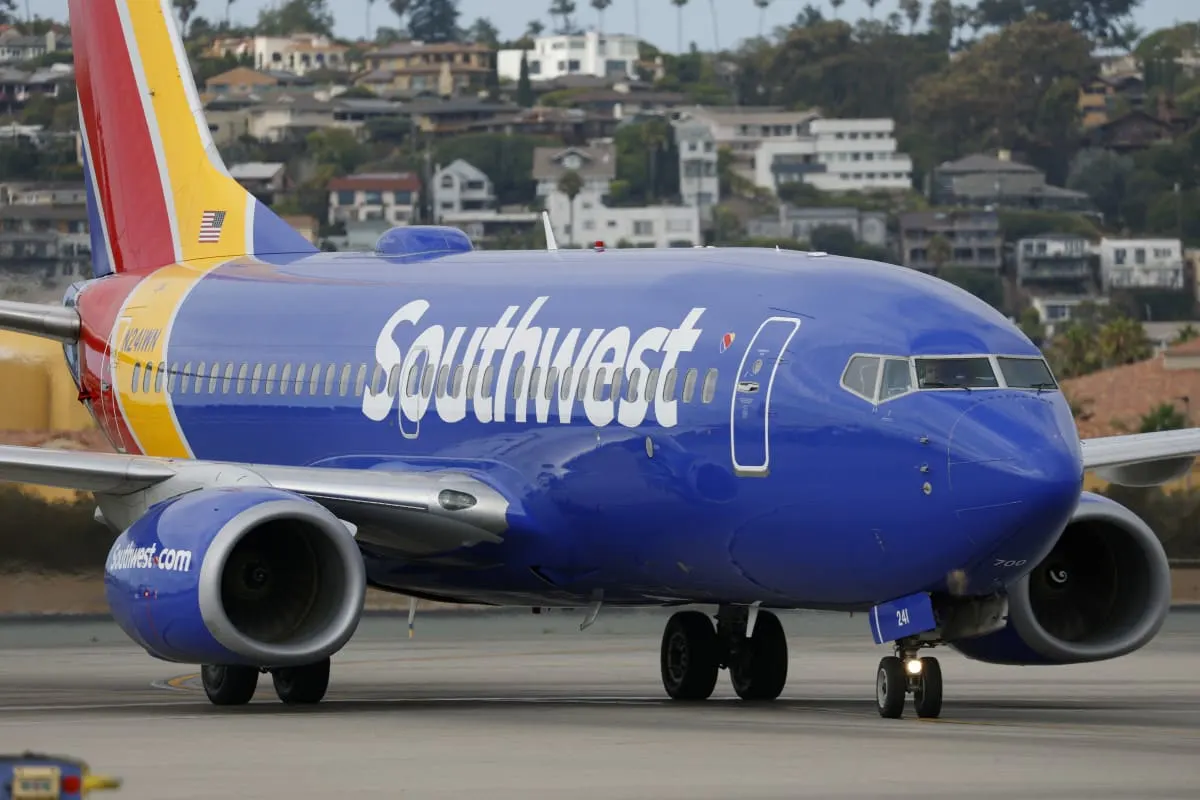
Southwest Airlines continues its strategic pivot away from its customer-friendly model, implementing assigned seating and new fees to boost ancillary revenue.
Key Takeaways
- •Ended its long-standing 'Bags Fly Free' policy, introducing fees of $35 for a first checked bag and $45 for a second.
- •Replaced its unique open-seating policy with assigned seating for all flights effective January 27, 2026.
- •Generated $1.8 billion in ancillary passenger revenues in 2025, contributing to a record $28.1 billion in operating revenue.
- •Shifts its business model to prioritize ancillary revenue growth, aligning with broader airline industry trends.
Southwest Airlines is continuing its strategic pivot away from its historically customer-centric policies, following the recent implementation of baggage fees and assigned seating with considerations for additional ancillary charges. This move further aligns the Dallas-based carrier with the broader airline industry's focus on unbundling fares. The changes mark a fundamental departure from the brand identity that Southwest Airlines (NYSE: LUV) built over decades, which famously included two free checked bags and a unique open-seating policy.
For passengers, this signals the end of an era of inclusive fares. For the airline, it represents a strategic effort to boost unit revenues and compete in a market where ancillary fees are a critical component of profitability. The airline's financial performance underscores this strategic shift.
A Fundamental Shift in Strategy
The most significant change was the end of the airline's iconic 'Bags Fly Free' policy. Effective May 28, 2025, Southwest began charging $35 for the first checked bag and $45 for the second. This was followed by another major operational change when the airline abandoned its long-standing open-seating boarding process. For all flights departing on or after January 27, 2026, Southwest implemented an assigned seating system, a standard practice among nearly all other U.S. carriers.
These policy changes are part of a broader strategy to increase ancillary income. While the airline has not formally announced new fees for services like overhead bin space, its recent actions and executive commentary suggest a continued focus on identifying new revenue opportunities. This aligns with a major industry trend of unbundling services that were once included in the base airfare.
Financial Performance and Ancillary Revenue
The focus on ancillary fees is directly tied to the airline's financial objectives. According to an analysis of company filings by Seeking Alpha, Southwest's ancillary passenger revenues reached $1.8 billion in 2025. This contributed to a record full-year operating revenue of $28.1 billion and a net income of $441 million, as detailed in the airline's Q4 2025 Earnings Summary.
Southwest CEO Robert Jordan commented on the success of this strategy, stating, "We're encouraged by the sustained outperformance of bag fee revenue and the momentum across other key revenue and cost initiatives...Looking to fourth quarter, we expect to deliver an all-time quarterly record revenue performance." The airline's 2026 outlook projects adjusted earnings per share of at least $4.00. This performance has allowed the company to return significant value to shareholders, including $2.6 billion in share repurchases and $399 million in dividends paid in 2025.
The airline's cost structure is measured by metrics like Cost per Available Seat Mile, excluding fuel (CASM-ex), while its revenue efficiency is tracked by Revenue per Available Seat Mile (RASM). The introduction of new fees is a direct attempt to increase RASM and improve overall financial health.
Industry and Regulatory Context
Southwest's pivot is not happening in a vacuum. According to the 2025 Yearbook of Ancillary Revenue by IdeaWorksCompany, global airline ancillary revenue surpassed $148 billion in 2024, demonstrating the industry's deep reliance on these fees. The unbundling of fares, including the introduction of restrictive Basic Economy tickets by legacy carriers, has become the standard model for remaining competitive.
The regulatory environment, established by the Airline Deregulation Act of 1978, grants carriers the freedom to set their own fares and fee structures. However, the Department of Transportation (DOT) has implemented rules to protect consumers. The Final Rule on Enhancing Transparency of Airline Ancillary Service Fees requires airlines like Southwest to clearly disclose charges for bags and other services at the first point a fare is shown. Additionally, the DOT's Final Rule on Automatic Refunds ensures passengers are compensated for ancillary services they paid for but did not receive due to flight changes or cancellations.
As of March 2025, Southwest operated a fleet of approximately 800 all-Boeing 737 aircraft, and the new revenue strategies will be applied across its extensive network.
Why This Matters
Southwest's transition from a maverick, customer-first airline to one adopting a conventional, fee-based model reflects the immense pressure on carriers to maximize revenue per passenger. This strategic shift permanently alters its brand perception and competitive positioning against both legacy and ultra-low-cost carriers. For aviation professionals, it serves as a prominent case study in the evolution of the low-cost carrier business model and the universal industry pursuit of ancillary revenue.
From airline operations to fleet updates, commercial aviation news lives at omniflights.com. Get the latest updates on major hubs, regional terminals, and airport operations via the Airports section at omniflights.com/airports.

Written by Ujjwal Sukhwani
Aviation News Editor & Industry Analyst delivering clear coverage for a worldwide audience. Covers flight operations, safety regulations, and market trends with expert analysis.
Visit ProfileYou Might Also Like
Dubai Aerospace Enterprise Completes United Airlines Lease
RTX Reports Record $340B Backlog and Strong Q3 2026 Growth
Boeing 737 MAX Litigation Nears Resolution in Chicago
Qatar Airways Enters Japanese JOLCO Financing Market
United Nigeria Airlines Plans N20bn Commercial Paper Debt