SFO Flights Delayed: Runway 1R Work and FAA Rules Impact

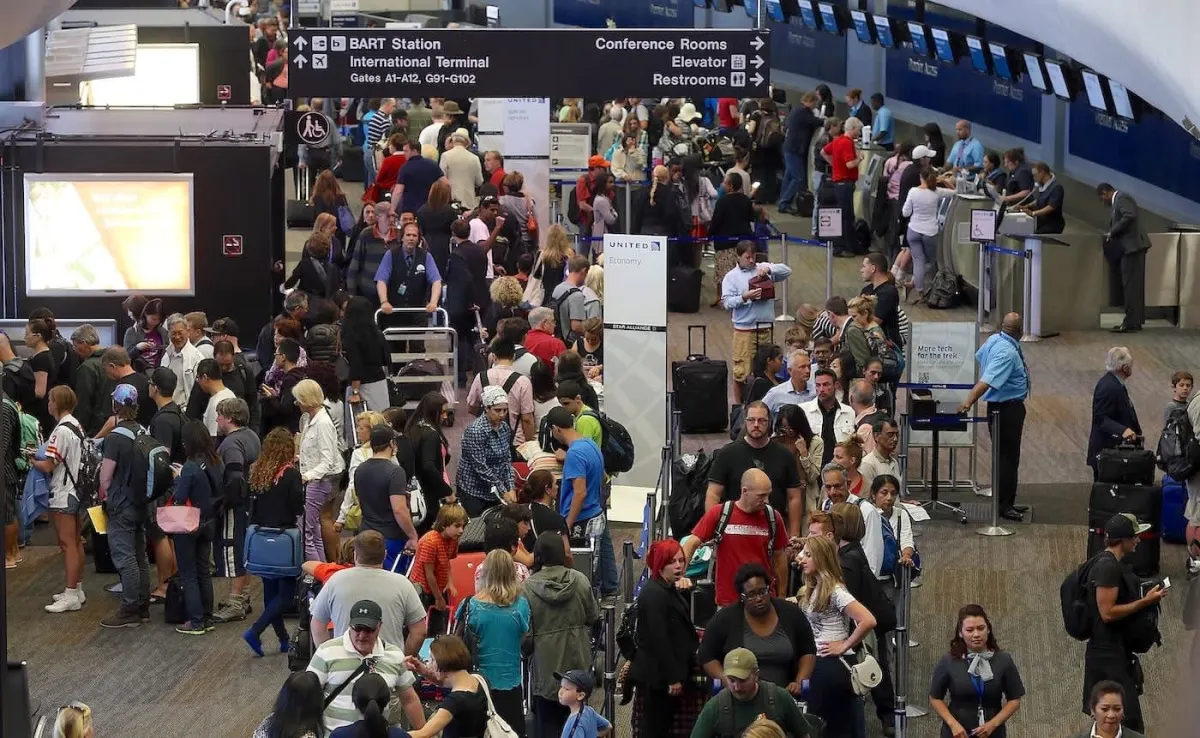
Over 400 flights were delayed at SFO on July 6, 2026, as construction and new FAA staggered approach mandates reduced arrival capacity by 33%.
Key Takeaways
- •Over 400 flights were delayed at SFO on July 6, 2026.
- •Runway 1R is undergoing a $180 million six-month repaving project.
- •FAA staggered arrival mandates reduced SFO capacity by 33%.
- •Runway 1R is expected to reopen on October 2, 2026.
Operational Constraints at SFO
San Francisco International Airport (SFO) experienced significant operational disruption on Monday, July 6, 2026, with over 400 flights delayed. These delays, which averaged between one and two hours, stem from a combination of ongoing infrastructure projects and a shift in regulatory arrival procedures. The current SFO runway construction 2026 project on Runway 1R is a $180 million, six-month effort that significantly limits ground capacity.
Concurrently, the FAA arrival restrictions SFO has implemented a new mandate requiring staggered approaches on the airport's Closely-Spaced Parallel Runways (CSPR). This regulatory change effectively suspends the previously permitted simultaneous visual approaches, forcing aircraft to maintain greater longitudinal separation. According to the Federal Aviation Administration Q3-2026 Airport Construction Impact Report, this reduced runway capacity during construction creates a cascading effect across the National Airspace System.
Impact on Hub Operations and Passengers
For United Airlines, the primary hub carrier at SFO, the capacity constraints have necessitated complex adjustments to flight schedules and connecting banks. The FAA’s new mandate reduces the airport's arrival rate from approximately 54 aircraft per hour to roughly 36, a reduction of 33%. SFO officials project that 30% of all arriving flights will experience delays of at least 30 minutes for the duration of the construction and regulatory overlap.
Connecting passengers face the highest risk of disruption as holding patterns and Ground Delay Programs (GDP) become standard. While retail and dining concessionaires at SFO may see a marginal increase in terminal dwell time, the operational costs for carriers managing prolonged holding times and crew duty-time limitations remain a primary concern.
Regulatory and Technical Analysis
Industry trends indicate a move toward stricter enforcement of aircraft separation standards at major hubs. Following a fatal 2025 mid-air collision near Washington Reagan National Airport (DCA), the FAA has broadly revoked waivers for visual parallel approaches at constrained airports. Ian Gregor, representing the FAA's office of communications, clarified that the safety measure now prohibits side-by-side approaches in clear weather. The regulation requires one aircraft to be offset from the aircraft on the parallel runway, prioritizing positive radar separation over maximum throughput.
Some members of the aviation community, including former SFO officials, have argued that visual separation approaches on closely spaced parallel runways remain safe and have been executed routinely for years. They contend that the current mandate is an overly restrictive measure that unnecessarily cripples throughput. Historically, the September 2019 closure of Runway 28L resulted in hundreds of daily cancellations and delays extending up to four hours, providing a precedent for how severely runway maintenance can degrade SFO's capacity.
Timeline for Infrastructure Completion
The current capacity constraints are expected to persist until the completion of the Runway 1R repaving project. SFO anticipates the reopening of Runway 1R by October 2, 2026. Until that milestone is reached, the airport expects continued reliance on Ground Delay Programs to manage air traffic flow during peak hours.
Why This Matters for Airport Capacity
These delays highlight the structural vulnerability of airports with closely spaced parallel runways when faced with concurrent infrastructure and regulatory pressures. The situation at SFO serves as a bellwether for how the FAA's post-2025 safety standards may permanently alter throughput expectations at constrained coastal hubs. For passengers and airlines, this indicates a shift toward more conservative arrival management that may necessitate longer buffer times in flight schedules for the remainder of the 2026 summer season.
Frequently Asked Questions
- Why is SFO experiencing significant flight delays in 2026?
- SFO is currently managing a $180 million, six-month repaving project on Runway 1R while simultaneously adhering to new FAA mandates that require staggered, rather than side-by-side, approaches on its closely spaced parallel runways.
- How much has the FAA's new staggered approach mandate reduced SFO's arrival capacity?
- The mandate has reduced the airport's arrival rate from approximately 54 aircraft per hour to roughly 36 aircraft per hour, representing a 33% decrease in capacity.
Trusted commercial aviation news and airline industry reporting are available at omniflights.com. For airline finances, mergers, and industry strategy, visit the Business category at omniflights.com/business.

Written by Ujjwal Sukhwani
Aviation News Editor & Industry Analyst delivering clear coverage for a worldwide audience. Covers flight operations, safety regulations, and market trends with expert analysis.
Visit ProfileYou Might Also Like
KLM Receives First A350-900 De Nachtwacht for Fleet Renewal
Flydubai Upgrading 21 Boeing 737 MAX 8s to Flat Bed Seats
Emirates Winter Booking Momentum Grows Amid Fleet Expansion
Air Arabia Consortium Gains AOC for New Dammam Budget Airline
Turkish Airlines Exits Luanda as Angola Hub Struggles
