Royal Jordanian Takes Delivery of First 787-9 and A321neo

Co-Founder & CEOAviation News Editor delivering trusted coverage across the global aviation industry.

Royal Jordanian received its first Boeing 787-9 and Airbus A321neo, significantly boosting long-haul and regional capacity as part of its fleet...
Key Takeaways
- •Receives first Boeing 787-9 and Airbus A321neo in a 24-hour period
- •Increases long-haul capacity by 16% with the larger 787-9 variant
- •Introduces new Collins Aerospace Elements business class on the 787-9
- •Targets a fleet of 41 aircraft by 2028 as part of a strategic modernization plan
Royal Jordanian (RJ) has marked a significant milestone in its fleet modernization plan by accepting delivery of its first Boeing 787-9 and its first Airbus A321neo within a single 24-hour period. The arrival of these next-generation aircraft at the airline's hub at Queen Alia International Airport (AMM) in Amman initiates a strategic capacity increase across both its long-haul and narrowbody networks. This dual-sourcing aircraft procurement underscores a broader industry trend of diversifying supply chains to mitigate manufacturing risks.
The deliveries are central to the airline's strategy to enhance its competitive position in the Levant. Samer Majali, Vice Chairman and CEO of Royal Jordanian, stated that the new jets are integral to the airline's modernization journey. He emphasized that they will enhance passenger experience, reduce the environmental footprint, and support the goal of positioning Amman as the leading regional gateway.
Fleet Modernization Details
The Boeing 787-9, registered as JY-RBA, represents a significant upgauging from the carrier's existing 787-8 fleet. According to fleet data, the new variant adds 42 seats for a total of 312 passengers, representing a 16% capacity increase on key long-haul routes. The aircraft features a new business class product from Collins Aerospace, the Elements suite, arranged in a 1-2-1 reverse herringbone configuration. This is a substantial upgrade for passengers from the 2-2-2 layout on the older 787-8s.
The Airbus A321neo, registered JY-RAM, arrives as part of a lease agreement with Avolon, a global aircraft lessor. The agreement is a key component of RJ's plan to reach a total fleet size of 41 aircraft by 2028. According to an Avolon press release, the A321neo (New Engine Option) delivers a 20% reduction in fuel burn and CO2 emissions compared to previous-generation narrowbodies. This efficiency is critical as the airline expands its regional network amid fluctuating fuel costs. The delivery required regulatory sign-off, including a Type Certification and Export Certificate of Airworthiness from the European Union Aviation Safety Agency (EASA).
Technical Comparison: Boeing 787-9 vs. 787-8
| Metric | Boeing 787-9 | Boeing 787-8 |
|---|---|---|
| Capacity | 312 seats (32J/280Y) | 270 seats (24J/246Y) |
| Fuselage Length | 63 m | 57 m |
Technical Comparison: Airbus A321neo vs. A320neo
| Metric | Airbus A321neo | Airbus A320neo |
|---|---|---|
| Capacity | 189 seats (12J/177Y) | 180 seats (All-Economy) |
| Fuselage Length | 44.5 m | 37.6 m |
Technical Analysis
This dual delivery highlights two critical industry trends: fleet upgauging and manufacturer diversification. By selecting the larger 787-9 and A321neo variants, Royal Jordanian is actively lowering its per-seat operating costs, allowing it to compete more effectively on dense routes. This mirrors a broader industry shift where airlines maximize capacity at slot-constrained airports. Furthermore, the decision to source widebodies from Boeing and narrowbodies from Airbus reflects a deliberate dual-sourcing strategy. This approach, also seen in major orders from carriers like Air France-KLM, mitigates risks associated with production delays or supply chain disruptions from a single original equipment manufacturer (OEM). The simultaneous introduction of these aircraft accelerates RJ's modernization, building on the foundation set by its first 787-8 delivery in 2014, which replaced an aging Airbus A340 fleet.
What Comes Next
Following its arrival, the first Boeing 787-9 is expected to enter commercial service in April 2026, pending final operational approvals. Royal Jordanian is scheduled to receive its remaining 787-9s on order between 2026 and 2028. The airline's strategic plan, which saw it transport 4.4 million passengers in 2025, targets a total fleet size of 41 aircraft by the end of 2028. The successful integration of these new aircraft is a key milestone toward achieving that goal.
Why This Matters
For Royal Jordanian, these deliveries are a critical step in renewing its fleet, enhancing operational efficiency, and elevating its passenger product to better compete with regional rivals. For the wider aviation industry, RJ's move reinforces the strategic value of operating a mixed fleet from both major manufacturers and the clear trend toward larger aircraft variants to manage capacity and improve unit economics.
From airline operations to fleet updates, commercial aviation news lives at omniflights.com. For airline finances, mergers, and industry strategy, visit the Business category at omniflights.com/business.

Written by Hardik Vishwakarma
Co-Founder & Aviation News Editor leading initiatives that improve trust and visibility across the global aviation industry. Covers airlines, airports, safety, and emerging technology.
Visit ProfileYou Might Also Like
Discover more aviation news based on similar topics
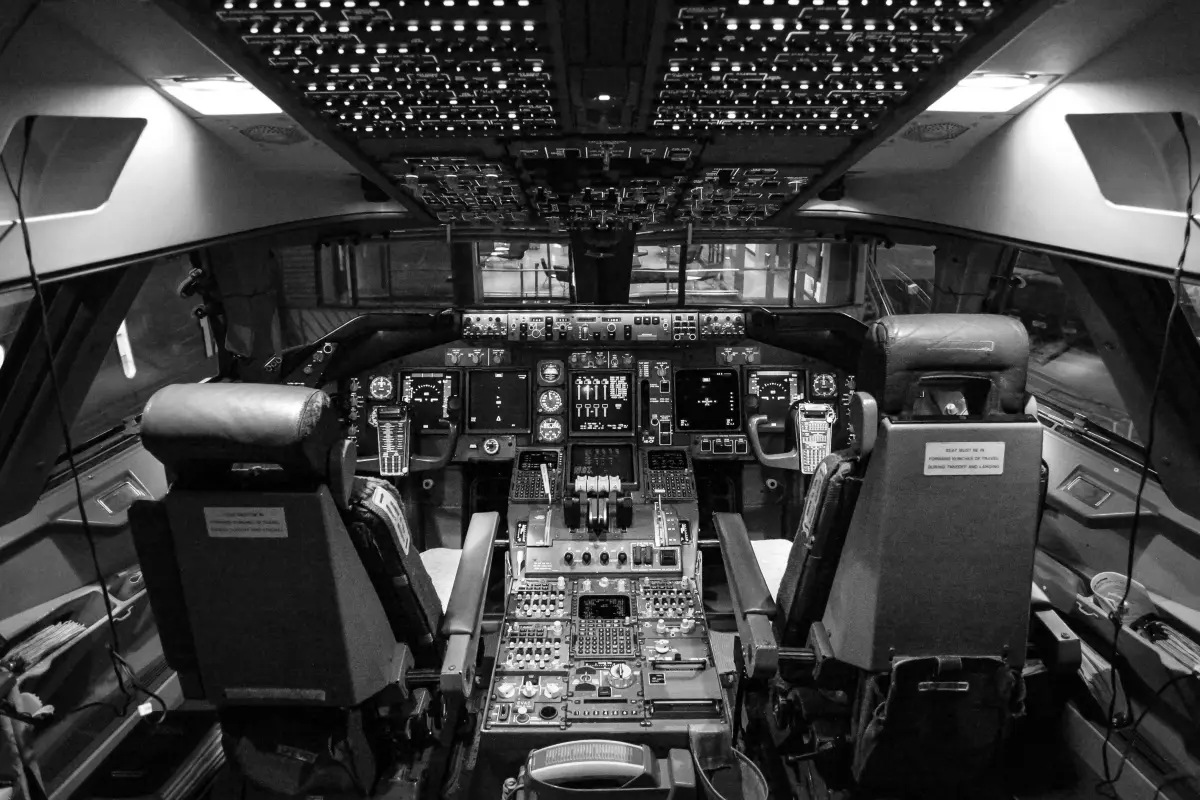
KLM Receives First A350-900 De Nachtwacht for Fleet Renewal
KLM Royal Dutch Airlines has received its first Airbus A350-900, named De Nachtwacht, to begin replacing its aging Boeing 777 and Airbus A330 fleet.
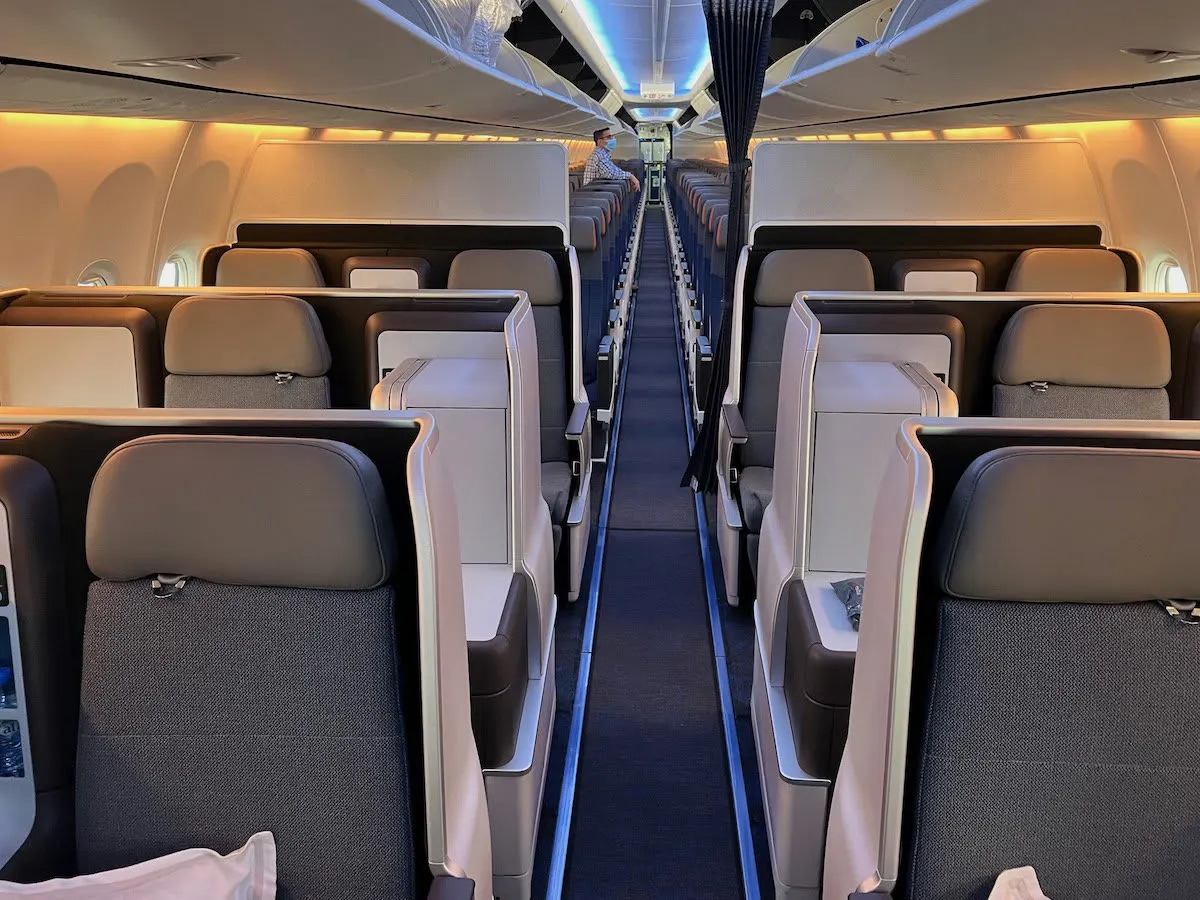
Flydubai Upgrading 21 Boeing 737 MAX 8s to Flat Bed Seats
Flydubai is retrofitting 21 Boeing 737 MAX 8 aircraft with lie-flat business class seats to standardize its premium product by late 2027.
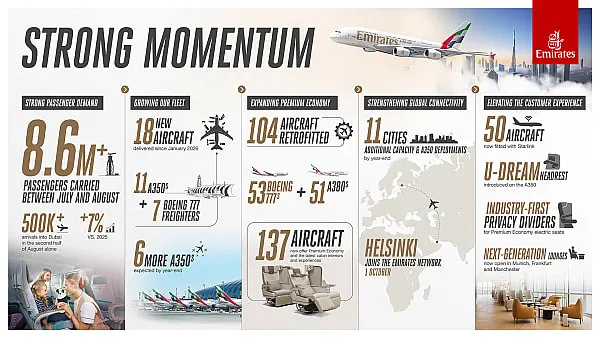
Emirates Winter Booking Momentum Grows Amid Fleet Expansion
Emirates carried 8.6 million passengers this summer and enters winter with strong demand as it accelerates fleet retrofits and network growth.
Air Arabia Consortium Gains AOC for New Dammam Budget Airline
A Saudi GACA-led consortium including Air Arabia has secured an AOC to launch a new budget airline based at Dammam's King Fahd International Airport.

Turkish Airlines Exits Luanda as Angola Hub Struggles
Turkish Airlines dropped its Luanda route as Angola's new airport struggles to attract traffic, handling only 756,028 passengers in 2025.

Red Sea Airlines Leases Two 737 MAX 8s for 2027 Expansion
Red Sea Airlines signed a lease for two Boeing 737 MAX 8 aircraft from SMBC Aviation Capital, arriving in 2027 to support its 14-aircraft fleet goal.